0
0
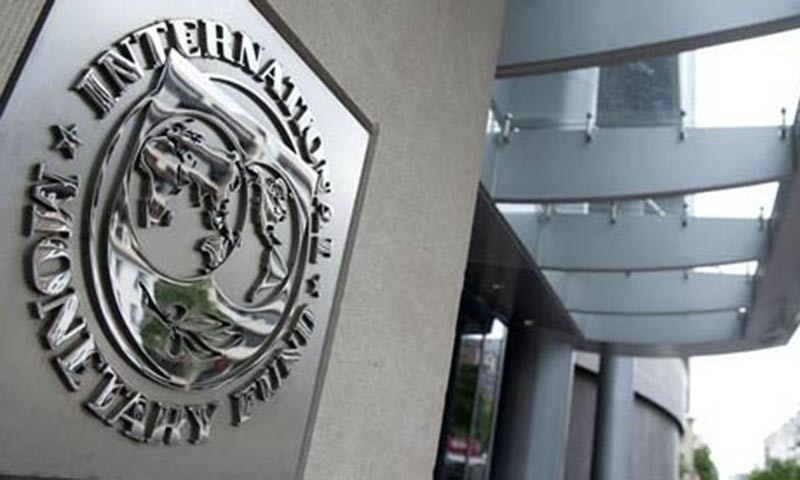

JOHANNESBURG: The IMF on Tuesday called on sub-Saharan Africa, one of the world’s fastest growing regions in recent years, to start adjusting policies in line with new economic realities of slowing growth.
The rate of expansion is forecast to drop from 5 per cent in 2014 to 3.75pc this year, the lowest since the region suffered from the impact of the global economic meltdown in 2009.
“Economic activity in sub-Saharan Africa has weakened markedly,” the International Monetary Fund (IMF) said in a bi-annual report titled ‘Dealing with the Gathering Clouds’.
To counter the drag on growth the Fund urged the region to adopt realistic fiscal and monetary policies and address the high income and gender inequalities levels.
The policies could include allowing currency depreciation as a shock absorber, especially in commodity exporting economies, and “striking an appropriate balance between debt sustainability considerations, on the one hand, and addressing development needs, on the other”.
“Reducing inequality could deliver significant growth payoffs for the region. Income inequality appears to be markedly higher at all levels of income in the region than elsewhere, with gender inequality being just one of the factors driving that result,” said the IMF.
The reasons for the economic slowdown included a sharp decline in commodity prices and tough financing conditions in several countries.
“The outlook for the region is clearly much less favourable than in the recent past,” the IMF report said, while predicting that economic activity will start “strengthening somewhat to 4.25pc in 2016 on the back of the gradual pickup in global activity”.
Economies that had in previous years grown rapidly on the back of raw commodity exports, largely driven by demand from China, had been hardest hit by the fall in commodity prices.
“After a steady rise in prices since the early 2000s, the decade-long commodity cycle seems to have come to an end.”
“This represents a formidable shock for many of the sub-Saharan African countries that are still substantial commodity exporters, as it cuts into export values and fiscal revenues.”
Reduced demand for commodities has jolted countries such as mineral-rich Angola, South Africa, Sierra Leone and Zambia.
Published in Dawn, October 28th, 2015
On a mobile phone? Get the Dawn Mobile App: Apple Store | Google Play