0
0

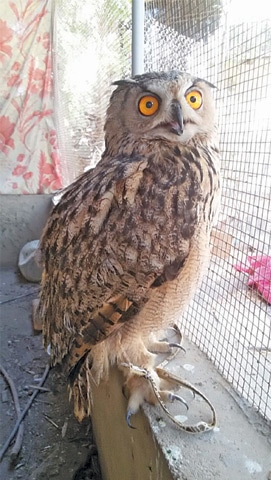
KARACHI: The Sindh wildlife department released on Wednesday the birds seized over the past two days. They included 40 laggar falcons, around 100 migratory shoveller ducks and an owl.
All the species are protected under the Sindh Wildlife Protection Ordinance, 1972.
“The falcons and the owl were released in the hilly parts of Jamshoro district while the ducks in the downstream Kotri barrage area,” said deputy director of the wildlife department Ghulam Mohammad Gadani.
The wildlife department office, he said, still held four falcons that couldn’t fly. “They are still weak. We are serving them with pigeon meat and hoping to release them in the next few days,” he added.
About the lone owl, he said it was a long-eared owl that had become rare now and that the last time he spotted a pair was in Ghotki district three years back.
“It’s sitting frightened amidst us that’s why it’s not showing its long ears. The rare bird found in dry forests in hilly areas is trapped and sold to faith healers for black magic and other purposes,” he said.
Jahangir Durrani, a wildlife expert, said that a number of owl species were found in Pakistan, including short-eared owl, brown-hawk owl, little owl, tawny owl, brown wood owl, brown-fish owl, eagle owl, Himalayan owl and snowy owl.
“No scientific data exists on their population in Pakistan. Threats to their existence includes extensive deforestation that has deprived them of places to make nests. The other is a shortage of feed,” he said.
Owls, according to experts, play an important role in ecology as they prey on small rodents such as mice and moles and thus keep a check on their population.
Meanwhile, in a late evening raid, the wildlife department in collaboration with the Rangers held two suspects with 20 common cranes from a Bannu-bound passenger coach at Toll Plaza, Jamshoro.
The migratory birds trapped in Balochistan were being taken to Bannu, Khyber Pakhtunkhwa, via Karachi, suspects Mustafa Khan and Javed Khan told the wildlife staff.
Released into sea
A five-foot-long spinetail mobula that recently became entangled in a tuna gillnet near Ras Zarrien, Pasni, Balochistan, was released back into the sea.
This was the third mobulid ray to be safely released by fishermen since last year, according to the World Wide Fund for Nature-Pakistan, an NGO that has educated fishermen on the ecological role of non-targeted marine species and trained them in releasing these species when they get entangled in fishing nets.
“Mobulid rays are important marine animals whose population is under serious threat mainly due to overfishing, habitat degradation and their very slow reproductive pattern. These rays are popular for their charismatic beauty, gentle behaviour and playful nature,” said Mohammad Moazzam Khan, technical adviser on marine fisheries with the WWF-P. Six mobulid species reportedly exist in Pakistan. Giant manta (Manta birostris) is the largest of them.
Published in Dawn, October 15th, 2015
On a mobile phone? Get the Dawn Mobile App: Apple Store | Google Play