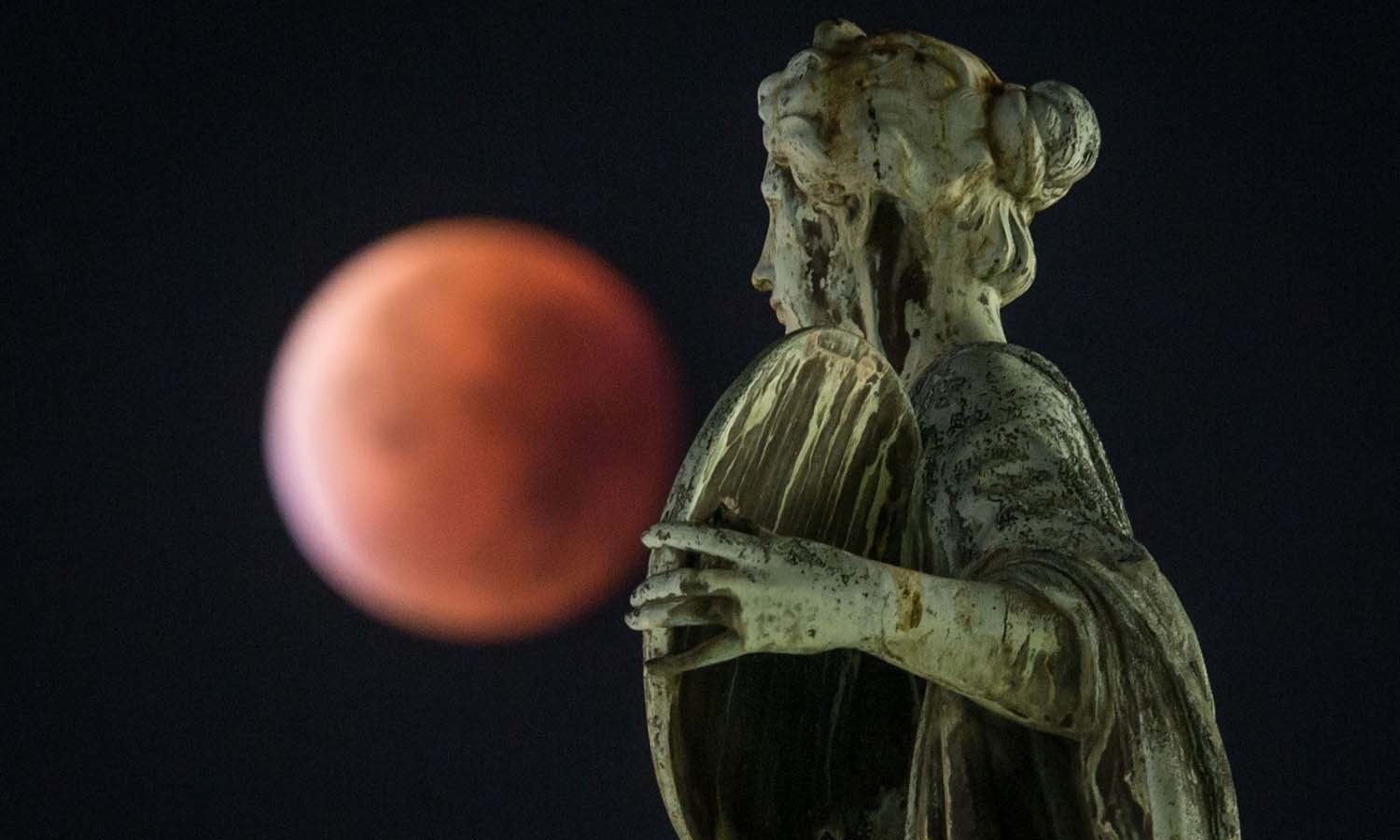


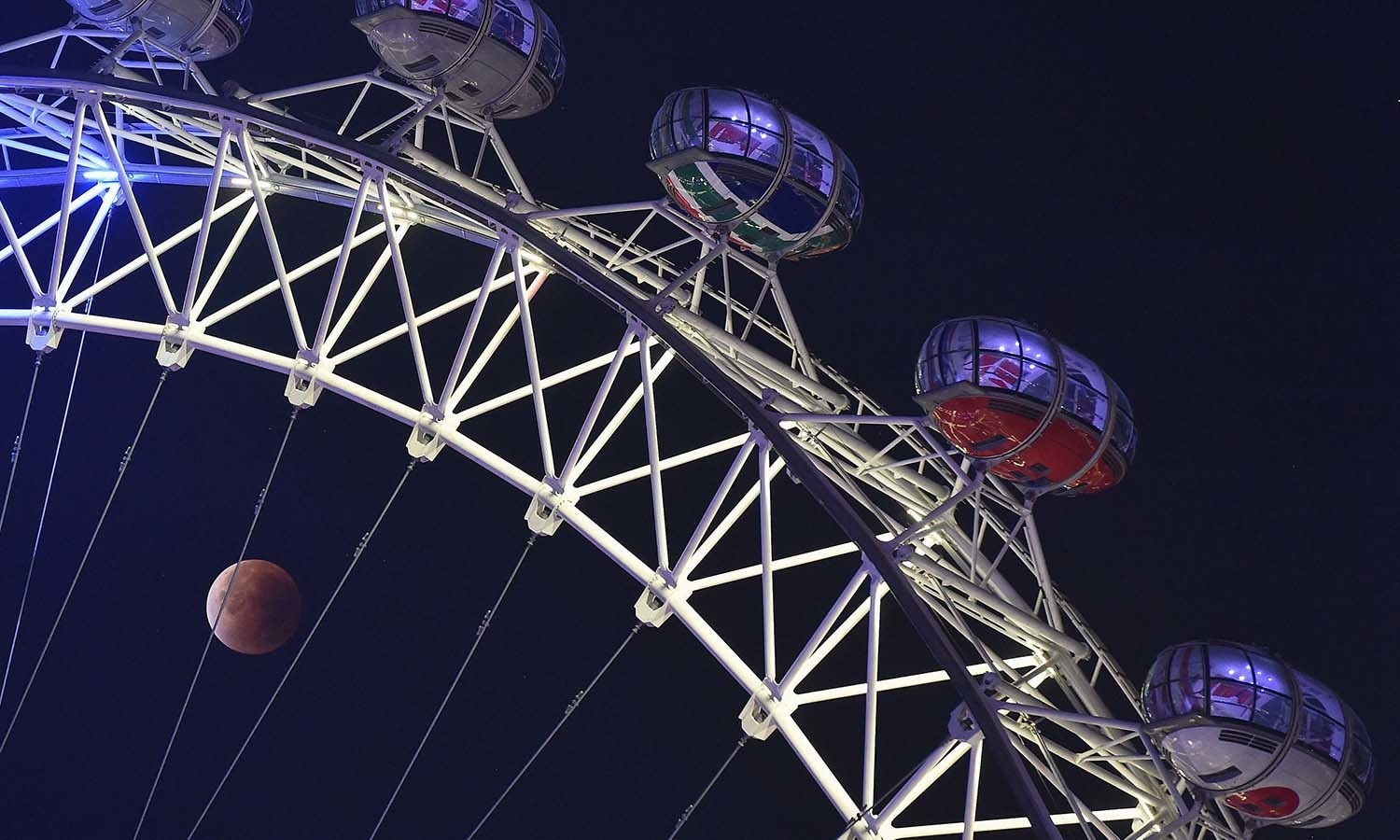


WASHINGTON: Skygazers were treated to a rare astronomical event Monday when a swollen "supermoon" and lunar eclipse combined for the first time in decades, showing Earth's satellite bathed in blood-red light.
The celestial show, visible from the Americas, Europe, Africa, west Asia and the east Pacific, was the result of the sun, Earth and a larger-than-life, extra-bright moon lining up for just over an hour.
Images from France, Germany, Argentina and the United States, among others, capture the progression of the lunar eclipse to a striking red finale.
The event also led to speculation about an impending apocalypse among certain followers of the Mormon Church of Jesus Christ of Latter-day Saints.
The fears are believed to have been stoked by a statement from Mormon author Julie Rowe, who regularly speaks to audiences about upcoming worldwide calamities.
Church officials were forced to issue a statement warning against panic, saying that while members should be "spiritually and physically prepared for life's ups and downs" they should avoid "being caught up in extreme efforts to anticipate catastrophic events."
The "blood moon" — which so far has had no apocalyptic consequences — appeared in stages across the planet as the satellite reached its closest orbital point to Earth, called perigee, while in its brightest phase.

The resulting "supermoon" appeared 30 per cent brighter and 14 per cent larger than when at apogee, the farthest point — which is about 31,000 miles from perigee.
Unusually, the Earth took position in a straight line between the moon and the sun, blotting out the direct sunlight that normally makes our satellite glow whitish-yellow.
But some light still crept around the planet's edges and was filtered through its atmosphere, casting an eerie red light that creates the blood moon. For people younger than 33, this was their first-ever chance to see a "super blood moon."
The last, only the fifth recorded since 1900, was in 1982, according to the NASA space agency, and the next will not be until 2033.
On top of the wow factor, the event was also of great interest for researchers.