



 2
2
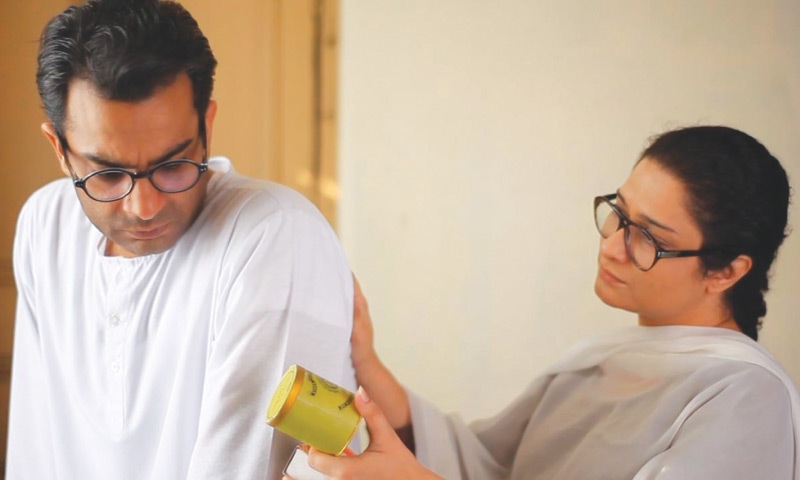

Short story writer Saadat Hassan Manto was brought back to life by actor/director Sarmad Sultan Khoosat through his film Manto. It pays tribute to a man whose works were banned or set on fire during his lifetime. The movie however just caters to Manto’s life in Pakistan from 1948 till his death which could have been avoided as Manto had a fledging career as a scriptwriter for films and radio before partition. No doubt Manto is regarded way ahead of his times due to his stories and plays but his own story had more than meets the eye.
Sarmad Khoosat at his best
Sarmad Sultan Khoosat is just plain brilliant as Manto, the writer who was hated by his contemporaries for breaking social taboos. Not only does he portray the late playwright to perfection, he acts with his eyes which is the most difficult thing to do. The anger, the frustration he conveys through his body movements and his mannerisms is nothing short of genius. Although I had my doubts regarding Sarmad Khoosat’s ability as an actor (he is a brilliant director), I am convinced that nobody else could have played Manto better. He even excels as a director who paints the 1950s well. He, however, fails in the editing department; the film could easily have been trimmed by half an hour, something that didn’t happen as the director himself was on the editorial panel.
Manto: the man and the writer
The film depicts Manto’s final years and how he was mistreated by the authorities. From sitting in an ice factory to receiving electric shocks in a mental hospital, Manto is shown to be always in need of money in his adopted country; his relationship with Noor Jehan, Qudrat Ullah Shahab and others was touched, but minimally. His appearances in court, his constant struggle to keep bread on the table for his family and his addiction to alcohol are something that was hardly discussed on screen before. Neither was his life in Bombay given much importance, considering he was one of the top writers in the film industry of pre-Partition India and was unsuccessfully stopped by his (Hindu) friends from migrating to Pakistan.
This ode to Manto will strike a chord with those who are as passionate about the writer and his works as the director is
Too TV-ish for the big screen
Veteran playwright Shahid Nadeem comes up with a very commendable screenplay, but despite his best intentions, Manto looks more like a telefilm than a feature film. There were hardly any long shots and at times the close shots seemed too much. Even when Lahore Railway Station is mentioned, the interior of a train is shown (we still use the 1950 trains, do we not!) rather than the exterior of the station. However, the flashbacks, the to-and-fro movement from one afsaana to real time and the scene where he meets Nimra Bucha’s character were well executed … Nimra’s character came too late in the film though. Manto’s visit to the mental hospital also seemed life-like and it was scenes like these that kept the viewers interested in the plot.
Guest appearances from friends
Director Sarmad Khoosat likes to work with people he trusts (read: friends) and that was quite evident while watching Manto. There was Mahira Khan, Saba Qamar, Nadia Afghan, Hina Khawaja Bayat and Savera Nadeem all of whom have worked in his plays as a director. What was disappointing was the length of the roles of these actresses; Mahira had a non-speaking guest role, Saba Qamar played the legendary Noor Jehan but looked more like a mistress than Madam (who wasn’t given the title in the 60s!), Nadia Afghan thankfully didn’t overact during her guest appearance whereas Hina Bayat appeared as the beautiful wife of a bureaucrat (Rehan Sheikh in an unrecognizable role) with emotional issues; Savera Nadeem also had a blink-and-miss appearance. Arjumand Rahim, Nimra Bucha, Yasra Rizvi and Sania Saeed made their film debut through Manto and while the rest had a few scenes, Sania Saeed had a full-fledged role as Manto’s dutiful wife and caretaker.
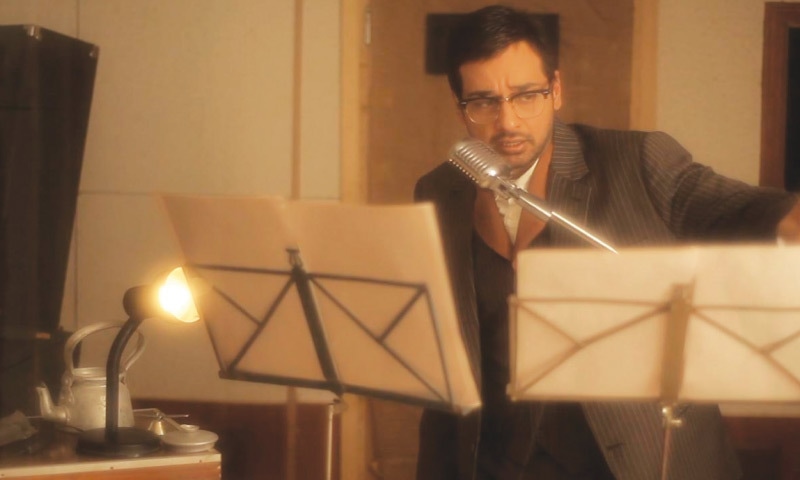
As for the men, Faisal Qureshi impressed with his role as a radio artiste but then, his rendition of Aalam Panah predated K. Asif’s Mughal-e-Azam by nearly 7 years. It was enjoyable to watch Shamoon Abbasi as a Sikh, Adnan Jaffar as Qudrat Ullah Shahab, Akbar Subhan as Chaudhry Sahab, Tipu Sharif as Shaukat Hussain Rizvi, Zain Ahmed as a writer, Irfan Khoosat as one of the characters of a story and Azfar Rehman in a non-speaking role. Humayun Saeed’s cameo at the credits was a waste of his talent as an actor and he could have been utilized wisely, elsewhere.
 |
Soundtrack
Manto’s soundtrack was composed by Jamal Rehman who does an impressive job. Ali Sethi leads the vocalists’ parade with Aah Ko Chahye and Kya Hoga (with Zeb Bangash). Javed Bashir continues to impress with his Kaun Hai Yeh Gustakh while Meesha Shafi’s Mehram makes you want to listen to it repeatedly.
For the love of Manto
There are two kinds of people in this world; one who love Manto and those who are unfamiliar with his work. Sarmad Sultan Khoosat’s effort is for those who know Manto very well; otherwise you will not connect with the intended subject.
Published in Dawn, Sunday Magazine, September 20th, 2015
On a mobile phone? Get the Dawn Mobile App: Apple Store | Google Play





























