33
33


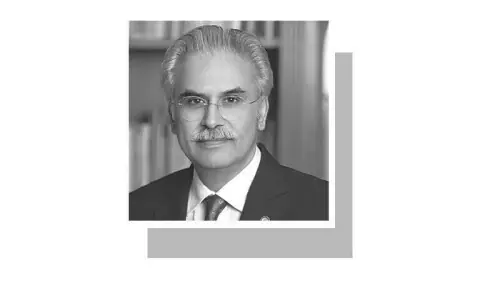
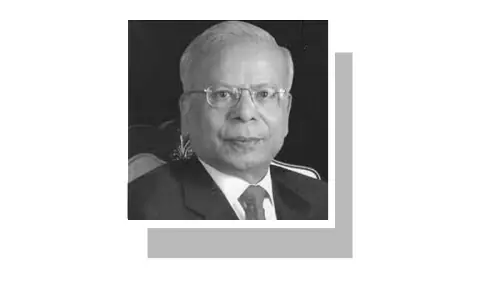
ISLAMABAD: President Mamnoon Hussain on Wednesday approved Prime Minister Nawaz Sharif's advice to appoint Justice Jawwad S Khawaja as the Chief Justice of Pakistan with effect from August 17, 2015.
Incumbent Chief Justice Nasirul Mulk is set to complete his tenure on August 16, 2015.
A news release issued by the Presidency reads:
“On a summary initiated by the Law, Justice and Human Rights Division, President Mamnoon Hussain approved the prime minister’s advice for appointment of senior judge of the Supreme Court, Justice Jawwad S Khawaja, as Chief Justice of Pakistan with effect from August 17, 2015, after superannuation of Justice Nasirul Mulk, Chief Justice of Pakistan, on attaining the age of 65 years w.e.f. August 16, 2015.”
Justice Jawwad Khawaja was born on September 10, 1950 in Wazirabad and obtained a degree in law from Punjab University.
He started his career as an advocate of high court in 1975 and got practicing license of Supreme Court in 1985. He has also served as a visiting lecturer at the Punjab University Law College from 1975 to 1986.
Justice Khawaja also received an LLM from University of Berkeley, California and taught at Lahore University of Management Sciences (Lums) until he was appointed as the Judge of Supreme Court in 2009.
It is pertinent to mention here that Justice Khawaja was the first judge to resign in protest from the high court in March 2007 after former President Pervez Musharraf virtually suspended the then chief justice of Pakistan, Chaudhry Iftikhar, and appointed the available senior-most judge, Justice Javed Iqbal, as the acting Chief Justice of the Supreme Court.
His resignation at the time was hailed by bars and jurists in the country. Senior lawyer Muhammad Lateef Khan Khosa had termed the resignation a first drop of rain, which he said would help the lawyers' movement against Musharraf.
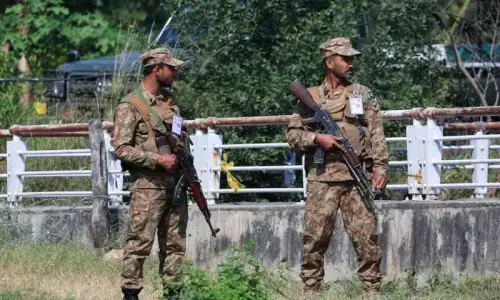
In Wednesday's landmark Supreme Court ruling that upheld the establishment of military courts in the country, Justice Jawwad S Khawaja was among the six dissenting judges, who ruled that the 21st constitutional amendment, which essentially gives legal cover to the said courts, is invalid.
Read: Military courts get Supreme Court nod.
In a copy of his judgment, which is written in Urdu to fulfill the constitutional obligation under Article 251, and is available on the Supreme Court's website, Justice Khawaja argues that the Parliament's authority has limits when it comes to Constitutional Amendments.
“The limitations to Parliament’s authority are not only political but are also explained through the Constitution. In certain scenarios, this court holds the authority to declare the Amendments approved by Parliament null and void,” he asserted.
“It is acceptable to let the representatives decide what’s good for people, and what’s not. But there are certain limitations to that as well.”
(With additional input by Irfan Haider)