0
0


SAHIWAL: Heritage is more than a record of the past. It should become living and an integral part of both rural and urban identity for future generations.
This is moving away from simply developing inventory or depository of artefacts, monuments, remains or material resources to something like living phenomena becoming part and parcel of people’s social behaviours and practices.
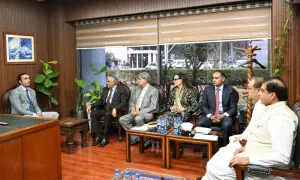
This was stressed by Punjab Higher Education Commission (PHEC) Chairman Dr Nizamuddin while presiding over a seminar on ‘The role of higher education in promoting and preserving cultural heritage’ organised by the Comsats Institute of information Technology’s (CIIT) Department of Heritage Studies in collaboration with PHEC on Wednesday.
He said this practice actually kept heritage alive and linked the past with present and future so people could take pride in ownership of that heritage. He also added Harappa was a living heritage of the people of the land and higher educational institutes must teach such disciplines.
Renowned archaeologist Dr Rafique Mughal said the purpose of the seminar was to introduce and bring questions of identity and heritage to higher academic institutes. He said Comsats had developed a heritage study department that was the only department in Punjab where living history and culture would be taught.
CIIT Director Dr Abdul Waheed said even educated people in Pakistan had no sense of association with the great civilisations of this region, popularly called the Gandhara and Indus Valley civilisations.
Dr Nizamuddin said PHEC was paying attention towards cultural identities and for that purpose the Harappa civilisation needed to be revisited in textbooks. He said the commission had a mandate to support research, training and cultural activities within the heritage context. He reminded the audience of the role of Sahiwal in the 1857 War of Independence. He also said the Sahiwal chapter of Lok Rahs had organised a two-hour theatre play on Rai Ahmed Khan Kharal’s struggle written by Najam Hussain Syed.
Punjab Lok Sujag gave a multimedia presentation on their Harappa community initiative for which Rs180 million had been released by the Punjab government for disbursement among 360 land occupants.
Imran Jaffar from the Department of History of Government Post Graduate College strongly criticised the change in elementary, secondary and higher education curricula during the ‘80s in the name of “Islamisation”. He said more communal, ethnic and narrow-minded historically distorted concepts of thought introduced in the books had left no space for tolerance and acceptance of views.
The seminar was also addressed by Bilal Ashraf of the Department of English at Government Imamia College, Sahiwal and Dr Bashir Ahmed from the Department of History at Education University, Lahore.
Published in Dawn, June 18th, 2015
On a mobile phone? Get the Dawn Mobile App: Apple Store | Google Play