IT is a cliché that Pakistani society is being torn apart by ethnic, linguistic, religious and sectarian conflicts. From highbrow politicians to street vendors, the level of concern for the strife in society is matched by the depth of ignorance regarding its reasons or the cure.
Little do we realise that there is a field of knowledge called social sciences, where students are trained to understand the changing dynamics of human societies by following long-established theories, frameworks and methods. The various fields of social sciences, if applied, have a lot to offer where contemporary challenges facing Pakistan are concerned.
The changing social and economic composition of cities, population explosion, rural-urban migrations, spread of the road network and civic infrastructure to remote areas, growth of small towns, development of new technologies of cellular communications, satellite and cable television and the rise of social media, are a few of the drivers of rapid social change and transformation in society, about which we have little scientific information.
Development is taken to mean economic development in Pakistan. The social sector research by NGOs is not only limited to select fields such as poverty alleviation, health, education etc, but also guided by donor-driven policies that are strategically framed by Western academics and think tanks. Pakistani researchers are expected to fill in the details rather than pose independent research questions that might lead to different answers and unexpected policy outcomes.
What are the consequences of the shifts in the way people lived and interacted with each other? Do we know enough about our ‘traditional’ society, which is in a state of flux? Take one of the new forms of digital communication as an example. Do we know the impact on the social psychology, public communications and visual norms of modesty of the ever-increasing number of image-savvy Facebook users cutting across classes and regions? Did we realise how Mullah Fazlullah aka Mullah Radio was able to use the latest broadcast technology to muster support for his retrogressive ideologies while we hailed the spread of technology as an aide to modernisation and development?
Do we know enough about our ‘traditional’ society?
Even during the most turbulent decades of Pakistani history, when the very survival of the democratic state was at stake, social scientists — foreign or local — were never part of any negotiations and consultations. A case in point is the Swat armed insurgency of 2002.
The people of Swat were the subject of classic ethnographies, which explored the broader issues of history, culture, class, and religion of the Pakhtuns in general and the residents of Swat in particular. Frederick Barth was the first Western anthropologist who had laid the foundation of anthropological studies of Swat with his book Swat Pathans (1951).
When the people of Swat became embroiled in a bigger battle for control of this key geopolitical region, anthropologists who could have contributed to understand the conflicts were never consulted by the state or NGOs. No effort was made to see what was happening in society that led to massive social upheavals.
Likewise, beyond the security perspective, no analysis of the deepening crisis in Balochistan is offered for public debate, whereas social scientists who have a deeper understanding of the social structure and history of Balochistan can explain why the social order has collapsed and what can be done to mitigate it.
The hegemony of English-language scholarship in Pakistan has led to academic disconnect with centuries-old, rational intellectual tradition among Muslims in India written in classical and regional languages, such as Arabic, Persian, Urdu, Sindhi, Pashto, Punjabi, Seraiki and Balochi.
In Punjab, Bulleh Shah, the 18th-century humanist philosopher who was well-versed in Arabic and Persian but chose to write in Punjabi, offers a powerful critique of the hegemonic interest of clerics and the state. His social analysis though articulated in rhyme was grounded in profound observation and rational interpretations.
The entire history of social analysis and critique of Muslim society in India, pioneered by the rationalist critique of Syed Ahmad Khan, should have served as the primary reference for social scientists on the current ills of fundamentalism and sectarianism, if not the theological critique of Ghulam Ahmad Pervaiz, Jinnah’s counsellor on religion affairs.
Social sciences need to help people cope with the impact of rapid social change to make their research relevant and responsive to the community needs. A people-centred agenda of applied research has to take front stage in social sciences, where the challenges facing the country are not seen as only matters of internal security.
The social science research into particular issues, rather than judicial commissions, can lead to mapping based on scientific grounds. It will be a sad commentary on us — as participants of a conference in 2002 concluded — if a bureaucratic, authoritarian, insecure, modernising and dependent state like Pakistan can produce only technocratic, apolitical, tame, hyper-factual and empiricist social sciences.
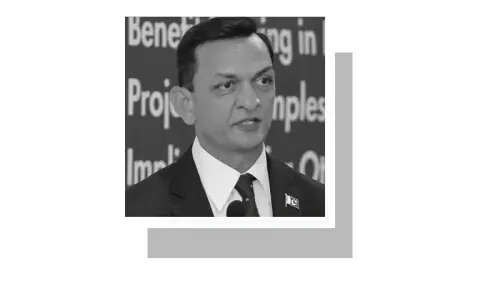
The writer is secretary general of the Council of Social Sciences Pakistan.
Published in Dawn, June 16th, 2015
On a mobile phone? Get the Dawn Mobile App: Apple Store | Google Play