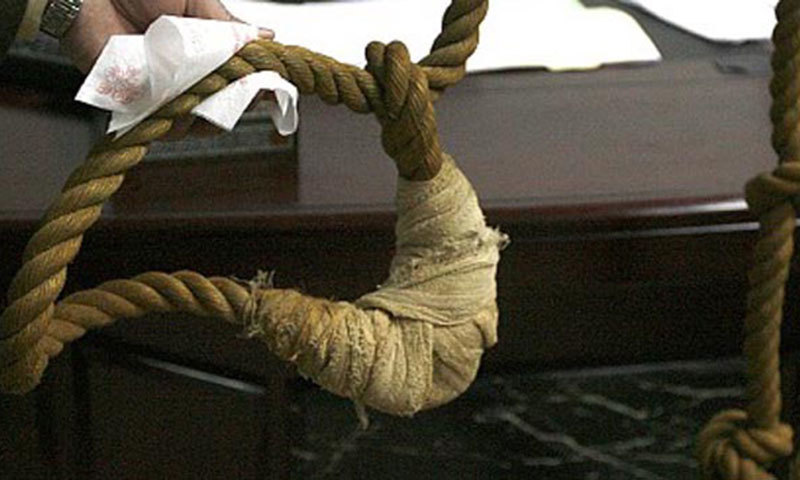
Pakistani has executed approximately 150 ‘criminals’ over the past six months amidst concerns that those executed may have been tortured into making false confessions, reports The Independent.
Saudi Arabia has executed at least 90 over the same time period, while the United States, 14.
Human rights organisation Reprieve last Thursday marked Pakistan's 150th execution since the lifting of the moratorium.
Prime Minister Nawaz Sharif partially lifted the moratorium on the death penalty for executions linked to terrorism following the Dec 2014 Taliban attack on Peshawar's Army Public School, leaving at least 50 convicts facing execution.
The moratorium was lifted completely on March 10, leaving 8,500 prisoners on death row ─ one of the largest death-row populations in the world ─ up for execution.
The report says ministers in Pakistan plan to execute hundreds more despite concerns over ‘forced confessions’ from international organisations.
Many of those on death row are believed to have been juveniles at the time of their offence ─ a breach of Pakistani and international law as Pakistan is a signatory to the International Covenant on Civil and Political Rights that forbids minors being sentenced to death or executed.
A 2013 study of 30 Pakistani death-row prisoners conducted by Reprieve and the Justice Project Pakistan found that 10 per cent of prisoners were arrested and sentenced to death as minors.
The study infers that according to these findings, there may be at least 800 child offenders among the 8,261 on death row.
Shafqat Hussain is believed to be one such offender, whose execution was stayed for the fourth time just hours before his hanging on Tuesday morning.
Shafqat was arrested and sentenced to death in 2004 for the kidnapping and involuntary murder of a seven-year-old boy, who lived in a Karachi apartment building where he worked as a security guard.
Read more: Shafqat Hussain hanging postponed for fourth time