0
0

With the gathering momentum of globalization it has become important to understand how the economic policy decisions in any region like Europe or America can influence workplace at home?
And hence its applications on the residents of the respective region or country that whether the policy designed in North has brought some favourable changes in terms of well-being of the concerned country or bloc?
The main reason for the South Asian countries’ economic woes and crises, one after the other, and more acute than the previous, especially in case of Pakistan, is that our economic policies and priorities have not been set keeping in view the ideology of the country and the real needs of its people. The object has been the protection of special interests and, deliberately or otherwise, to conform to the global order and the agenda of the West.
While the last decade of the 20th century saw great economic progress in many parts of the world, it also witnessed stagnation and setbacks. An estimated 1.2 billion people still live on less than one US dollar a day. A fifth of the world’s people living in its richest countries share 86 per cent of its GDP, the poorest fifth just one per cent and the gap between them continue to increase. These differential effects of trade and investment on development and poverty reduction show that while economic growth is of central importance, its quality is the key for sustainable development. Both the sources and patterns of growth also shape development outcome.
A key mechanism was the fact that many political leaders in the developing countries came to agree with the types of policies that were advocated by the international financial institutions and private sector investors. As the Cold War ended, the influence of alternative ideologies waned and democratic elections frequently returned leaders who favoured such policies.
Among the biggest dilemmas for the South bloc (i.e. the developing countries) is that whether they should open themselves up to the globalization process, in the hope of obtaining some of the benefits, or take a more cautious approach/way to avoid therisks which would attract criticisms from the mainstream institutions that are sure to lecture the countries concerned that they would be left behind?
The relationship between the globalization (trade liberalization), and the economic growth has occupied an important place in the development debate for a prolonged period. Indeed, the vigour and interest characterizing the debate reflect its importance and continued elusiveness in setting the main contentious issues on the theoretical and empirical fronts. The preposition that trade liberalization is one of the most important determinants of the economic growth is becoming popular with the each passing day.
The relationship of poverty, financial market, and globalization has been taken since there is sound and direct impact of the later via financial market over the level of living standards (poverty), being central feature of globalization, of the respective region. It is what we have experienced in 1999’s East Asian crises where the portfolio flows fell back to only $5 billion in 1999 from $105 billion in 1994. The reversal was even more dramatic in the case of short-term bank lending with a peak inflow of $75 billion in 1995 turning into an outflow of $91 billion in 1999. Such volatility is very damaging for economic development and poverty reduction.
There is a notion that the less outward-oriented countries with few restrictions on the trade have experienced better performance than the inward looking economies with high tariff walls and strict control on capital mobility, Kruger (1998) and Bhagawati (1986)
The import substitution policy promoted by Raul Prebisch has got stimulus from the infant industry argument and the countries, which have followed import-substitution policies, and imposed restrictions on the trade flows have lagged behind. Consequently, such results have led the liberalization of the international trade and capital flows that have gained special importance for recent going on reform process of the developing countries in South Asia and Latin America.
Those who do not favour globalization argues by way of following outcomes that the world has experienced so far in this context.
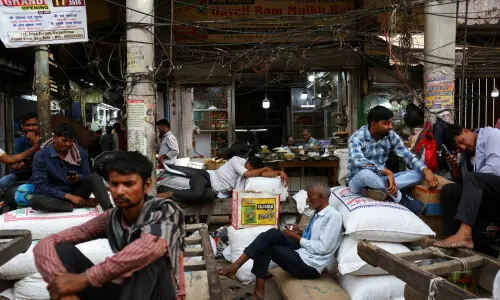
The world economy is in a state of what is commonly viewed as unprecedented growth. But this growth has brought dangerous and destructive economic disparity (John a Powell and Udaya Kumar). On the one hand, we see the ‘impressive’ economy in the Silicon Valley, a region of 2.3 million people, has produced tens of thousand of millionaires, with 64 new ones every day and on the other hand, particularly those of South Asia and Africa do not have enough food to eat, resulting in malnutrition and disease.
We are not against economic liberty and the market economy system, but we can not overlook the way the western capitalism has got hold of us and the way global colonial institutions, corporations and foreign governments are tightening the noose around us in the name of liberalization and globalization. Whether today’s economic policy makers or yesterday’s policy managers, all consider foreign aid based economic development as the be-all and end-all
However, with the concept of globalization, its advocates have created an atmosphere that not only prevented a real solution to the social problems, but also promoted repressive legislation which worsened the conditions of the south region.
I endorse the natural propagation whereby the developing countries move into higher value-added activities, pay higher wages to their workers because their output grows in value, and become in themselves eventually uncompetitive in producing simple goods and services against countries with even lower wages.
This can only happen by way of import substitution policy unless our infant industries become competitive to exist in the era of globalization. Let us industrialize rapidly and produce locally under tariff protection rather exporting raw material.
This would be the acceptable way to developing countries to make globalization work for the betterment or benefit not of a select few, but for every one in all countries.
Recommendations for policy change: The developing countries themselves have to take some important steps before the full impact of globalization could be felt. To open economy it stands out as a prerequisite of membership in the WTO or as the part of the conditionality accompanying loans from the IMF or the World Bank. Also important is the increased cultural homogeneity of the world that stimulated demands for imports and travel on the part of local population in developing countries.
Policy suggestion to respective countries that how these have to go for globalization, particularly to save the infant industry could be addressed while answering hereunder given some basic query.
‘How economic policy decisions in any region like Europe or America can influence workplace at home (developing country) in a globalized world?’
To answer this query we have to organize/manage the following important points:
* Macroeconomic consequences:
* To explore the impact of trade liberalization (openness) on economic growth.
* To assess the impact of distortions and interventions to determine the economic stability.
* To grasp the impact of the FDI flows whether they are negatively or positively moving the growth of these Asian countries.
* To investigate the relationship between political instability and economic growth.
* To evaluate the import substitution as it had positively or negatively induced the growth in the observed sample countries.
* How the global finance affected the growth and equity?
* Policy analysis:
* How to react the international, domestic and regional policies?
* Control of foreign capital surges — to rightly see the boom-bust cycles (Ref: East Asian Crises) through large amounts of capital entering in a country and exit in the same way.
* Policies to encourage domestic savings.
* To analyze the policies at international, domestic and regional level and in this context to see the respective areas of special importance such as analytical macroeconomic policies, pro-cyclical policies and their relationship with growth.
* Whether the global finance has limited the autonomy of the government decision?
* Policies to offset the inequality that frequently result from financial globalization between haves and have-nots as under the trade liberalization scenario, only few households are made worse off but distribution of gains from liberalization tends too skewed towards the urban rather than the rural and the wealthy rather than the poor.
Summarizing the phenomenon of globalization one would come to the conclusion that the chance of success with the proposed strategy was far greater than with the IMF’s plan. The financial restructuring did not require huge bailouts. The disillusionment with the large bailout strategy is now almost universal. The IMF did not learn quickly from its failures in East Asia.
It would only be blessing for the Third World countries if, and only if, it meets the certain conditions, among others, industrial infrastructure prior to the implementation of the WTO, which will be effective from January 2005.
The dirty little secret about globalization — and it takes a lot of countries a long time to figure it out — is that the way to succeed in globalization is to focus on the fundamentals. It’s about reading, writing, and arithmetic.
It’s about churches, synagogues, temples, and mosques. It’s about rule of law, good governance, institution building, free press, and a process of democratization. If you get these fundamental rights, then the wires will find you, and wires will basically work. But if you get them wrong, nothing will save you.