26
26


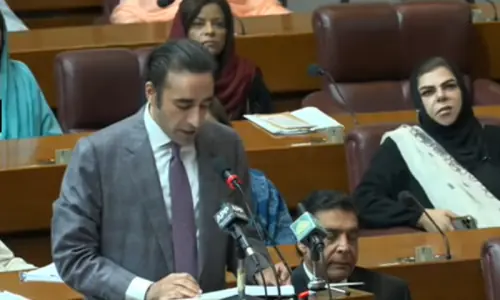
ON the fifth day of the extraordinary joint session of parliament, a resolution that the legislators can be proud of — and the country satisfied with — was passed unanimously yesterday.
Pakistan will not be a participant in the Saudi-led campaign inside Yemen. Instead, the government will continue with its pursuit of a diplomatic solution to the war in Yemen.
While language in support of Saudi Arabia is included, there is an unmistakable line drawn: in the present instance, there will be no military deployments from Pakistan to Saudi Arabia unless there is a direct threat to Saudi territory — and then sending the Pakistani military in a combat role is not automatic or guaranteed.
Know more: Parliament calls for neutrality in Yemen conflict
All of that is quite extraordinary. Not just because the PML-N government, and Prime Minister Nawaz Sharif himself, are perceived to be especially close to Saudi Arabia but also because the Saudi regime has had close ties with the Pakistani military and security establishment for decades.
Moreover, with a new king, the first next-generation deputy heir to the throne and a youthful defence minister all dealing with their first major foreign policy crisis and opting for a military response, the pressure on the Pakistani state to join the Saudi-led coalition must have been intense.
The brazen assertions by Saudi officials and media that Pakistan had already committed to participating in the Saudi-led campaign in Yemen were surely only the tip of the iceberg. It is unimaginable that such public assertions were not backed by insistent demands behind closed doors.
So it goes doubly to the credit of this government, parliament and the military that the sensible choice — the choice that was in Pakistan’s own national interest — prevailed.
There is, however, still much work left to be done, particularly with Pakistan taking an unfamiliar lead in trying to broker a peace in the Middle East on effectively two fronts: the intra-Yemen conflict and the soaring Saudi-Iran tensions.
The strident comments emanating from Iran on Thursday are surely unhelpful and the threat of a land invasion remains. Adding to the complications, the US appears to be siding with Saudi Arabia — possibly in a bid to try and balance Saudi, Israeli and domestic US opposition to the US-Iran nuclear deal that may be sealed later this summer.
Shuttle diplomacy by Pakistan and Turkey may not yet have yielded any concessions by the sides warring and grandstanding, but it has provided the contours of a possible diplomatic end to hostilities.
There is also, as reiterated in the joint resolution of parliament yesterday, the need for the OIC and the UN to play a greater role here.
The more diplomatic forums on the regional and international level get involved, the more likely it is that better sense may prevail and a peaceful solution to Yemen’s long-running woes is found.
Published in Dawn, April 11th, 2015
On a mobile phone? Get the Dawn Mobile App: Apple Store | Google Play