0
0

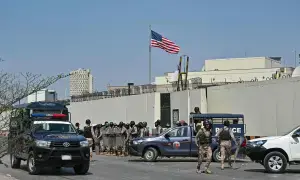
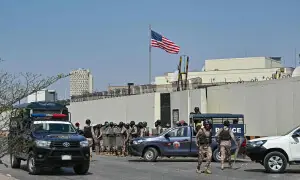
GUJRAT: The district government has declared at least 478 buildings, including educational institutes, business centres, banks, worship places, restaurants, shopping malls, petrol and CNG stations and factories, most sensitive on grounds of security.
District Coordination Officer (DCO) Liaquat Ali issued a formal notification declaring these places sensitive under Section 5(2) of the Punjab Security and Vulnerable Security Establishment Ordinance 2015 on Tuesday.
The survey to assess vulnerable buildings in all three tehsils of Gujrat district had been conducted by the district police that recommended such places to the district government to issue a notification in this regard.
According to the notification, the managements of these places will be responsible for ensuring foolproof security arrangements under Section 11 of the law and in case of any violation or negligence legal action of sealing the location will be initiated.
The DCO also asked station house officers (SHO) of police stations concerned to monitor the security arrangements at these places and send a report to the district office.
ARMS: The Punjab Home Department has authorised district governments across the province to issue firearm licences to managements of all worship places.
According to an official of the district government, licences will be issued in the name of the worship place rather than an individual. However the ban on issuance of licences to common people will remain intact.
Earlier, the provincial government had relaxed the ban on firearm licences to managements of educational institutes in the wake of the Peshawar school massacre and scores of private institutes here had obtained them. He said the managements of worship places could apply for licences to the DCO.
WASH: As many as 100 villages of eight union councils of rural areas of Gujrat have been selected by the district government for launching an awareness campaign for setting up latrines in houses that did not have the facility, under the District Water, Sanitation and Hygiene (WASH) Programme.
The government will provide financial resources to at least 5pc of poor families that did not have such facilities whereas committees comprising active people from these rural areas will launch the campaign to convince others to construct a latrine in their house on self-help basis for a cleaner environment.
Apart from village committees, there will also be a volunteer for every 300 houses who will be paid a stipend for his services whereas social mobilisers of the Public Health Engineering Department will also participate in the campaign who, along with members of village committees, will be given proper training.
Teachers and students of government schools will also be asked to form committees for the campaign.
Published in Dawn, April 8th, 2015
On a mobile phone? Get the Dawn Mobile App: Apple Store | Google Play