0
0
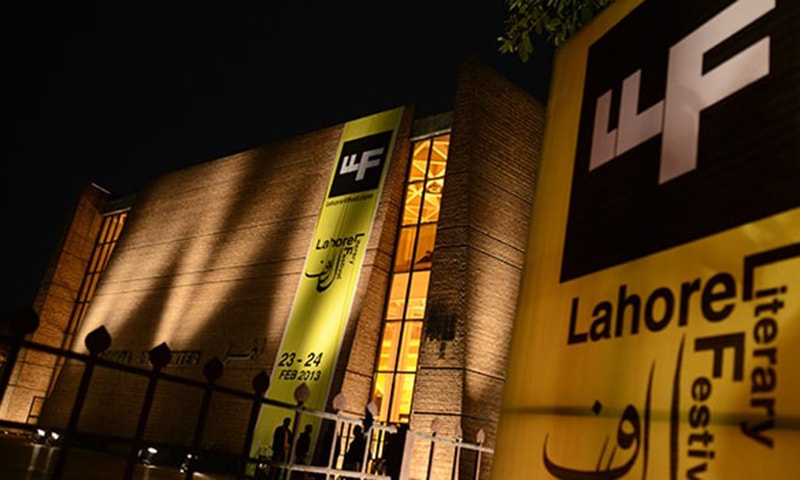

“Two Goans” – Indian journalist Naresh Fernandes and Karachi-based writer and former musician Leon Menezes – had a lively discussion about the golden age of Jazz in Karachi and Bombay (Mumbai) on the second day of LLF. It was based on the research that Naresh did for his book, ‘Tajmahal Foxtrot’, a name taken from the first Indian jazz track.
The book studies how jazz music was brought to these megacities and how it influenced the local culture and music scene. The conversation between the two ‘Goans’ as they put it, was smattered with humour and colour and though it pointed out the history of jazz this was not given in an academic style.
“I used to play music for the band ‘The In Crowd’, in what used to be Karachi’s good ol’ bad ol’ days,” said Menezes. “I think you can guess my age by now.”
They showed a clip of the Lahore-based Sachal Orchestra playing a classical rendition of the 1959 jazz track by Dave Bruebeck, called ‘Take Five’. “The clip when it came out had gone viral over the net,” said Naresh. “But seriously, they have been well received internationall because for the western audience it is something exotic to see people in Pathani clothes play jazz.”
He said President Eisenhower as part of his propaganda mission sent many jazz artists all over the world, and therefore many came to both India and Pakistan. Dizzie Gillespie, a trumpet player is seen in a photograph playing to a snake somewhere in Sindh, while Charlie Parker is said to have stayed in Lahore’s Fellatti’s Hotel. Duke Ellington came to India among others. And when here they often jammed with local musicians.
By the 1930s Karachi had its first band, said Naresh. Musicians from Pakistan and India copied western musicians, down to keeping their names in the same fashion, like Jazzy Joe, and Rudy Cotton, whose actual name was Cowasjee Khatau. In 1947, at an event, live music was performed by Ken Mac, an anglo Indian and his band, and played for Muhammad Ali Jinnah Paul Robeson’s track ‘The End’. This was Jinnah and Ruttee’s song that they danced to, and when she died, Jinnah would go to her grave often and hum it over there, he said.
In the same year Bombay had about 60 jazz bands. But the 1940s was not a fun time for these musicians. The influx of cinema music was making it hard for them to play pure jazz, and often had to collaborate with classical music directors to make a film composition, but a prime example of a very jazzy track is EenaMeenaDeeka sung by Kishore Kumar. As sound became sophisticated, there was an orchestra needed for film music. So classically trained directors who could not make a music score would hum a tune, the jazz musician would pick it up and execute it.
“There was an absurd situation in the studio,” says Naresh. “There were these Hindu music composers, Muslim lyricists and Christian musicians, and they often disagreed. But within the studio was where they also arose beyond all boundaries and thought only about art itself.”
Menezes said that Karachi ‘s music was fed mostly by it being played live. “There was a lot of live music, in our nightclubs and balls and discotheques,” he said. “Unlike India not too many steamships came to Karachi so hardly many musicians came to stay here and bring with them their influence to local musicians. We used to listen to the radio and learn to play from there, because not many had gramophones either. But in our posh Metropole hotel, we did have a ballroom with a sliding stage which was electronically operated.”
Menezes joked that most of the musical influence was on Goans because they “did not like day jobs”.
Violence and big cities
In an earlier session, a discussion on violence and big cities brought together Mahesh Rao, Bilal Tanweer, Yasmin El Rashidi and Lauren Gayer.
Rao said he was interested in the faultlines in society. He said that though in Mumbai there had been no major violence since some time, it still felt like something was brewing. “Often there are developments which have he costs and the people who pay for these are the ones who get angry,” he said. “We are told India Shining is back and this means there is a lot of replicating China, especially where infrastructure is concerned. But there are a lot of issues concerning real estate and when people are made to move because of that, they not only lose their mobility they also lose their kinship structure,” he said.
Bilal Tanweer expounded on how fiction explained violence sometimes. “One thing that you do in fiction is that you do not necessarily write from a point of authority,” he said. “You write from the point of naivete –we have a limited subjective point of view but we interrogate the subjectivity too.” He says that the story of the world is usually found through the media which is not very ambiguous. NYT for instance over the years have shown Pakistan as a war torn failed state. But the arts tell you to slow down and think for yourself.”
Meanwhile Gayer spoke about the fact that violence had changed the architecture of urbanscapes and because of more violence cites including Karachi and Lahore have changed their houses and how they live.
“Higher walls, impediments made to slow down cars, and barbed wires are some of the additions,” added Gayer. “War has reentered the city especially in Karachi’s everyday life. Urban landscape has become militarized. But the state while it claims to protect us also creates an atmosphere of fear so that it is able to sell itself and this is also true in France. The State has threatened the existence of diversity.”
Later Gayer also launched his book ‘Order and Disorder in Karachi’.
Published in Dawn, February 22nd, 2015
On a mobile phone? Get the Dawn Mobile App: Apple Store | Google Play