As I walk under the pale blue sky today, the pre-spring breeze resounds with the distant clatters of a Basant from my childhood. A sadness settles in, as I realise it is a sound that will never ring in the ears of our new generation.
Basant, the annual spring celebrations of colour, music, festivities and of course kites, which once reflected the spirit of Lahore, today remains a pleasure denied owing to our own excesses.
Editorial: Basant ban
Whether it was crime and delinquency or an attempt to rebuff our cultural history, it has robbed us of our heritage, the youthful thrill and the joy of celebrating nature; besides depriving the city of tourism and seasonal business.
My recollections of Basant are purely of a family fiesta.
Relatives from distant places would wait for the announcement of Basant dates in order to schedule their visits accordingly.
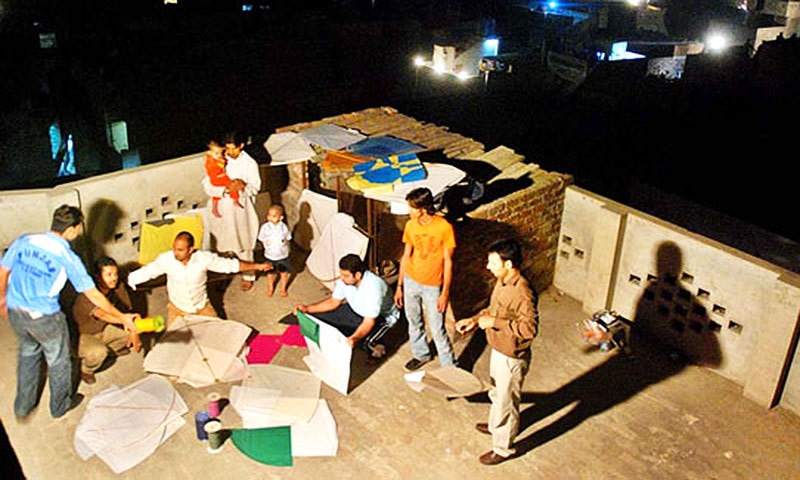
The celebrations, that would begin a night before, usually included kite flying under the flood lights on the roof, bonfires, loud music accompanied by occasional bhangras subject to the results of warring kites entangled in the night sky above and the wonderful smell of BBQ.
 |
The following day would be even more festive and bursting with colour, with everyone consciously donning the colour yellow — the ultimate symbol of spring.
The all inclusive Basant was a fête for all, the preparations matching the Eid frenzy.
Women and young girls would wear traditional dresses, preferably the colour yellow and adorn themselves with flowers and bangles, that too yellow.
Men would reserve some amount of their earning to purchase for themselves or sponsor their young ones buying strings and a variety of kites.
Aspiring kite fliers would keenly embark upon their journey of learning with little feats like offering kanni (holding the kite for the flier so he/she could easily air). That would then qualify the young participants to hold a pina, the round ball of string and eventually lead to flying a kite and participating in the ultimate battle, the paicha.
Each paicha would result in one winning team, registered by their claptrap and complemented with dhol, baja and hooting.
Also read: Getting to grips with celebrating Basant
Boys on the street would run to and fro, snatching their share of happiness by looting disentangled kites sometimes flying them, at others selling them dearly.
In short, Basant offered tremendous delight that only a few self-righteous aunties could resist.
Although the day’s festivities would come to an end as dusk neared, its message would linger on for much longer. Basant taught one resilience and the art of losing and winning.
 |
Recalling the day’s adventures, young and old, men and women would sit together and animatedly converse about the day’s events.
Above all, Basant restored one’s belief in merit. Paicha after all was an art in which only the more skillful would emerge victorious.
Sadly, the glories of Basant have died down since the past few years.
Also read: Ban the ban on Basant
Ostentatious display of weapons, aerial firing and the use of the lethal string that has resulted in avoidable fatal accidents, on one hand, depicted moral sleaze and on the other corrupted the spirit of the carnival. Add to this the sadistic radical attempts to uproot ‘pagan’ cultural ties and imminent terror threats.
Whatever the reason has been, our beautiful spring sky has been denied its colours.
Restoring Basant celebrations with proper state sponsorship under a watchful eye will benefit manifold. It will disseminate our soft image and project Pakistan as a celebrating nation. It will provide the much needed platform for our already entertainment/recreational starved society. And promote temporary employment in a receding economy.
As of earlier, the Lahori Basant remained a great tourist attraction. Resuming it also promises tourism that has been ever-decreasing in Pakistan.
Above all, Basant, as a cultural identity, must be owned as an attempt at the de-radicalisation of our society.