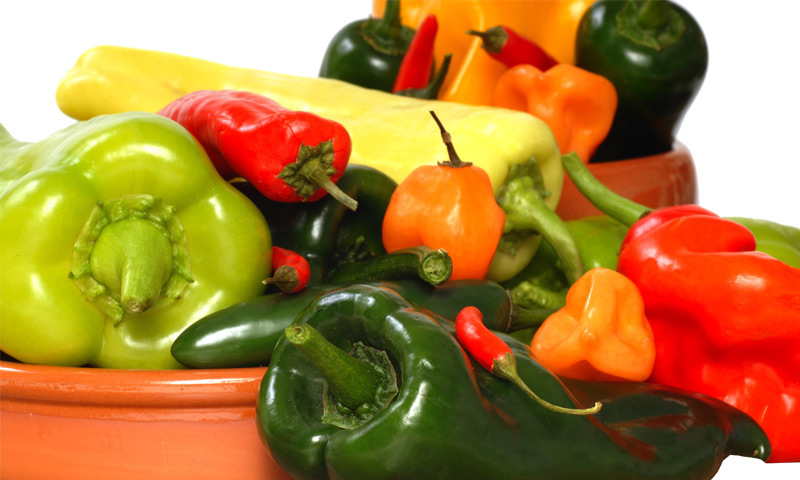


The Naga Viper, Carolina Reaper and Trinidad Moruga Scorpion are neither poisonous creatures nor are they professional wrestlers; They are chilli peppers known for their heat and flavour.
People who love hot and spicy food can’t get enough heat so they order extra hot portions, pour hot sauce, dribble chilli oil, sprinkle chilli flakes or chopped jalapenos on their food or dunk and dip in fiery relishes and sauces till they can literally scream in joy (or pain). All the while, those with tamer palates look on in a mixture of envy and horror. But only if those who prefer the bland to the blitz knew just how rich in antioxidants chilli peppers are, they would too start peppering their daily diet. Studies suggest that eating chillies is not just about heat, it is healthy too!
Chilli peppers can protect the body against free radical damage, giving you natural resistance to cancer and also slowing down the ageing process. Fresh chilli peppers, red and green, are a rich source of vitamin-C, which is a potent water-soluble antioxidant. You might have also noticed that having chillies helps open up your blocked nostrils. The vitamin C in green chillies strengthens your natural immunity to diseases and is required for the collagen synthesis inside the human body. Collagen is one of the main structural proteins required for maintaining the integrity of blood vessels, skin, organs and bones.
Regular consumption of foods rich in vitamin C helps protect from scurvy, develop resistance against infectious agents (boosts immunity), and remove harmful, pro-inflammatory free radicals from the body. They are also high in other antioxidants such as vitamin-A, and flavonoids like ß-carotene, alpha carotene, lutein, zea-xanthin, and cryptoxanthin. These antioxidant substances in capsicum help protect the body from injurious effects of free radicals generated during stress and diseases conditions.
If variety is the spice of life, remember also that spices can in fact prolong and improve your life
Being rich in Vitamin E, which is essential for producing certain natural skin oils, spicy food can actually give you good skin. All the good things that you get from the chillies come at the cost of no calories. Chillies have zero calories and hence you can have them even when you are trying to lose weight.
Chillies are specially recommended for men because scientific research suggests that eating green chillies can keep prostate problems at bay. Diabetics can benefit from green chillies as these can balance the blood sugar levels. Green chillies have plenty of dietary fibres so eating chillies actually help you digest your food faster.
Chillies release endorphins into the brain that helps to keep your mood upbeat. So if you feel happy after a platter of spicy fajitas, it is not just a coincidence.
Green chillies have been linked with a lowered risk of having lung cancer. So if you are smoking up your lungs every day, try to include chillies in your diet. Green chillies have anti-bacterial properties which help keep infections at bay, especially skin infections.
Green chillies are a natural source of iron so women who have a tendency to be low on iron should enjoy spicy food.
Chillies contain a good amount of minerals like potassium, manganese, iron, and magnesium. Potassium is an important component of cell and body fluids that helps in controlling heart rate and blood pressure. Manganese is used by the body as a co-factor for the antioxidant enzyme, superoxide dismutase.
Chillies are also high in the B-complex group of vitamins such as niacin, pyridoxine (vitamin B-6), riboflavin and thiamin (vitamin B-1). These vitamins are essential in the sense that human body requires them from external sources to replenish.
Look for raw, fresh chillies featuring brilliant colour (green, yellow, orange, red depending on the variety), with a healthy stalk, and a wholesome and compact appearance. Avoid those with spots or those spoiled tips inflicted by moulds. At home, chillies should be stored in the refrigerator inside a plastic bag where they will stay fresh for about a week.
Published in Dawn, Sunday Magazine, January 4th, 2015