0
0
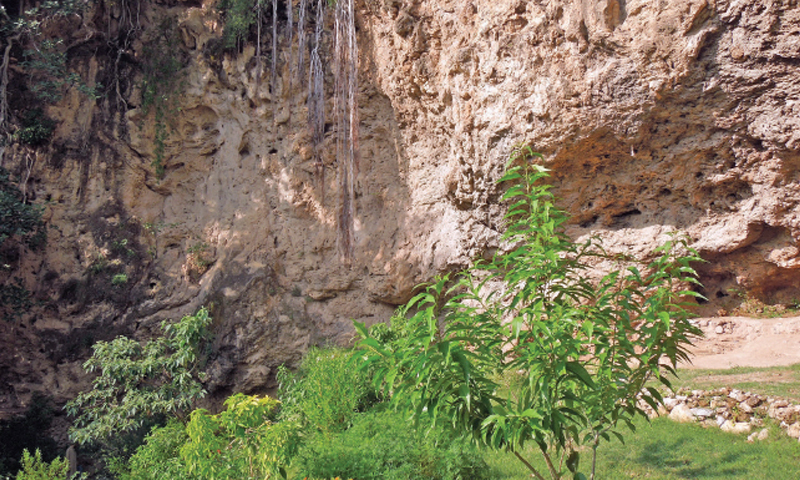

The caves of Shah Allah Ditta are one of the most important heritage sites in the region. Located in the lap of Margalla Hills in Sector D- 13, its environment and serenity is an attraction for visitors. Besides the centuries old Banyan trees, there is a fresh water spring that flows near the caves.
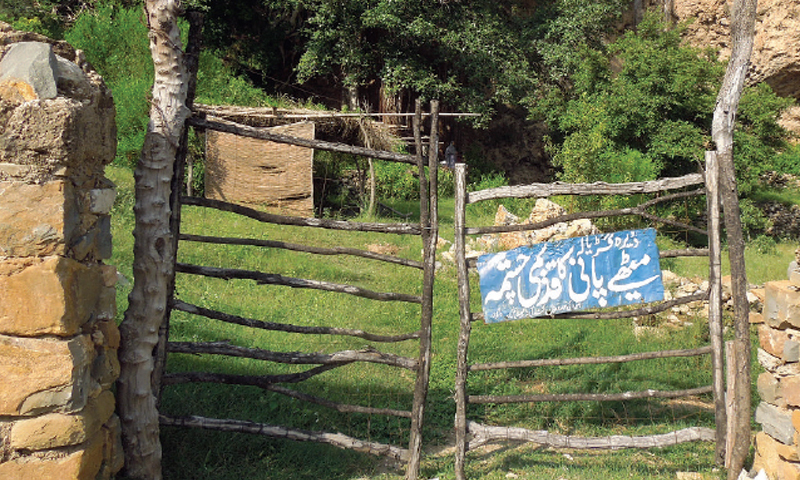 |
| A signboard outside the boundary wall of the caves says ‘Ancient sweet water spring’. A spring flows from the caves which then turns into a stream. |
These 2,500 years old caves, which once served as a meditation site for the Buddhists, are now losing their charm, thanks to neglect by the authorities concerned.
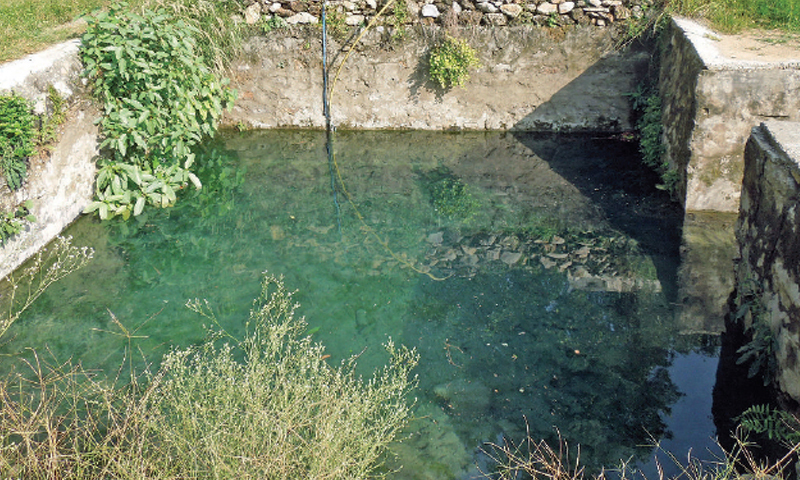 |
| A pond which stores the spring water. Despite the negligence, water in the pond is crystal clear. |
Uncontrolled commercial activity is destroying much of the ancient remains. It is believed that Shah Allah Ditta village is named after a saint who lived there during the Mughal period. This is why the area near the caves is also known as ‘Sadhu ka Bagh’ or Saint’s Garden. “These caves date back to ancient times and are considered a part of Gandhara civilisation” said Nadeem Omar Tarar, anthropologist and Director, National College of Arts Rawalpindi campus.
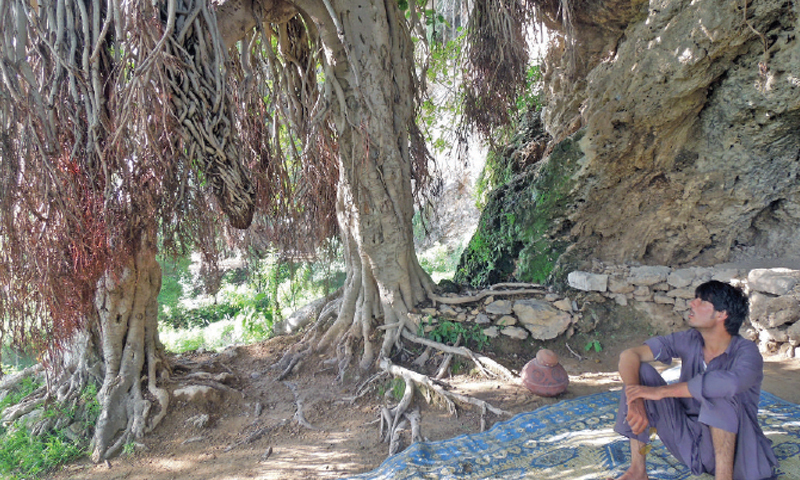 |
| There are several centuries-old Banyan trees. |
“This part of Margalla Hills is very important as their width is minimal at this point. In the medieval period, people followed a path in the area that passed through the Margalla Hills up to Taxila. In ancient maps the location of these caves is clearly marked,” he added. “These caves and the area around them were used as a resting place by the travellers,” Tarar said.
 |
| One of the ancient caves of Shah Allah Ditta village. This cave has been turned into a sitting place for the visitors. |
Muhammad Ismail Abbasi, a café owner near the caves, claims that this place was allotted to his family after partition. “Our family had been living in the area for more than 200 years, and after partition we have been looking after this place,” said Abbasi. “It is said that this place was home to a Muslim saint, Shah Allah Ditta, that’s all I know about it,” he added.
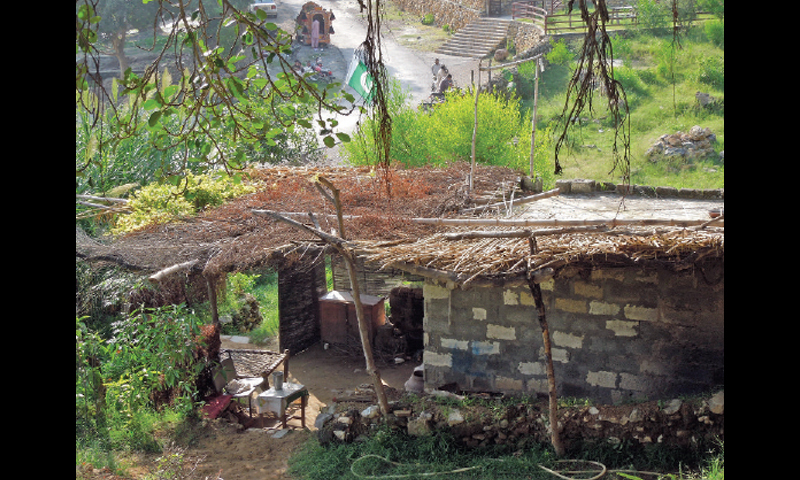 |
| A view of a café near the caves. |
“There was an old garden in front of the caves which is no more; it has already become a victim to development work being carried out in the area,” he said. Shafiq Khan, a resident of Islamabad who was visiting the caves with his family, said: “This place can be turned into a tourist attraction in Islamabad, as it is just a few miles away from the city.”
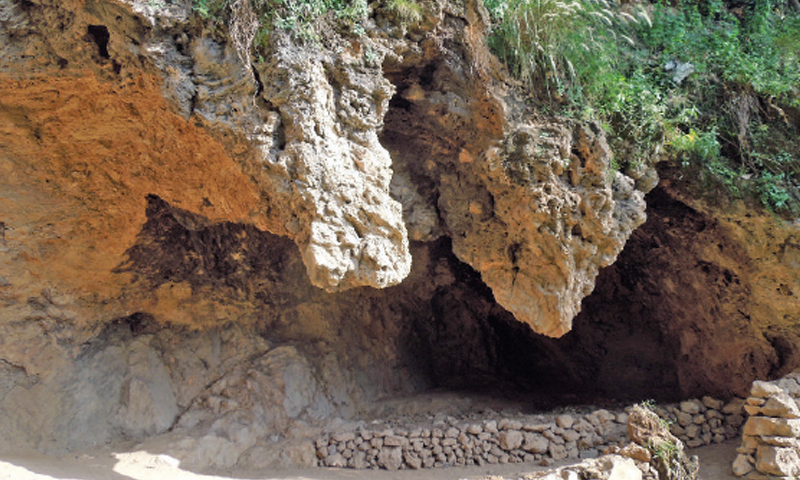 |
| Another view of the ancient caves at Shah Allah Ditta village. |
“If the government pays attention to it, people would frequently visit it to enjoy the area’s rich natural beauty,” he said. Some locals, while expressing concern over the neglect of the caves, said the government should preserve the natural habitat and historical site.
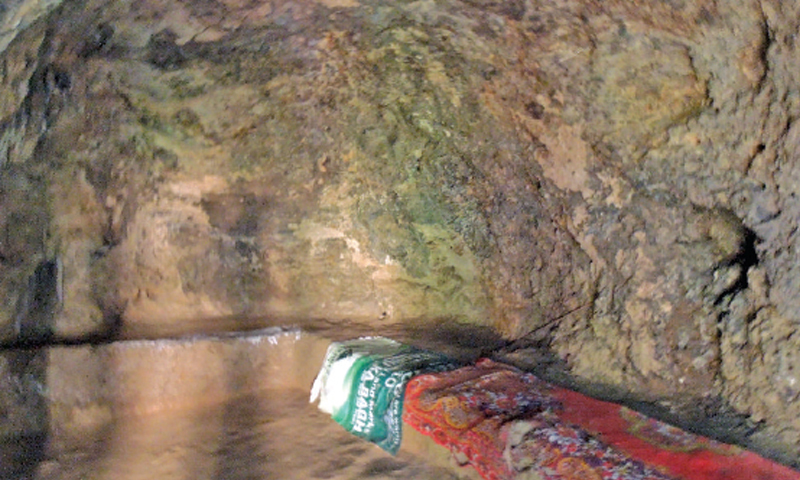 |
| The interior of the largest cave at Shah Allah Ditta village. — Photos by the writer |
They said the authorities should strike a balance between preserving historical sites like these caves and carrying out development at the footsteps of the Margallas.
Published in Dawn, October 5th , 2014