24
24


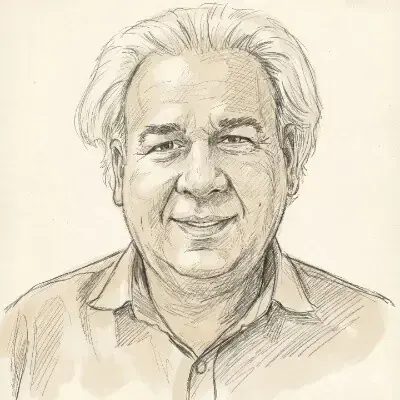
KARACHI: Ismailis were the first Muslims, and the best missionaries, to arrive in the subcontinent, said eminent historian Dr Mubarak Ali while speaking on ‘Impact of history writing in India and Pakistan’ at the Sindh Institute of Urology and Transplantation on Saturday evening.
Shedding light on facets of history writing, Dr Ali said there were three aspects of history that every historiographer kept in mind: events, evidence and interpretation. Events were to do with what happened in the past. Sometimes events were concocted which was why it’s the historian’s responsibility to present them with evidence.
Interpretation was equally important because there were different groups of historians — Marxist, feminist, positivist, etc — analysing things in their distinct ways. In that context the example of Mehmood of Ghazna could be taken who for one group of historians was a holy warrior and for others a looter and plunderer. While the events were the same, it’s their interpretation that varied.
Dr Ali said interpreting history changed drastically after World War I as now there were several ways of looking at it — history of emotions, history of sensibilities, cultural history. “Nothing is beyond history,” he remarked. In 1980, historian E. P. Thompson wrote an article, ‘History from below’, in which he included the role of the common people, the marginalised ones, in history and not of the rulers because by being part of history the common folk would be respected.
He argued that in the subcontinent history became politicised in the colonial period. The East India Company was fascinated by Indian culture. By that time Europe had become well versed in the art of editing and knowledge of philology. So the company formed the Asiatic Society of Bengal. Its founder, William Jones, tried to establish a relationship between Sanskrit and European languages suggesting it was the ‘meeting of cousins’ taking place in India. They published histories based on religion (history of Hindus, Muslims) whereas for themselves they would use the phrase ‘rule of British India’.
After the 1857 war of independence Indian writers were not allowed to write anything. It was imperialism and colonialism that created nationalism in India. In 1920, after the collapse of the Khilafat and noncooperation movements, Muslim nationalists created their own heroes suggesting things such as the Mughal period was part of our history but the Mughals were not our heroes. Hindu historians also came up with their own heroes — Rana Pratab, Guru Gobind Singh, etc.
Dr Ali said in Pakistan, after 1947, history was written in different stages. First rulers started to devise ways how to identify Pakistan as different from India. Instead of looking for its roots in the Indus Valley Civilisation, they tried to identify Pakistan with Mesopotamia. Even Prof Ahmed Ali wrote a piece saying Mesopatamian culture was deep-rooted in us.
In the second stage a lot of other distortions were made. Dr Ishtiaq Hussein Qureshi wrote that Akbar was responsible for the fall of the Mughal Empire. And that the Muslims who arrived in India did not have their ethnic identities. After the fall of Dhaka, Z. A. Bhutto formed a cultural department which tried to prove that Bengal had nothing to do with the Indian subcontinent. Then Dr Dani came up with the idea that we had our links with Central Asia and not with India.
With regard to textbooks, Dr Ali said in India historians such as Romila Thapar wrote good textbooks, but when the BJP came to power it tried to change them. It wanted to prove that Aryans were Indians who migrated to other parts of the world, but education ministers of many states refused to comply with that.
In Pakistan, history was not considered an important subject; therefore, in the 1960s it was replaced with the discipline of Social Studies, which began history with Moenjodaro, then jumped to Sir Syed Ahmed Khan and then to the two-nation theory — it was discontinued, interrupted history. Such an attitude would lead us to have no historical consciousness.
In response to a question put to him by Syed Hasan Khan, Dr Ali said that to have a counter narrative he took out a quarterly magazine, Tareekh, which owing to lack of funds and original writings he might have to stop publishing.
In reply to another question, he said the first Muslims that arrived in India were Ismailis; they were the best missionaries. Mehmood Ghaznavi destroyed the Ismaili kingdom. As for Mohmmad bin Qasim, as G. M. Syed had written about him, he did not capture Sindh to serve Islam but was an imperialist representing the Ummayad dynasty.
Earlier, SIUT director Dr Adib Rizvi said history was equally important for doctors because if they didn’t know about the history of their patients, they wouldn’t be able to have the right diagnosis.
Rana Muzzaffar conducted the programme.
Published in Dawn, October 5th, 2014