0
0
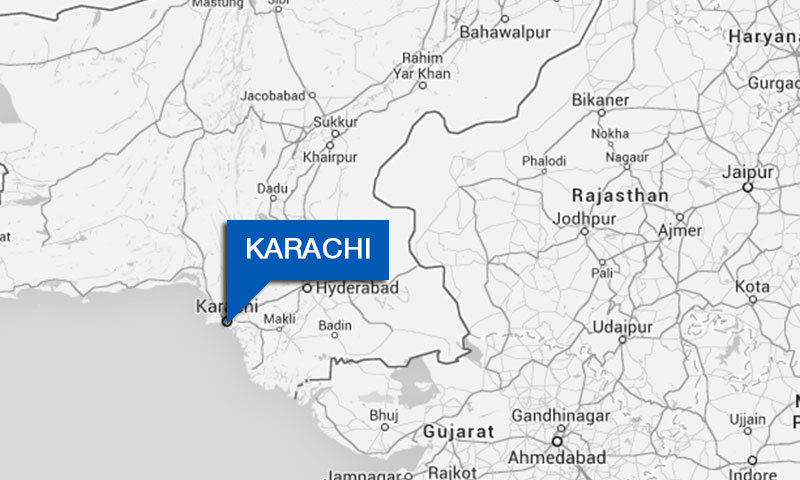

KARACHI: Pakistan must ratify the Ballast Water Convention without further delay and put in place a national mechanism to comply with the international agreement in order to tackle the threat posed by invasive species, said experts at the Saarc workshop on Tuesday.
The convention’s ratification, according to the experts, was necessary to protect Pakistan’s seas and ports that had been declared very vulnerable to bio-invasion.
The three-day event titled ‘Bio-invasion and Ballast Water Management’ was organised by Saarc Coastal Zone Management Centre in collaboration with climate change division.
Director of the National Centre for Maritime Policy Research, Bahria University, retired captain Tariq Masood, spoke on national legislation for ballast water management. The ballast water, he explained, was required to maintain ship’s balance in the sea but it also served host to a number of invasive species which could seriously affect the environment. “Invasive species know no boundaries. If an alien species establishes itself in a new location, it can disturb the ecosystem by either eating away native species or by competing with them for habitat or food, or both,” he said.
The biggest issue associated with marine bio-invasions, he said, was that the damage was usually invisible and that the adverse changes in the habitat were irreversible. “Today, the world’s oceans are under attack and armies of seaborne invaders are threatening life in shallow seas, coastlines and rivers.
“The risk of marine bio-invasion increases with the vessel’s size as more invasive species will be attached to its structure when it will move from one place to another. Besides, a large ship will also carry huge quantities of ballast water that transports sea life that might endanger another ecosystem once the ballast tanks are emptied there,” he said, referring to cases where invasive species not only greatly harmed biodiversity but also impacted economies and human health in different parts of the world.
According to Mr Masood, there had been global increases in “red tides” (toxic dinoflagellates or harmful algal blooms) over the past 20 years. Researches, he said, had shown that many of these species had been introduced by ballast water exchange.
The toxic algal blooms, he said, could produce toxins that could cause paralysis and sometimes death in humans who ate infected shellfish. This had led to closure of shellfish harvesting in many areas worldwide.
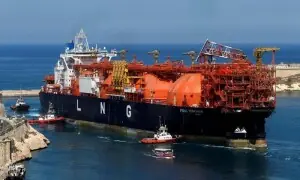
According to Mr Masood, Karachi was very vulnerable to the threat of invasive species since 70 to 85pc of the total world oil exports were carried from the Persian Gulf and unloaded at Asian ports. Commercial ships, he said, was responsible for up to 80pc introduction of invasive species in coastal habitats.
Regarding international regulations on ballast water, he said that the International Convention for the Control and Management of Ships’ Ballast Water and Sediments was adopted by the International Maritime Organisation (IMO)in 2004.
“So far, only 40 countries that represented 32.25pc of the total world shipping cargo tonnage have ratified the convention. The convention that provides detailed guidelines on the management of ballast water will become effective one year when more countries will ratify it and the target of 35pc of world shipping cargo tonnage is achieved,” he said.
According to the speakers, it is unfortunate that Pakistan hasn’t ratified the convention though it shows complete compliance to some important provisions of the convention as an export requirement. It was also highlighted that provincial laws didn’t cover the issues related to marine flora and fauna and there was no awareness at any level regarding the risks posed by marine bio-invasion.
“All member states of the International Maritime Organisation including Pakistan must ratify the convention. There is also a need to bring national legislation on ballast water so that the international treaty is implemented in letter and spirit,” said Mohammad Moazzam Khan of the World Wide Fund for Nature-Pakistan.
What was restraining countries to ratify the convention, according to the experts, was the fact that it would require a lot of money to minimize the risks posed by invasive species by modernising vessels and finding environment-friendly solutions to address issues of ballast water and fouling.
Dr Nuzhzat Khan and Dr Shahid Amjad from the National Institute of Oceanography and experts from Sri Lanka, the Maldives, Bangladesh and Afghanistan also spoke.
Published in Dawn, August 27th, 2014