0
0


The outside of many boundary walls is nothing more than a totally neglected, dusty area in which rubbish collects and little, if anything, grows. Sadly, this is often the case even when there is a gorgeous garden hidden behind the very same walls.
Some people lay the blame for this unsightliness on a shortage of water, others claim that passers-by will uproot or otherwise damage anything planted outside their boundary wall. Whilst there may be a small degree of theft/damage, beautifying urban surroundings should be given the time and respect it deserves as, to be frank, few people see ‘inside’ gardens and never have a hope of creating a garden of their own. Walking down streets lined with greenery and flowers provide so much pleasure that the visual, sometimes also aromatic, treat brightens up their lives considerably.
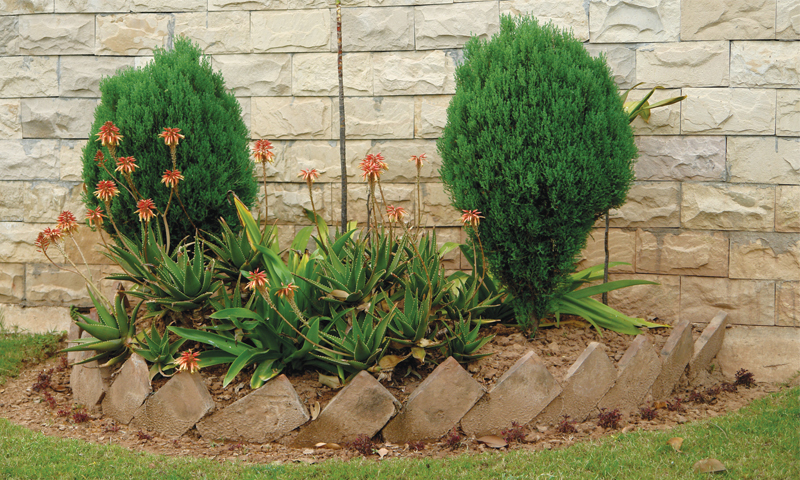 |
| Drought tolerant aloes and Juniper |
Creating gardens outside boundary walls is ‘social work’ in action, as cheering up, even briefly, the lives of others as they go about their own personal daily grind, is a wonderful contribution to society and to the environment as a whole. Making such a garden need not be an expensive affair, especially if you are either living on a limited budget, as so many are these days, or if you fear that anything you plant outside your boundary walls may simply disappear. You can probably create quite a ‘show’ by using self-seeded plants from inside your garden proper, by root division of existing perennials or by propagating cuttings until they are of a size to survive any transplantation shock and, depending on the species of course, are able to survive with the minimum of fuss and on very little, if any, precious water.
Using indigenous species — these are naturally adapted to soil and localised climatic conditions — is a far better bet than planting imported ‘exotics’ which may, or may not, survive what can be harsh growing conditions, especially if planted adjacent to a busy road where traffic pollution adds to other possible menaces.
Some ‘inside’ plants, creepers and climbers such as the ever popular Bougainvillea for example, often make a break for freedom and clamber over walls in search of the ‘great outdoors’ only to be ruthlessly pruned back and restrained. If left to their own devices, they erupt into an absolute riot of colour, thus brightening up even the bleakest of streets and, thorny customers that they are, no one is going to bother them other than the occasional, wind-blown, plastic bag which, along with other garbage, should be cleaned up and sensibly disposed of.
Other plants that are suitable for over the wall planting include those tough Canna lilies which are tremendously drought tolerant, multiply rapidly and put on a colourful show during the hottest months of the year; cacti are another idea and — the larger the prickles the less likely that anyone is going to interfere with them. Bamboo can be used to good effect as can all kinds of aloes, ‘lantana’ and a wide assortment of hardy shrubs and local trees such as Kuchnar, Bottle Brush, Flame of the Forest, Rain trees with their wonderful, powder-puff, pink flowers and Persian lilacs. If planting trees remember to plant them at least six feet away from the base of the boundary wall so that their roots will not — at least not for many years — adversely affect the walls foundations. Also, please select species suitable for your localised growing conditions.
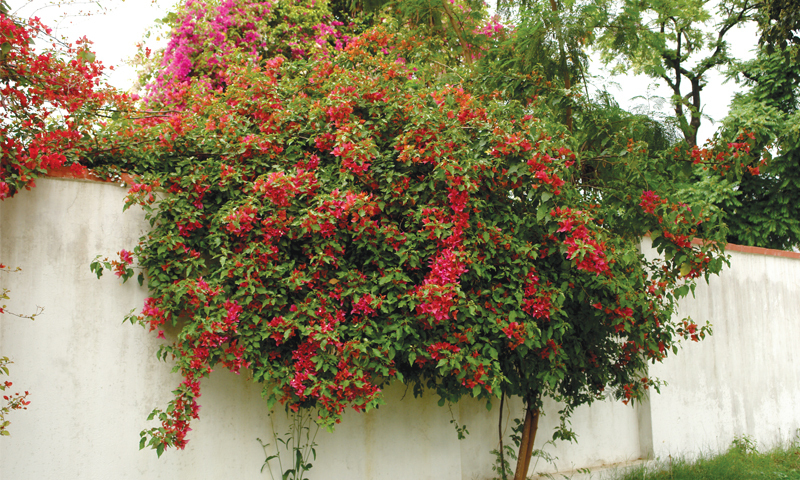 |
| Bougainvillea — making a break for freedom |
Perennial plants which, depending on the suitability of your location, thrive outside boundary walls are, really, anything you might like to cultivate inside your garden too. Roses, geraniums, gaillardia, spider lilies, amaryllis, day lilies are all a visual delight and quite simple to care for.
 |
On the seasonal flower front: A huge spread of sunflowers is a cheap and cheerful way to go and their smiling faces will give much delight to all who see them. Home harvested seeds of cornflowers, phlox, cosmos, ageratum, zinnias, dahlias, pansies and petunias (non-hybrid) are also a useful idea, although some of you may prefer to splash out on nursery grown seedlings to put on an impressive display.
Last, but by no means the least, you may even like to try your hand at cultivating some vegetables ‘out there’ and, if someone helps themselves, at least you can be satisfied with the knowledge that someone, probably a poor person, enjoyed a decent meal for a change!
Please continue sending your gardening queries to zahrahnasir@hotmail.com. Remember to include your location. The writer will not respond directly by e-mail. E-mails with attachments will not be opened.
Published in Dawn, Sunday Magazine, May 18th, 2014