0
0
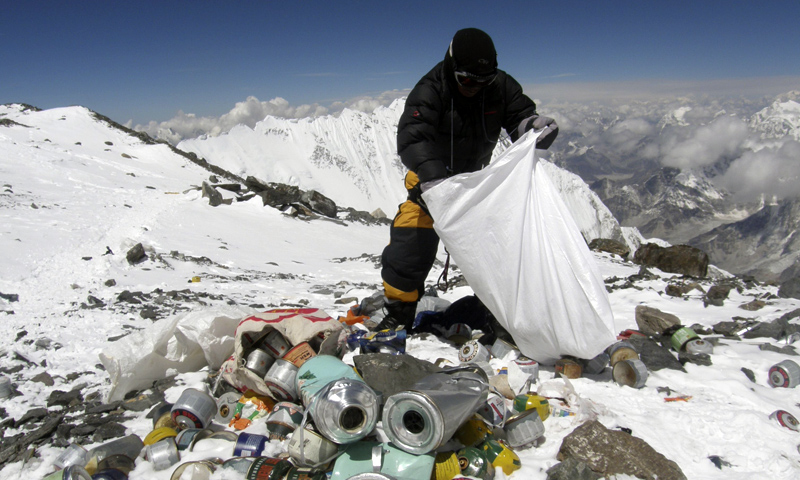

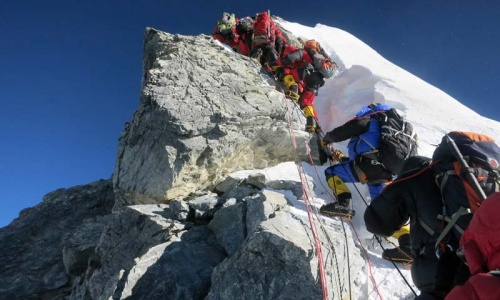
KATHMANDU: Climbers scaling Mount Everest will have to bring back eight kilograms of garbage under new rules designed to clean up the world's highest peak, a Nepalese official said Monday.
The rule, one of several new measures for mountaineering in the Himalayan nation, will apply to climbers ascending beyond Everest's base camp from April onwards, said tourism ministry official Madhusudan Burlakoti.
“The government has decided in order to clean up Mount Everest, each member of an expedition must bring back at least eight kilos of garbage, apart from their own trash,” he said.
Burlakoti said authorities would take legal action against climbers who failed to comply with the new rule, although it was unclear whether this would involve a fine or other penalty.
Decades of mountaineering have taken a toll on the peak, which is strewn with rubbish from past expeditions, including oxygen cylinders, human waste and even climbers' bodies, which do not decompose in the extreme cold.
Expeditions will have to submit their trash to an office to be set up next month at base camp.
It will also offer medical aid and resolve conflicts, after a brawl between European climbers and local guides last year.
Although expeditions currently have to fork out a $4,000 deposit, refunded once they show they have brought back everything they took to the mountain, enforcement has been a problem.
“Our earlier efforts have not been very effective. This time, if climbers don't bring back garbage, we will take legal action and penalise them,” Burlakoti said.
Last month Nepal slashed fees for individual climbers to Everest and other Himalayan peaks to attract more mountaineers, sparking concerns of increased traffic and more trash on the mountains.
In an overhaul of security on the mountain, the new office at base camp will station soldiers and police so climbers can approach officers with any problems, officials said last month.
Environmental and climbing groups have long sought to focus attention on the waste problem while clean-up projects have also been organised.
Discarded oxygen and cooking gas cylinders, ropes, tents, glasses, beer cans, plastic and even the remains of a helicopter made up 75 artworks commissioned for a Kathmandu exhibition in 2012, highlighting the environmental impact of alpine tourism.
Everest is a key revenue-earner for the impoverished country, with hundreds scaling the mountain every year during the peak climbing season in April and May.