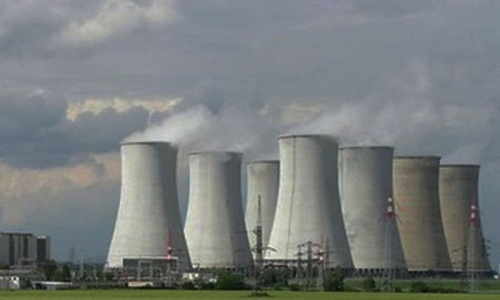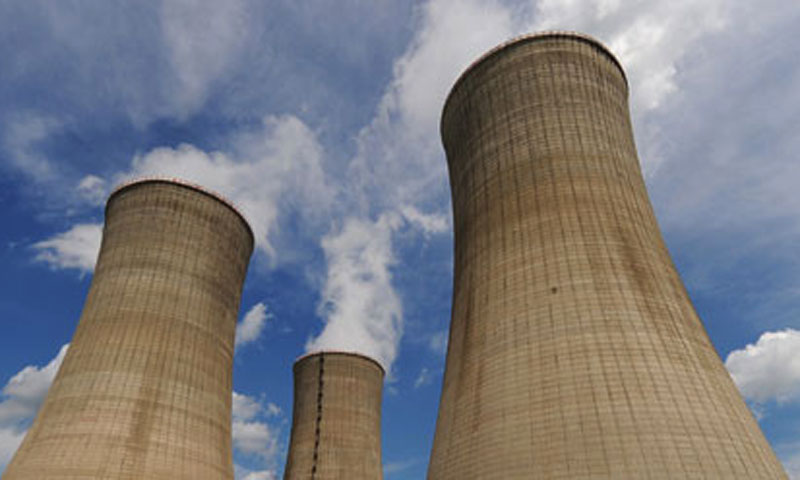


ISLAMABAD: The Pakistan People’s Party (PPP) wants the government to take parliament and the nation into confidence on the issue of building of two nuclear reactors in Karachi reportedly with untested designs that can cause a fatal mishap.
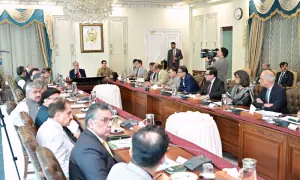
The government is expected to come out with a policy statement on Thursday when the Senate will take up a “Call Attention Notice” moved by PPP’s Saeed Ghani on the subject, Dawn has learnt.
Through the notice, Senator Ghani has drawn attention of the government “to a matter of sufficient public importance regarding building of two new nuclear reactors in Karachi with a new and untested design, which can prove a safety threat” to millions of people living in the city.
Nuclear, environment and health experts have been voicing serious concerns in public over the government’s decision to invite Chinese firms to build two nuclear plants of untested design near Karachi.
The plants are projected to generate 1,200MW of electricity after completion.
Talking to Dawn, Mr Ghani said that people of Karachi were perturbed after watching debates on TV shows and different seminars and conferences about a possible threat to the city because of the proposed setting up of two nuclear plants with the help of China.
He said that though the officials of the Pakistan Atomic Energy Commission (PAEC) had declared these projects safe, nuclear experts had reportedly pointed out some serious flaws even in reports of the Pakistan Nuclear Regulatory Authority that included the site evaluation report, reactor safety report and the environmental impact assessment.
Mr Ghani said that there were serious concerns among the public over such reports due to the fact that Pakistan did not have the capacity and plan for mass evacuation in case of an accident.
The experts, including Dr Pervez Hoodbhoy and Dr A.H. Nayyar, in a recent seminar held in Islamabad said that the (model ACP-1000) plants were even not operational in China.
They warned that since fuel in the reactors would be in tons compared to only a few kilograms in a bomb, any accident could spread radiation on a disastrous scale.
According to them, any terrorist attack, equipment failure, earthquake or a tsunami could lead to a large-scale radioactive release.
They said that due to international sanctions on Pakistan, components needed from France and Germany could not be sold to Islamabad directly. So China will first have to replicate these and then test them in reactors in Pakistan.
The experts say that most reactors need to be run for a considerable period of time before being used for power generation and the proposed ACP-1000 model is yet to be built and tested.