0
0

My good old friend, General Attiqur Rahman, officer and gentleman, would often caution his friends not to stand stock still on the parameters of a military field as there was a good chance that an army man prowling around may mistake him for a tree and have him whitewashed from the waist downwards.
A profoundly educated man, with whom it used to be such a pleasure to talk each Sunday, when discussing the written word he would tell me that each word was like a drop of water dripping on to an extremely hard stone but that nevertheless every drop helped.
When that great statesman, Winston Spencer Churchill, finally assumed the office of prime minister of Great Britain it was at a time when his country was literally burning, the Battle of Britain was being fought and the Germans were bombing the cities day and night.
Having taken stock of the situation and found that all was chaos, his first question to his ministers and staff was : "Are the courts working?" When he was assured they were, he nodded and growled through his brandy drenched Havana, "Then all is well."
Three days prior to the birth of the nation named Pakistan, its founder and maker told his constituent assembly members : "The first observation that I would like to make is this : you will no doubt agree with me that the first duty of a government is to maintain law and order, so that the life, property and religious beliefs of its subjects are fully protected by the state." Do we have another 55 years?
This maritime country, with its 1,000 kilometer coastline and many more thousands of seafarers, in the days before Zulfikar Ali Bhutto came to power, could boast of a host of private shipowners and a national fleet of close to a hundred ships. Today, this figure stands at zero. Prior to 1974, when Bhutto nationalized shipping, shipowners would often charter ships from shipping companies all over the world, ships registered in the oddest of countries - Panama, Liberia, Guatemala, Christmas Islands.
One standard clause for the settlement of any dispute would stipulate that all disputes between the owners and charterers would be resolved by arbitration in London according to the laws prevailing in England. A Greek shipowner residing in London or basking in the Monacan sun, naturally had no faith in the courts of Pakistan, and the Pakistani charterers equally naturally had no faith in the courts of Liberia or Panama.
Now to the serious business at hand of enlightening the learned government of Pakistan, the cabinet ministers of which are constantly asking each other why no foreigners are flooding into the country to invest.
The reasons are many, and one reason is the question of the manner of resolving disputes or disagreements with their Pakistani partner, be it a corrupt democratic government or any other.
When two businessmen enter into a contract, each wishes to have the laws of his own country apply. The most common compromise solution between two opposing viewpoints is for the law of the contract to be the law of the land, in our case Pakistan, and for any disputes to be settled by arbitration in a neutral country according to the rules of a renowned international organization, the most prominent of which is the International Chamber of Commerce and its International Court of Arbitration which has established its integrity and credibility internationally for over seventy-five years.
This is where the Convention on the Recognition and Enforcement of Foreign Arbitral Awards, commonly known as the New York Convention 1958, comes into play. Pakistan was quick off the mark and signed the Convention on December 30, 1958, before the year's end, but it has yet to ratify and implement it.
Today, 44 years later, 130 countries have signed and ratified and implemented this Convention, including countries born during this period - amongst others, Bangladesh, Burkina Faso, Bosnia-Herzegovina, Kazakhstan, Ukraine. Recently UAE signed and ratified the award and has now decided to set up a Centre for International Arbitration for which purpose one entire floor of their Business Chamber building has been dedicated. In future all regional arbitral work will flow into Dubai. We lost out on this one too.
Businessmen need a legal and regulatory framework conducive to business interests. They need a dispute resolution mechanism that is inexpensive, speedy, and accessible. They need transparency.
The ICC mechanism provides all this. Arbitrators are chosen from an international panel of eminent jurists and lawyers from all over the world. Pakistan's representative on the panel of the ICC International Court of Arbitration is none other than the Jadoogar of Jeddah, our one and only Syed Sharifuddin Pirzada.
The New York Convention gives reciprocal rights in other countries. Once Pakistan ratifies and implements the Convention, Pakistani businesses will be sure their arbitration awards will be implemented without delay and without allowing them to be challenged in various courts. Foreign investors and traders will draw similar confidence and comfort in doing business with Pakistan.
By not implementing the New York Convention 1958 Pakistan continues not to support its exporters and, at the same time, sends the wrong signals to the international business community and investors, including overseas Pakistanis. The Convention is critical if we are to improve the climate for both trade and foreign direct investment. It is an essential building block for foreign direct investment to flow in.
At the recent ICC Regional Conference on the Crossroads for Trade and Investment held in Karachi in February 2002, the consensus at the session on arbitration was that Pakistan should move expeditiously to ratify and implement the 1958 Convention. This was summed up in the Karachi Business Declaration issued by ICC Pakistan at the end of the conference.
Why is the Convention not being implemented? There is no problem: we can ensure it will not have any retrospective implications. Pakistan can have its safeguards.
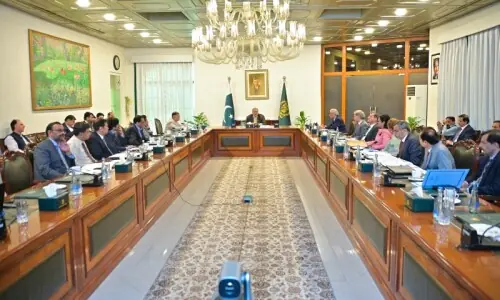
However, there is some good news. The government of Pakistan has begun to move. The first meeting of the working group for coordination of arbitration reforms was held this August 10 under the chairmanship of Dr. Tariq Hassan, Adviser to the finance minister.
We must hope that the committee will reach a consensus decision and move forward. The committee's members are drawn from the National Tariff Commission, ministries of finance and law, the Board of Investment, the Export Promotion Bureau, Federation of Pakistan Chambers of Commerce and Industry, International Chamber of Commerce, and our legal community.
The bad news is that four subcommittees have already been formed by the working group to : review the 1940 Arbitration Laws; recognize and enforce international arbitration awards; form a council for arbitration; to make a comparative analysis of institutional arbitration rules. Where will these subcommittees take us and when?
Our president-general is ruling by ordinances. Why can't Musharraf do good by the country, now, and promulgate an ordinance implementing and ratifying the 1958 New York Convention, also promulgating the enabling rules, the draft of which is ready? Neither the Jihadis nor our corrupt and noisy politicians will be affected or offended - their bounty will continue to grow unimpeded.