0
0

Air travellers’ plight
A woman, Sadia Syed, flying by a PIA flight (PK-722) form New York to Karachi on December 7, lost 80 tolas of gold. She was on her way to Hyderabad to visit her family.
While lodging an FIR at the airport police station, she told the police that during the flight she had been accompanying her children to the washroom and back and could not say who the culprit could be.
A few years back, noted TV artiste Bushra Ansari lost her cash -- Rs400,000 or thereabouts -- while flying from Lahore to Karachi. Whereas the lady coming from the United States might not have suspected that such things could happen during travel in a world-class airline’s plane, Bushra should have been aware of what people here are capable of doing. And yet she was outwitted. But the TV artiste was smart enough to raise a storm of sorts in the media, drawing the attention of the president to the matter. She reportedly got back her lost money, or at least a part of it.
Although the two women were robbed of their gold and cash midair, much more is happening on the ground to air travellers.
When a passenger arrives from abroad, all sorts of shady characters pounce upon him. They know how to handle different categories of passengers. Similarly, people going abroad face the same kind of swindlers.
Zulfiqar Hussain, a crane operator in Malaysia, told me that he and many others, apparently uneducated workers, were driven into a room. After being questioned and harassed, they were told to pay a certain amount of money. Those who offered the Pakistani currency were ridiculed and ordered to part with their dollars. The victims finally agreed to pay 100 dollars apiece.
Those leaving for abroad may have a totally unexpected trouble waiting for them at the other end. When a Pakistan journalist landed at Narita airport in Tokyo some years ago, he found that his suitcase had been forced open and his money taken out from it. He was obviously shocked. It did not take him long to guess who could have done it.
“When I entered the airport and had my baggage scanned, the staff insisted that I could not take the suitcase along and would have to let it go through the luggage section. I had a sneaking suspicion that they were up to something, but they quickly dismissed my protests,” the journalist recalls.
The victim made a brief but noisy protest and a Japanese stewardess, an employee of the PIA, ensured him that she would take up the matter with her bosses in Karachi.
Foreign tourists and businessmen are not spared by people on duty at the airport. When a South Korean businessman, returning to Seoul during one of his frequent trips, was discovered carrying replicas of Buddha’s statues, he was told that he could not take them along. These statues are produced in Pakistan officially and sold at nominal prices. Thanks to the latest technology, they can be replicated in minutes. The airport people know this very well. But they told the businessman that he could not take the statues with him.
The Korean businessman returned to his Pakistani employee standing outside the airport terminal and told him about the matter. Following the Korean gentleman was a plainclothes policeman who demanded money in return for permission to take the artificial statues. The episode shows that if a person is ready to pay for it, he can smuggle anything out of the country.
Sport-loving Lyari
Lyari has the distinction of producing world-class footballers and boxers. And locals say that most sportsmen who made it to the top found early training in their schools.
"Schools in Lyari used to be the nurseries of sportsmen which produced a number of renowned football players and boxers. But such schools have closed down for want of government support," says Ali Nawaz, one of the country’s most outstanding footballers.
Reminiscing about the locality’s sport culture in evidence at schools just a couple of decades, he says: “The state-run schools of Lyari produced many sportsmen primarily because the teachers were themselves sport aficionados and encouraged their students to take part in sport contests.”
Hussain Bux, former teacher at Abdullah Haroon Boys Secondary School, recalls that noted sportsmen from the locality were tasked by the elders to visit schools and other educational institutions on a regular basis with a view to instilling a passion for sport into the youth. Inter-school tournaments were organised and those who performed well in such contests were given awards, medals and shields – objects that adorned the drawing-rooms of the proud recipients for years to come and became a source of inspiration for others.
“Abdullah Haroon School was one of those educational institutions that set great store by sport and would often face Sindh Madressatul Islam in the inter-school football final. For years, it won the title without much difficulty,” says Mr Bux. Sadly, such bitterly-contested tournaments, which used to attract droves of sport buffs from far and wide, have now become history. State-run schools gave place to private schools which, apparently, attach little importance to sport.
Mr Bux feels particularly perturbed about the absence of playgrounds from newly-established schools. “I suppose the concept of extra-curricular activities has no longer the kind of currency it did in the past,” he says.
Lyari still has over 100 registered football clubs. In addition, it has many boxing clubs. They all need government support and patronage – and they need this sooner rather than later.
People like Mohammad Siddique, who runs a bodybuilding and boxing club, are determined to enable Lyari to continue to enjoy the kind of sport-loving reputation it has always had.
“We have limited resources to groom our boxers and footballers. But we’ll do everything to show the world that when it comes to sport we are not far behind Cubans and Brazilians,” says Mr Siddiqui.
— Karachian
Email: naseer.awan@dawn.com
Are we neglecting airlines’ role in tourism promotion?
THE ministry of tourism recently unveiled an impressive calendar of cultural attractions for ‘Visit Pakistan Year 2007’, now renamed by the livelier slogan ‘Destination Pakistan 2007’, to attract what would hopefully be a record number of tourists next year.
The big question is even with these 52 or so colourful events all over the country lined up for the coming year, would we be able to bring in a record number of visitors given the poor health of our national flag carrier PIA.
For any country to be worth visiting, it needs not only tourist attractions but also accessibility. Statistics show that accessibility by air is crucial for international tourism.
Given the geo-political environment around Pakistan, it is obvious that the majority of visitors come by air. According to statistics of the UN World Tourism Organization, Pakistan had an estimated 648,000 tourist arrivals in 2004, up from 378,000 in 1995.
Country Tourist arrival
2004 1995
Iran 1,659,000 489,000
India 3,457,000 2,124,000
Malaysia 15,703,000 7,469,000
Thailand 11,737,000 6,952,000
China 41,761,000 20,034,000
Pakistan 648,000 378,000
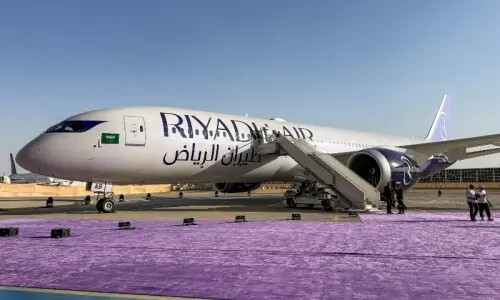
Technically speaking, all airlines flying into Pakistan, most important of which is naturally our very own PIA, play a noble role in making our country accessible to international tourists. Some 14 airlines land at Islamabad Airport, including PIA and three other local airlines, while Lahore Airport is served by 16 airlines and Karachi has some 36 airlines flying through its airport.
However, it is not only the number of airlines but which airlines and also the frequency of flights in a week which determine the accessibility of a country. For instance, Spain’s Madrid and Barcelona airports each have only 35 airlines serving them, as compared to India’s New Delhi and Mumbai airports which have 70 and 42 airlines respectively. Yet Spain was the second top tourist destination in the world in 2004 with 52.4 million tourist arrivals while India only had 3.4 million tourist arrivals in the same year.
How effective PIA is in performing the role of increasing the accessibility of Pakistan to international tourists can be judged by the health of the airline. And our national airline is in very bad health. It has degenerated over the past three-and-a-half decades from a successful trend-setting corporation in the 1960s to a concern today that seems to exist only to serve certain vested interests.
According to recent media reports, as well as revelations made during a recent briefing by PIA to the Senate standing committee on defence and defence production, PIA is not only deep in the red, it is also in a shambles administratively, hardly being able to cover existing international and domestic routes even by leasing or borrowing aircraft from here and there.
PIA is even having trouble handling newly acquired aircraft. The airline seems unable to put into routine operation the new ATR turboprop planes on routes to the tourism-important Northern Areas, access to which was practically cut off after the grounding of the Fokker planes in July.
Although PIA cites rising fuel costs as the major reason for it being in the terrible mess that it is in, it is obvious that other factors are also responsible, chief of which seem to be a combination of management failure and the lack of government commitment to the success of the airline, both in terms of revenue generation and tourist promotion.
Although the Public Accounts Committee of the National Assembly and the Defence Committee of the Senate have both raised the issue of PIA’s poor performance, and the ministry of defence had reportedly ordered an inquiry into PIA’s affairs earlier this year, nothing seems to have moved so far.
It is puzzling that we have not deemed it fit as yet to order a commission of inquiry into the affairs of PIA, particularly into decisions in the past that have adversely affected its performance. Such a commission of inquiry is also very much needed for recommending measures that should be taken to turn PIA around.
Even a layman knows that one of the first basic rules in tourist promotion is an efficient national airline. If we really want to encourage tourism, we must rejuvenate PIA and give it a new lease of life. PIA needs to lower costs yet at the same time raise quality and standards, operate more efficiently, exploit business opportunities, enter into new marketing alliances, promote new investments that raise productivity and last but not least raise profits, all this to be achieved despite rising fuel costs.
While reforming PIA, we should at the same time actively engage with other foreign airlines in developing and promoting the tourism industry in our country. Some ministries of tourism in other countries have signed memorandums of understanding with foreign airlines to market their countries as attractive tourist destinations to holiday-makers travelling on these airlines. For example, Australia’s tourism ministry has an umbrella memorandum of understanding with Singapore Airlines to market Australia as an attractive tourist destination.
Similarly, our ministry of tourism could consider cooperating with foreign airlines that land here in the joint promotion of Pakistan internationally as a compelling tourist destination and boost tourist arrivals here. Aside from joint promotional activities, such agreements would also represent commitment of resources by our ministry of tourism in promoting Pakistan overseas with important airline partners.
Finally, our ministry of tourism might want to start looking at Saarc as one of our key sources of tourism, particularly as people in the region are beginning to earn more and can afford to travel. A major bottleneck towards the promotion of tourism in Pakistan and in other South Asian countries has been the dearth of travelling within the region. As experience in regions elsewhere has shown, e.g., in Southeast Asia and Europe, it is the regional tourists which usually form the bulk of tourist arrivals in any particular country.
In the promotion of regional tourism, low-cost or budget airlines have an important role to play in providing point-to- point services bypassing congested hubs. But the success of budget regional airlines, as with the success of any regular national airline, depends on active commitment and support from the government.
Peace may arrive in Kashmir via Ireland, Sri Lanka
MIRWAIZ Umar Farooq called from London last week. He was heading for Ireland as guest of the British Foreign Office, which had invited him to study the 1998 Good Friday peace agreement in Northern Ireland. The pact was brokered, among others, by President Bill Clinton. The young head of the Hurriyat Party was planning to visit Oslo next before returning to Delhi. In Oslo, he said, he hoped to meet officials involved in peace efforts between Tamil rebels and the predominantly Sinhalese Sri Lankan government. Oslo has also featured prominently on the radar of the Palestinians and Israelis as and when they have found it right to talk peace.
The Mirwaiz was then hoping to meet Prime Minister Manmohan Singh in Delhi, preferably before he leads a delegation of his Hurriyat colleagues to Islamabad for talks with President Musharraf. There were separate reports from Islamabad last week that President Musharraf too had asked the visiting foreign minister of Norway to take interest in Kashmir and to offer suggestions on what could be done to narrow the disagreements between India and Pakistan.
The Irish model was prescribed for Kashmir by President Clinton in March 2003 when he addressed decision-makers in Delhi at a symposium. The Irish model again cropped up in a conversation in August this year that President Musharraf had with senior Indian writer A.G. Noorani. It would be useful to recall exceprts from that interview because Prime Minister Manmohan Singh on Friday appeared to respond favourably to the gist of this conversation. Here’s the relevant part of the Q&A.
Noorani: You have used some phrases or concepts which are misunderstood. I know you have not spoken of joint sovereignty (over Kashmir) but joint management; maybe joint control.
Musharraf: One of the four steps after demilitarisation is self-governance. Let the people govern themselves. You talk of maximum autonomy, lots of people talk of maximum autonomy. We need to define what is the maximum autonomy that you are talking of and what is the self-governance that I am talking of. We need to see how the people should govern themselves. Lastly is the superstructure that gives comfort to both, Pakistan and India, and their involvement and some responsibility and some commitment; involvement, I would say, in having their say on both sides of the border.
Noorani: I was coming to that. I am very happy that you have mentioned it. The prime minister of India, at the round table conference with Kashmiris in Srinagar on May 25, used strong words - 'institutional arrangements’ between the two parts of Kashmir. Would you consider that as an acceptable mode of joint management, an institutional arrangement linking the two parts of Kashmir?
Musharraf: Yes, I think that is a starter. This is a very good term. Would you identify?
Noorani: There is a model. The Ministerial Council between Northern Ireland and the Irish Republic, it may not have executive powers. Let us face it, we cannot have executive powers. But if there are regular meetings, trust builds up and they evolve joint policies by common consent without wielding executive powers. Would you consider that a good substitute?
Musharraf: The term you use, 'institutional arrangements’, is what I think is correct. But we need to define the modalities.
Noorani: If the leaders agree politically, then the lawyers come in. What you have said is a very forward step because there was misunderstanding about joint control and joint management? Now you have said that Prime Minister Manmohan Singh’s proposal on institutional management is doable, I think that is a step forward.
Musharraf: Yes. But let me clarify. Noorani Sahib, this term 'joint management' was first coined by (former Indian diplomat) Mr. J.N. Dixit. These are not my words. I took these words from Mr Dixit when he coined them, where we had backdoor diplomacy going on, and that is how I started calling it joint management. So these are not my words really.
Noorani: I find much common ground between what you have said and what our prime minister has said. For example, both of you agree that the LoC should be made 'irrelevant’. The prime minister said at the round table conference on May 25 that it becomes just a line on the map. Do you think this is a good statement?
Musharraf: I think it is a good statement.
Noorani: In other words, de jure the sovereignties end at the line on the map. But de facto the state becomes one.
Musharraf: Yes. That kind of an arrangement, as you said, this institutionalising the arrangement, needs discussion and thought. I have said we give governance to the people and we then make an arrangement which is acceptable to both Pakistan and India. Compare this and President Musharraf’s latest interview to NDTV with his four steps on Kashmir that were enunciated during an absorbing meeting with senior Indian editors in Agra in 2001. We can see a continuity, despite the militarist disruptions of 2002, in the trajectory of the peace talks.
In President Musharraf’s scheme of things the first step seems to have been taken in July 2001 with the invitation by Prime Minister Vajpayee for the Agra summit. The second step, going by what he told the Indian editors, was to acknowledge the existence of the issue of Kashmir by India. This second step involved also the removal from the table of what was not acceptable to either side as negotiable. It would be fair to surmise that these requirements have been met.
It was this step after all that was sealed last week by Indian Foreign Minister Pranab Mukherjee when he tersely told parliament that if the MPs really believed that Kashmir was not a negotiable issue, then there was not much left to discuss with Pakistan. The message was expected to have a sobering effect on the MPs, especially on those who had been led to believe that a 1993 resolution claiming Azad Kashmir as the only dispute was some kind of an irrevocable principle. Prime Minister Singh’s positive response to Gen Musharraf’s comments was another signal that serious talks are going on in the back channel. In this context the Mirwaiz would find that the Sri Lankan and the Irish models for peace between India and Pakistan may offer some talking points in the context of Kashmir, but they may fall well short of the required remedy. The Irish situation was rooted in nationalism driven by religion. The Sri Lankan dispute rests on ethnic, mainly linguistic, differences between the Tamils and the Sinhalese. There are bits from each of the models that may be relevant. But at the end of the day India and Pakistan will have to look for solutions that are more home-grown and durable.
Tailpiece: In his book, 'A call to honour’, former Indian foreign minister Jaswant Singh recalls how the 1998 nuclear tests in Pokharan were preceded by serious concern over the safety of cattle at the test site. 'For the team at the test site -- which included A. P. J. Abdul Kalam, then the head of the Defence Research and Development Organisation, -- possibly death or injury to cattle was just not acceptable. “A test to ascertain India’s scientific and hi-tech capability would ordinarily not accord too much importance to the safety of cattle, but this team of scientists did,” he says.