0
0

When justice is elusive
THE woman who came to be known as the Sui rape victim, Dr Shazia Khalid, has along with her husband left Pakistan. The incident took place in January; she was shifted to Karachi to a mental health facility; her case was badly handled by her employers; and vested interests then turned her misfortune into a political issue. Few would have undergone an ordeal like this without falling completely apart. The media attention regarding the incident led to the president also commenting on the case, but in a strange twist, he exonerated the person whose name was mentioned as the accused. This happened while a judicial tribunal was still in progress. The inquiry in its report also did not hold any one person or group responsible for the incident, but asked the police to expand the scope of its investigation. It is important to emphasize that a crime was committed, of a particularly revolting nature, and that, irrespective of Dr Khalid’s departure, the investigation into it must continue. Numerous delays in the legal process hamper a trial and delay justice being meted out.
It takes a great deal of courage on the part of a woman to step forward and report a rape, especially in a hidebound feudal society like ours and in a situation complicated by a legal mixed bag which puts the burden of proof on the rape victim. Dr Khalid chose to leave the country because she did not feel safe and probably because she despaired of finding justice. Before her departure, she told reporters that she wanted to forget everything that had happened and start a new life abroad with her husband. But there is also a woman like Mukhtar Mai, who, despite the odds against her, has chosen to stay in the country and fight the battle for justice. The fact that the prime minister met her on Friday and assured her that the government would take necessary steps to ensure security and justice is a welcome sign. The re-arrest of the four men accused of Mukhtar Mai’s rape, whose earlier release was a cause of concern vis-a-vis the victim’s safety, is also a positive development. The matter is now with the Supreme Court, and its verdict will be anxiously awaited.
But Mr Shaukat Aziz’s meeting with Mukhtar Mai will be seen as a token gesture. The pitch remains heavily tilted against women, and not merely women but men who also face daily oppression under the tribal and feudal system. This system and the absence of rule of law create conditions for the perpetuation of injustice. Crimes against women are rising at an alarming rate, but cases against those involved are unfortunately becoming harder to prove. The press continues to play a significant role in raising awareness but until and unless people in the rural areas — where crimes like karo-kari are rampant — are provided with education and a sense of liberation, real change will not come. In the past we have seen that when women like Mukhtar Mai and Dr Khalid are brutalized, a host of high-level officials pay them a visit, assuring justice, promising many things but delivering very little. Dr Khalid has left disheartened while Mukhtar Mai chooses to fight it out. The struggle for a more just dispensation must continue.
Rebuff for Modi
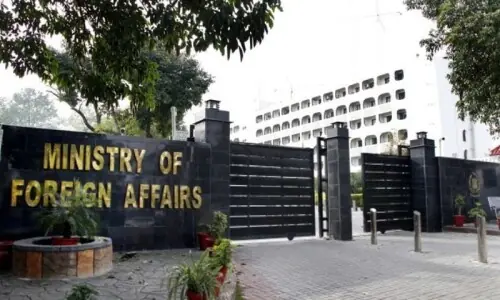
The cancellation of his visa by the US serves to highlight Mr Modi’s criminal role in the riots and his failure to protect the life, honour and property of Gujarat’s Muslim citizens. The American decision blacklisting Mr Modi comes under that clause of the US immigration act which covers violations of religious freedom. The Indian foreign ministry has expressed its concern over the cancellation of the visa for the “honourable chief minister of Gujarat”, but the world can see that the American action has rightly indicted Mr Modi for what he is — a fundamentalist using state power to persecute a minority.
Rooting out hepatitis
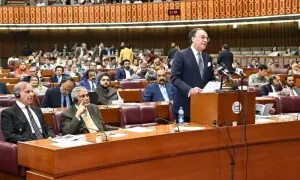
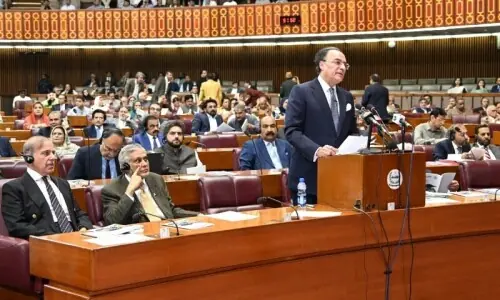
THE National Assembly has been informed by the parliamentary secretary for health of a Rs. 2.5 billion plan for the prevention and control of hepatitis in the country. Prime Minister Shaukat Aziz had made the announcement earlier this month, adding that the disease was one that “worries me most”. His fears are well-based. While not all forms of hepatitis that affects the liver are equally virulent, there are some that cause not only permanent damage but are also potentially fatal. Both the preventable (through vaccine) hepatitis A and the less prevalent hepatitis E, spread through contaminated food and water, are not as much a cause for worry as hepatitis B and C. The latter are blood-borne diseases which can have disastrous consequences. While there is a preventive vaccine — included in the Expanded Programme on Immunization in Pakistan — for hepatitis B, there is none for the C virus, a silent killer that is present in the bloodstream of about five per cent of the population.
Much of the Rs. 2.5 billion is to be spent on vaccines, medication and safe medical equipment. Reports say Rs. 125 million will go towards awareness campaigns. Perhaps, more funds should be made available for the latter where lies the ultimate weapon for conquering the disease. Apart from emphasizing the importance of uncontaminated water and hygienically prepared food, there is an urgent need to lay stress on safe medical practices that, at present, are non-existent in most hospitals and clinics. This is reflected in the presence of a huge industry for recycled syringes, blood bags, cannulas and other equipment tainted by infected blood, as well as unscreened transfusions. For erring medical institutes to be identified and reported by the public, it is necessary to educate the latter about all the aspects of the disease.