0
0

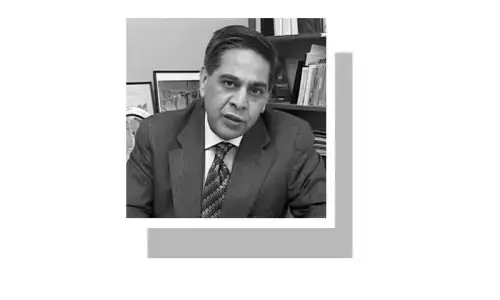
Zamir Niazi: passion for freedom
Ghazalan tum to waqif ho kaho
Majnoon pe kya guzri;
Diwana mar gaya akhir ko
veeranay pe kya guzri.
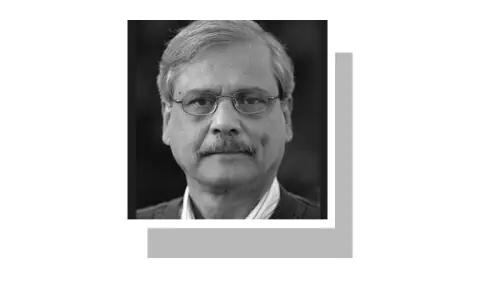
A brave fighter died on Friday. Zamir Niazi was brave, very brave, in more senses than one. He fought with serious ailments of his frail body for so long and so bravely. But no amount of physical discomfort or pain could prevent him from his research-based work.
Niazi was a conscientious journalist who became the conscience of Pakistani journalism. His researches, embodied in his three books on the Pakistan press, leave little of significance unrecorded. His life's le passion grande was human rights, with special reference to the freedom of the press. Indeed, his books on the state of the press are one long tale of overbearing and tyrannical governments trying to keep the press on a tight leash. The only redeeming feature being the struggle of some good journalists.
In this story, there is not much to be cheerful about. Those of us who have in some fashion fought for press freedom and have tried to keep the flag of freedom aloft always regarded Zamir Niazi as our leader. His steadfastness in keeping the ideal of truth telling supreme inspired us all. No government reward or frown deflected him from his path.
Many have deprecated the common habit of praising a person after he dies while ignoring him altogether when he lived. One confesses to the desire of praising the qualities of his character. He never sold his pen or conscience for any consideration and never cosied up to any regime. Not that temptation did not come his way. His integrity always kept him unattached to holders of power. No one who tried to use him succeeded.
Needless to say, Zamir Niazi was an unalloyed democrat who was never impressed with any ideological hocus pocus. His personal accomplishments were formidable: He was well versed in Islamic lore and learning, having been the product of a madressah of his native (Indian) Gujarat. I do not know how well he knew his mother tongue, Gujarati. But I admired his abilities to appraise Urdu poetry and prose. He was also well versed in Persian. His English language abilities were the results of his own endeavour at a later stage of life.
He was no purveyor of patriotism, a word he seldom mentioned. But the inheritance of tyranny and military domination of his Pakistan kept him unhappy. His love of this state was possessive, though it never made him accept the self-serving rationale of any military dictator for a takeover.
One saw him in hospital but once in the closing stages of his clearly unequal fight when several serious conditions had almost consumed him and laid him physically low. He was bed-ridden for several years, unable to stand or walk without assistance. But he read and wrote copiously for several years in a physical state when he could neither sit in any posture or lie down for long. He carried on producing articles and books.
Toward the end, he was consumed by the question of nuclear weapons. He would have nothing to do with these abominable weapons; they are not fit for any purpose, not even for defence, he would say. He edited an Urdu book Zamin Ka Naoha. He was engaged on a magnum opus about Urdu and Persian poets of the subcontinent and had been collecting pictures and particulars of even obscure poets. It was to be titled Gauhar-i-Abdar. Sadly his progress had slowed down during the last one year. He has left it incomplete after spending a treasure for a man of modest means. One can only hope that his associates in the project will see it through.
But it is for the press and its leaders to pay him the tribute he deserves: a monument that will go on promoting his life-long passion - freedom of the press.
Is this a dead society?
Of course, Karachi has been suffering intensely from the ongoing water and power shortages these days giving a feeling of hopelessness to citizens. And the water pollution in Hyderabad - another reminder of how unhygienic our water is - does not intrinsically matter because the decision makers evidently consume mineral water!
But let me make it clear here that one is not focusing on water and power shortages, even though as I write on another disturbing Friday evening, there has been that familiar annoying hide and seek that KESC has been playing, and which only made me ensure that the rechargeable lights were on, and adequate enough to see me through this column. Does one read any symbolism in the electricity failures? The lights going off and coming on this evening? And let me underline that the summertime suffocation is at its peak, in a way.
What kind of a city do we live in really? Old weary question in a way; a question that we have asked for almost two decades now. From some recent events in bloody May and even June, one fears it makes one dread that there is no real hope in sight. One hopes that he is proved wrong, and those who dream of a decent sustainable civil society for Karachi, and our upcoming urban centres are proven right. That the nightmares that we are living through end. We have said this before, and we need to say it again, that this fear, frustration and failure in a context of uncertainty (read understatement) is impacting the collective psyche on a long-term basis.
It makes one wonder whether this society even takes notice of such thoughts as reflected in Dawn's editorial of June 2nd, "Time to stand up", which says that since the so called opinion makers and the elite live in their own cocoons and are not likely to be in the crowd at a mosque when a suicide bomber ignites himself, they are unconcerned about the fate of their less fortunate compatriots.
I was talking to a colleague of mine during the week on the way in which Karachi's law and order scenario remains a matter of the deepest concern, and asked why all efforts appeared not to produce the results that were required.
He explained that he wanted to view Karachi in retrospect and focus in particular on the manner in which the fundamental unit - family - has been devalued and how it has disintegrated with time. There were many reasons for this, but a primary factor for this, he argued was the abnormal emphasis on the material side of life.
There has disappeared the strength of the family, and he gave a long list of causes of why he believed this had happened. He said that he was an advocate of the joint family system even in these "modern" times, despite everything that appeared to be working against its popularity. He continued with the assertion that this decline in the power and the emotional sustenance that a well-knit family gave to society had harmed society directly.
It had eroded the togetherness of the neighbourhood, the community. Neighbourhoods were not the same caring, courteous, considerate places that there were in this very city even some 25 years ago. Things have changed to such an extent that now today's youth, especially the students, are unable to accept or imagine how violence-free this society was. No perfect place, but not as chaotic and turbulent as now. It was a peaceful world, now lost forever.
And then he went on with his observations to say that one of the most deplorable and shameful changes that had taken place in this society, Karachi being a major player in this regard, was that people no longer cared whether their neighbours were morally good or bad. It has ceased to matter whether they are honest or not in their dealings, and whether they have the reputation of being a smuggler, or a corrupt official, or a dubious businessman. Or whatever.
The attitude that seeped into the fabric of this society was that his personal life did not matter to society, and that as long as he had the appearance of an affluent, (read filthy rich) man he was important, successful, and that it would be useful to know him. In fact, this is more so now than ever before. Now all that matters is the material success of an individual, and his reputation or his track record of being dishonest, and dismissed from service is of no consequence.
I heard him in pin drop silence as it were. There was much truth in what he was saying, and thoughts went out to the days when in this very city it was common to hear how well-knit neighbours were. There were of course bad neighbours, even then. But clearly the good were in a majority. Is it the other way around as the city grows. And is the bond between neighbours and families as sincere, well-meaning, courteous as it should be?
In fact, is there any contact between neighbours, keeping in mind that the almost fashionable (read snobbish and arrogant) thing to say is that "I don't know my neighbours. In fact, I don't get time."
Indeed this is a city where people have no time. No time to be civil, and decent and dignified. And then my friend has this dream of a "civil society."
One is reminded of a couplet from the Urdu poet Bashir Badar who says:
Koi hath naa milae ga jo galey milo gay tapak say
Yeh nae mizaj ka shehr hai zara fasley say mila karo
Perhaps this is what has happened to a city, which has been unable to give its huge population the confidence and the hope that very soon things will be put right. It has arrived at a stage where there is a real life insecurity not just on streets, in offices, at places of entertainment, but also at homes despite increasing role of private guards in personnel life.
A friend of mine quoted from the poet Pirzada Qasim the following couplet:
Itney safak samak bhi ghazab hai kay
Baat khatm na ho aur pathar ajaain
That is the state of our intolerance, and that is perhaps the cause of why have been unable to establish a meaningful dialogue and a sensible communication channel with the growing number of dissenters in this society. History is witness to the fact that dissent has never been handled with force and violence. Ideological dissent versus force?
With reference to the targeting of places of worship one would like to mention what has been attributed to the Sindh police chief, who is quoted as saying that "no one should be allowed to enter a mosque or imambargah once prayer/majlis has started". I wonder how practical that can be, given the size of Karachi.
He has also been quoted as saying that "each worshipper would be checked before entering into any mosque or imambargah of the city, and that the concerned authorities of these places would be taken into confidence." It has also been stated that private armed guards, volunteers, and police would collectively work to provide security cover to the people who come to pray. One wonders who will bear this cost?
Now this is the state of the city, and of this society, and it seems that the shadows are lengthening. We are walking in the shadows of what? death or just despair and disbelief? We neither believe, nor trust, it seems. As Shakespeare says: "What is a city but the people?" And perhaps these people will not stand up.
Mystique of the six pious ladies
Of all the graves and mausoleums in the Punjab, there is not one to match the mystery and mystique of the six pious ladies of Lahore. Known popularly as Bibi Pak Daman, the six graves have always remained an enigma. The beauty of this puzzle is that it is the one place in Lahore where all differences among all sects simply disappear. It is the picture of hope in an age of darkness.
Located just off Durand Road, opposite Queens Mary's College at Garhi Shahu, the graveyard has a small mausoleum and besides the other graves, the six most prominent are those of the six Bibis. The graveyard can be approached from Empress Road, too, but one has to walk through the narrow lane to reach a small mosque. The lane up to the mausoleum has an array of shops, all catering to the various beliefs that people have.
There are two versions as to who these six ladies are. One is the popular version, while the other is the researched version of scholars. Both versions have their appeal and their flaws, so it is best to narrate both as simply as is possible, and leave the reader to make up her or his own mind.
The popular version goes like this: It is claimed that the mausoleum on the six graves was build almost 1,000 years ago, so the legend goes, by the Afghan invader Mahmood of Ghazni and his followers, on the grave of Ruqqaya, claimed to be the daughter of the fourth caliph of Islam, Hazrat Ali Ibn Abi Talib, a cousin and son-in-law of the Holy Prophet (pbuh), and wife of Muslim-ibn-Aqeel, an emissary of Hazrat Imam Husain to Kufa. Another legend has it that the mausoleum actually holds the graves of six ladies from the Holy Prophet's household, including that of Ruqqaya, with the remaining being Ibn-Aqeel's sister and daughters.
According to legend - and so the tombstone on the main grave says - Bibi Haj lies buried here. Popular belief is that Bibi Haj was the name of Ruqqaya, and she along with some companions came to Lahore after the tragedy of Karbala. It is said that the Hindu Raja who then ruled Lahore on hearing of the news of their arrival summoned them to his court. As they were purdah observing ladies they prayed to God for death.
The earth, thereupon opened and the pious lady and her companion ladies were buried alive. There is some controversy about this legend for it is held that no lady related to Hazrat Ali was named Bibi Haj. Moreover, it is argued that after the tragedy of Karbala, there was no point in any Muslim ladies coming to Lahore, which was ruled by the Hindus.
However, in his book on Lahore, Kanhiya Lal lists them as being six sisters, having the names Bibi Haj, Bibi Taj, Bibi Noor, Bibi Hur, Bibi Gauhar and Bibi Shahnaz, all of whom, the legend goes, fled Makkah after the massacre at Karbala on the 10th day of Muharram in 61AH (October 10, AD 680). Today, these are the very names written on the six graves. Nowhere does the world Ruqqaya appear on any tombstone, though everyone present refers to the grave of Bibi Haj as that of Ruqqaya.
To one side is a tablet which states that "Data Ganj Baksh stood at this place when offering fateha every week for the six Bibis". This reinforces the belief that the graves are over 1,000 years old. If this is true, then these are the very first graves of Muslims in Lahore, and represent, probably, the oldest Muslim graves in the entire sub-continent.
As there is no written proof, or even mention of any such movement of the women of the household of the Holy Prophet (pbuh) in the aftermath of the massacre, for this reason some scholars consider Ruqqaya to have been the daughter of Syed Ahmad Tokhta, who lived in Lahore in the 12th century. A mention of this fact has been made by Kanhiya Lal, who says that in the 12th century AD, an Arab by the name of Syed Abid Zahid Waliullah Tokhta, came and settled in Lahore. He died in the year 604 Hijra and was buried inside of the walled city in Mohallah Chahaal Bibian in Akbari Gate.
His grave is still there and the date of his death is given on the tombstone as 604 Hijra. To check this out, I visited the grave, and it seemed to depict its age. The grave once had a fine mausoleum, which was damaged extensively by Maharajah Ranjit Singh. The graveyard was flattened by the Sikh ruler, and on it was built the haveli of Ghulam Mohyuddin Shah Pirzada, who was kind enough to leave the grave of Syed Tokhta intact.
To this day lies the grave of Syed Tokhta on one side of a small house built in a side street on the now demolished Haveli Pirzadan. There are again some scholars who hold that the daughter of Syed Ahmad Tokhta was married to the ruler of Kech Mekran and she died there and never came to Lahore. We find that Hazrat Ismail whose shrine is on Hall Road came to Lahore before the conquest of Lahore by the Muslims. It is probable that some Muslim ladies might have also come to Lahore during that period, and though not actually related to Hazrat Ali, they might have been Syed.
The six daughters of Syed Tokhta moved inside the walled city and settled in a haveli near the present - graveyard of Bibi Pak Daman. They were known for their piety, and they all, so the claim goes, remained unmarried. For this reason, they were all referred to as Pak Daman Bibi in the singular sense. In the year 615 Hijra, when the Afghan invader Sultan Jalaluddin Khorasani sacked Lahore, the adjoining areas were also subjected to loot and rape, as was the 'Timirud' tradition after a victory in battle. Fearing the worst, the six sisters, so legend goes, got together to pray for their chastity.
At that moment an earthquake struck, opening the ground to bury the six sisters and their maids, saving them from disgrace. Afterwards, local people seeing the clothes of the sisters sticking out of the ground, gave them a proper burial. These graves still exist in two portions. On one side are the graves of Haj, Taj and Noor, while in another compound are the graves of Hur, Gauhar and Shahnaz. The graves of the maids are also on the outer perimeter of these graves.