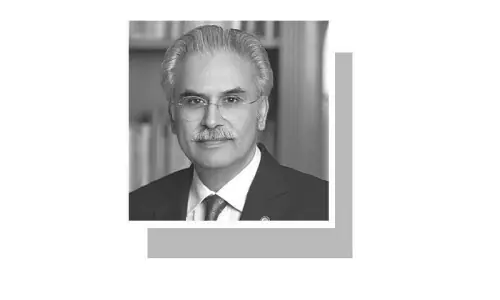
Dr Hamidullah: a great scholar
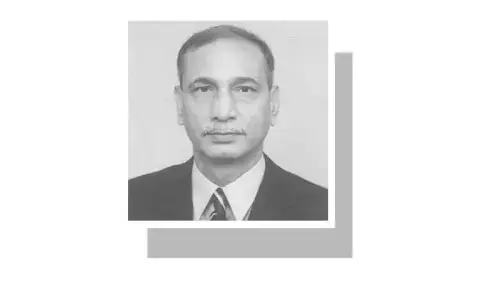
WITH the death of Prof Dr Muhammad Hamidullah, the Muslims have lost a great scholar, Pakistan a trusted friend and the State of Hyderabad Deccan one of its last free citizens.
Dr Hamidullah lived a remarkable life which he dedicated to scholarship and service to Islam. He belonged to a rare breed of intellectuals who focus on scholarship and strive for serving humanity without seeking any recognition in return.
His portfolio of scholarship included a doctorate from the Bonn University and a PhD in literature from the Sorbonne University. He translated the holy Quran into French, English and German, and wrote more than 170 books in 24 languages, besides 1,000 articles.
Dr Hamidullah is recognized as a most authoritative scholar who carried out extensive research into Islamic international law and Islamic constitutional law. Two of his most popular works are Muslim Conduct of State and Introduction to Islam. These books have become very popular, so much so that they have been translated into almost every major language of the world.
In early 1950s, Dr Hamidullah was invited by the government of Pakistan to draft the first Islamic constitution for the country. He started the work but later resigned because of a difference of opinion with vested interests, and returned to Paris. After that he often visited Pakistan on various scholarly ventures.
In 1985, the government in recognition of his scholarship and service awarded him Hilal-i-Imtiaz and a 10-million-rupee cash award. But he refused to accept the award of Hilal-i-Imtiaz and donated the Rs10 million to the Islamic Research Academy.
In 1946, as a citizen of the State of Hyderabad Deccan, Dr Hamidullah was appointed a delegate by the Nizam to represent the state at the League of Nations.
In 1948, India invaded Hyderabad. Before the invasion, Hyderabad Deccan’s delegation which included Dr Hamidullah left for the United Nations to plead their case. But before the delegates could reach the UN, the state was annexed by India (Nehru did not keep his promise of making Azam Jah Nizam VIII of Hyderabad).
Thus, Dr Hamidullah like other delegates became a stateless refugee. In 1948 he founded the Hyderabad Liberation Society to get recognition for Hyderabad as an independent state, and decided to stay in France as a stateless person as long as the status of Hyderabad remains open in the United Nations.
Dr Hamidullah was a very humble man who lived a modest life and dedicated his time to his students. In 1967, he told his students during a lecture, “We can expect to solve the problems facing us if everyone... help others before asking for help.”
According to his great-grand niece, Saida Attaullah, “He wanted to be that fortunate man who lived and worked and died in anonymity and acknowledged 200 years after his death.” Indeed, Dr Hamidullah lived a life of anonymity in France and the United States without seeking either any help from anyone or recognition for his work.
He was truly a silent scholar and a seeker of the truth. His legacy will be a source of guidance for generations to come.
A. S. KHAN
Lombard, USA
Condition of Aziz Bhatti Park lake
ONCE upon a time the lake in the Aziz Bhatti Park located in the centre of the city of Karachi used to be a beautiful spot.
The lake is now full of filth and has become a breeding place for mosquitoes due to negligence on the part of the authorities concerned.
These mosquitoes are a menace not only for those who visit the park but also for the residents of the surrounding areas. Probably, it is for this reason that clinics and hospitals in Gulshan-i-Iqbal are reporting more and more cases of malaria.
The best solution to this problem is to clean the lake by removing filthy and stinking weeds and by preventing sewage from flowing into it.
A cleanliness drive should be launched and supported by regular anti-mosquito sprays. This will enable visitors to enjoy walking around the lake and relax on the lawns even after sunset.
Unfortunately, in spite of repeated complaints to the Nazim and the Naib Nazim of the area, no action has been taken yet. Is there any other authority to look into the matter?
DR BANOO
Karachi
ARY’s membership card
AFTER being convinced by a great deal of publicity which is made on the ARY TV channel, I applied for an ARY Exclusive Membership Card through Granton Customer Service, an ARY’s authorized agent, whose representative sold me the idea to purchase an ARY membership card.
I paid Rs600 and a receipt (10140, dated 22-10-2002) was issued to me by ARY Communication (Pvt) Limited, approving my membership vide serial No. 14000186.
I was assured by the Granton representative that I would get my ARY exclusive membership card within 10 days but, after a lapse of more than two months and several telephone calls to the ARY Gold’s local office at 6th Floor, Madina City Mall, Abdullah Haroon Road, Karachi, I have not got my membership card yet.
MUHAMMAD AKHTAR
Karachi
Unjustified anti-Americanism
ACCORDING to The New York Times, 52 per cent of Pakistanis have a “good opinion” about Saddam Hussein and only 10 per cent of Pakistanis have a favourable view of the United States.
The truth is that Saddam Hussein is a ruthless dictator running a totalitarian state where the punishment for criticizing him or his family is amputation of the tongue (reported in The Washington Post).
In the 1980s he squandered his country’s resources fighting Iran in a pointless war. Then he used chemical weapons on Kurds and finally he invaded Kuwait in 1990. It was the invasion of Kuwait that brought about the American presence in Saudi Arabia and in the Gulf.
Besides killing fellow Muslims and causing misery and suffering to the Iraqi people, what has he achieved? It is quite obvious that the media in Pakistan refuses to present the truth about Saddam Hussein’s Iraq. Here I refer in particular to the Urdu press, although the English press, too, is culpable. As a result, people without knowing the facts are supporting Saddam Hussein against the United States in a misguided sense of Islamic solidarity and reactionary nationalism.
And what about PTV which is a government propaganda machine? Why has it not at least exposed the truth about Saddam Hussein’s record? After all, Pakistan is an ally of the US in the war on terror.
Obviously, the government has failed to convince people at large and contradict inaccurate news reports in the Urdu press such as (a) Hamid Karzai is going to be protected by Israeli bodyguards, (b) US Marines raped Karzai’s secretary, (c) the Afghans have killed 1,000 US troops (as reported in the NYT on Dec 22).
All these news reports are untrue and should have been refuted by PTV at once in the interest of good relations with the United States which Pakistan needs.
I hope the US invades Iraq, overthrows Saddam Hussein and Iraq becomes a model of democracy thereafter in the Arab world. At present there is not a single democratic Arab country in the world.
SHAMIM MIRZA
New York, USA
Trading with Egypt
I WAS glad to read the letter, ‘Trading with Egypt’ (Dec 22), by Abdel Majeed Ismail, informing the readers of great export/import prospects for Pakistani businessmen.
The letter was also an eye-opener for our embassies, business concerns and trade offices.
They should take note of the comparison of the attitude of the Pakistani embassy staff in Cairo, Egypt, with that of the Indian embassy staff.
Our embassies and commercial sections can do a lot to improve Pakistan’s exports if they like JETRO, KORTA and similar non-profit organizations work sincerely.
It is hoped that the authorities concerned will be more active, prompt and cooperative and will answer all inquiries satisfactorily.
M. HANIF HABIB
Karachi
Gas leakage in Islamabad
IT has been observed in various sectors of Islamabad that there is gas leakage on a large scale at most gas supply stations, specially on Saddar Road at G-6/1-2 and G-6/2 sectors.
Iron fences which were erected around these stations for safety have broken and children get inside the fenced area to play near these gas pipelines. This may lead to a serious accident someday.
The continuous gas leakage is also polluting the environment, thus posing a threat to the health of people.
The Sui Northern Gas Company is requested to direct the authorities concerned to repair the pipelines immediately and mend the fences around these gas supply stations.
ASMAT ULLAH
Islamabad
Jinnah as parliamentarian
I AM grateful to S. M. Zafar that in his article (Dec 25) he has brought the new parliamentarians of Pakistan face to face with Jinnah, the parliamentarian of the 20th century.
There is a lot for the members of the National Assembly to learn from the life and struggle of Mr Jinnah, and even if a few of them take their work as seriously as Mr Jinnah did as a member of the Imperial Legislative Council in 1910, the future of parliamentary democracy in Pakistan will be assured.
But, is there even half a dozen of them who can attempt to justify their position as parliamentarian like Mr Jinnah? Or are the women representatives ready to take the lead?
NAILA AZIZ
Lahore
S. M. Zafar’s portrayal of Mohammad Ali Jinnah as a parliamentarian is a masterpiece in language and substance.
Somehow, a certain discrepancy has crept in, albeit inadvertently, in my humble opinion, towards which I want to draw his attention. The removal of the discrepancy and a clarification of this matter will be of great knowledge for the readers.
The fifth paragraph begins with the words, “Imperial Legislative Council in which Mr. M. A. Jinnah took his seat in 1910 was constituted by Indian Legislative Council Act 1909. It consisted of 60-man legislature and included men like Gopal Ghokle, Moti Lal Nehru, and other political activists.”
It adds that the council “possessed limited and restricted power of legislation. Matters of public importance could be discussed through properly moved resolutions. But the right to question the executive was not conceded till much later (in 1892)”.
How is it possible that the council which was constituted in 1910 under an act promulgated in 1909 was given the right to question the executive in 1892?
DURR-E-SHABNUM
Karachi
Nazim-i-Ala’s attitude
LAST week I went to see the Nazim-i-Ala of Karachi at his Civic Centre office regarding a number of problems being faced by the residents of my locality.
I had a long list of problems which I had already discussed some eight months ago at the Union Council level but to no avail.
During my discussion with the Nazim-i-Ala, I requested him to abolish charged parking, saying that most Karachiites were not happy with the system.
I suggested to him to develop special areas for charged parking if the city government desired to levy a parking fee.
I told the Nazim-i-Ala that I had been informed by the Union Council that the system of paid parking would be abolished in July, but nothing had happened till then.
I expected that the chief city administrator would engage me in a rational discussion but, to my surprise, he interrupted me at least on three occasions by saying each time, “Yeh to nahin bund hogi” (Charged parking will not be abolished).
When I asked him as to what prevented him from abolishing paid parking, he shocked me by saying: “Kyoon kay mein kehraha hoon” (because I am saying so) in the typical Moghal court style. I could not believe that this reply came from an elected representative.
On his asking if I had anything else to discuss, I thought it better to say him goodbye, for I had realized by then that further discussion would be pointless. So much for the devolution of power plan.
FARHAT ASRAR
Karachi
Despair of NSC holders
THE despair of the holders of the certificates issued by the National Savings Centre is nowhere better expressed than in this quote from the book of Genesis, “From him that hath not, even that he hath shall be taken away from him.”
FIROZ A. KHAN
Karachi
IBS affairs
A LARGE number of people are suffering from mental disorders for which they need urgent attention. Charitable type of organizations like Institute of Behavioural Sciences (IBS) are good examples in the direction of services.
The present problem in the IBS and the resultant uproar in the press may impede the humanitarian cause and give birth to controveries and misconceptions. It is important that the differences and misunderstanding are resolved internally with mutual respect and understanding.
The names involved in the matter are prestigious with remarkable contributions and it will be most appropriate for the sake of sufferers that this matter is resolved on an urgent basis.
DR AMIN A. GADIT
Chapter Chief, Pakistan Psychiatric Society,
Karachi
Discrimination against pilgrims
DISCRIMINATION is the name of the game insofar as the religious affairs ministry is concerned in respect of Haj pilgrims this year.
The discrimination is between the pilgrims who will travel by PIA and those allotted to Saudia Airlines and has been notified in the Haj travel programme dispatched to the pilgrims.
PIA passengers will inter alia get a gift of ‘ahram’ /’Iba’, besides a 10-litre can of Zamzam water on their return at the airport. These things will not be given to those to be airlifted by Saudia Airlines.
In fact, pilgrims earmarked for Saudia Airlines have been specifically told to arrange Zamzam water for themselves. It implies that such pilgrims will be additionally penalized because the weight of a Zamzam water can will count towards their overall baggage entitlement.
Saudia Airlines’ pilgrims will also be required to get their Zamzam water cans encased and packed at Jeddah airport under a special arrangement for which each of them will be required to pay five riyals.
Pilgrims’ resentment is on two counts. First, making them pay additional charges is discriminatory. Second, the government did not ask them to choose an airline.
They have urged the government to make arrangements to that effect if Saudia Airlines is unwilling to extend concessions at par with PIA.
A little expenditure on this account will be worthwhile in order to ensure even-handed treatment of all pilgrims, they argue.
A CITIZEN
Karachi
Large buses for Karachi are the answer
THE comments of A. B. S. Jafri on Karachi’s ‘traffic culture’ (Dec 16) and his criticism of the new large buses being introduced in Karachi are hard to fathom, specially when he so rightly identifies the Karachi traffic situation as “chaos”.
A high standard of public transport is exactly what Karachi needs to solve traffic-related problems, be it a high quality bus system, or an urban rail system, or both.
In fact, most major cities worldwide now recognize that, while thousands of passengers can be moved daily by train, it is either a rapid transit bus system or a light rail alternative that gets most cars off the road. The problem with traffic is that it is mostly made up of cars and rickshaws, and by supplying large airconditioned modern buses, we give citizens a real choice to use public transport and leave their cars at home. Each bus can replace many cars or bikes or rickshaws.
Mr Jafri has rightly pointed out the many deaths and injuries caused through bus accidents in Pakistan. But the large buses being introduced are European-made and built to the toughest international safety standards. They will run on roads with drivers who will have completed intensive driver training equal to the world’s best standard.
Passengers are the direct beneficiaries as the buses are environmentally friendly, have easy low-floor access, and will close the doors after boarding to ensure the travelling safety of all passengers.
It should also be noted that the urban bus project with large buses has significant local investment by people who can visualize solutions and implement a project with no direct government investment or subsidy.
Who knows? A decent bus system may provide the framework to expand into better and more sophisticated transport alternatives that can also incorporate the KCR thoroughfare. If we can improve Karachi’s ‘transport culture’, it becomes an easier concept to sell innovative public transport concepts to investors and will provide a positive example of what can be done.
I would also like to contest Mr Jafri’s assumption that “urban rail systems are a good investment all over the world”. Most governments while agreeing they are a necessary part of infrastructure know that they absorb large amounts of funding each year through subsidies. Therefore, it is not necessarily a “good commercial proposition, assured of finance”.
Bus systems, on the other hand, have proved to be more flexible, adaptable and, therefore, cost effective alternative to meet transport needs. Worldwide, many cities are at present engaged in building rapid-transit busways, instead of light rail, to meet urban transport needs, generally costing about 10 per cent of a similar rail infrastructure. These busways are most successful, reducing private vehicle traffic and, thus, alleviating traffic congestion.
Just now, Karachi should look for feasible solutions that it can afford and a growing fleet of large modern buses is a most positive step in the right direction.
AHMAD SHABIR
CEO, Swede Bus Pakistan,
Karachi