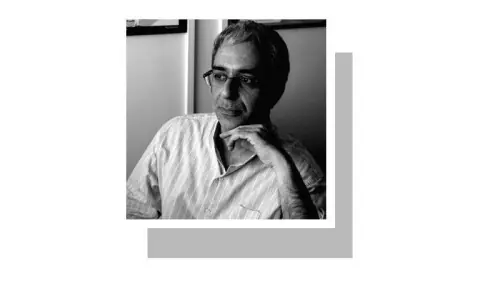
NOT many young people in this country might have heard of Dr Daud Rahbar. He was one of the many bright young men who soon after migrating to Pakistan left for Europe or the US to pursue higher education.
Daud Rahbar, too, after doing his master’s in Arabic literature from Government College, Lahore, left the country at age 23 in 1949 to study at Cambridge University, UK.
He did his PhD in Arabic from Cambridge and went on to teach in England, Turkey, Canada and the US. Besides being a good poet of Urdu and a prolific writer, both in English and Urdu, with a distinctive style of his own, he was a scholar of Persian and Arabic as well.
He taught comparative religion for more than two decades at the Boston University in the US. His academic achievements were many, but what personally impressed me was his deep knowledge of Indian-Pakistani classical music.
His two books Batain kuchh sureeli si and Nuskha-hai-wafa are delightful read. As luck would have it, I became his elder brother’s friend some time in the mid-1980s. I used to call him Ayub Bhai. He lived on Kashmir Road in PECHS. He too was into serious music and played ‘dilruba’, an instrument now extinct in Pakistan.
Those were the days when Karachi was a peaceful city and people enjoyed frequent late-night music sessions and went back home without any fear of mugging or abduction.
It was then only that I had the good fortune of meeting Daud Rahbar at the PECHS residence of his cousin Surraiya. Her brother Zia Mohiuddin was there too. Dr Rahbar was on a short visit to Pakistan and she had invited close friends to dinner in his honour and to listen to his rendering of some of the many ‘bandishes’ composed by him.
It was amusing to watch his style of ‘tanpura’ playing; he held the instrument not vertically as is generally the practice but kept it in a horizontal position and plucked the strings with his thumb, instead of two fingers.
Professor of Arabic, scholar, musicologist, poet, author, translator, thinker, Daud Rahbar passed away on Oct 5 in Florida, US, where he had settled after retirement with his wife and two daughters -– an unsung hero, like many others in his own country.
S.M. SHAHID
Karachi