16
16



KARACHI: When Prime Minister Nawaz Sharif assured all segments of society on Tuesday that peace would be brought back to Karachi, many were not ready to buy his words as history has made them sceptical. Despite seriousness showed by the federal government, the people in Karachi wonder what lies ahead for them, with threats ranging from militancy to target killings and street crimes to kidnapping for ransom tormenting them they face daily.
Experts concur that all the stakeholders responsible for making Karachi a peaceful city have systematically sowed violence in the metropolis over the years.
Take political parties for instance. It is no secret that all of them have militant wings. The Muttahida Qaumi Movement, which claims to enjoy the electoral mandate of the city, has a blood-drenched history and a known violent track record.
The PPP has links with the outlawed Peoples Amn Committee (PAC), accused of running an extortion racket across the city.
Take law enforcement agencies. The police are corrupt and politicised. But paramilitary Rangers are fast learning the ropes from police.
Political observers wonder under what policy Rangers have evicted gangsters belonging to the Awami National Party, particularly after the May 11 elections, in a few city localities like Gulistan-i-Jauhar and replaced them with those of the PAC.
Political observers, rights activists and security experts agree on one point: time is running out. With over 1,890 people having already been killed in targeted attacks in the first eight months of the year across Karachi, they suggest an even-handed action against every individual and group involved in crimes.
Apart from politically motivated killings, deadly attacks carried out for sectarian reasons have seen a surge, with banned outfits such as Lashkar-i-Jhangvi and Tehreek-i-Taliban Pakistan, as well as Shia groups, undertaking tit-for-tat killings. So there can be no two opinions about the need for ending the spiral of violence in Karachi.
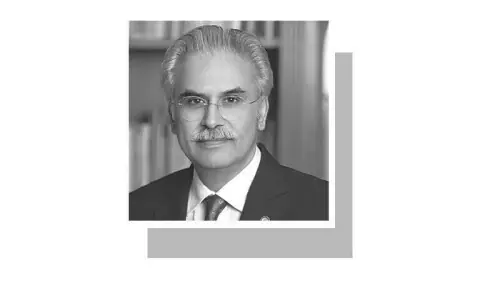
“This time it (the government) looks quite serious,” said Zohra Yusuf of the Human Rights Commission of Pakistan. “But it’s a little difficult to express hope at this point of time about the outcome of any government action. We monitored such situation in the past and definitely continue it when the government comes up with a plan about Karachi.”
She came up with a spontaneous response when asked about the reasons behind Karachi’s situation, accusing three major parties — MQM, PPP and ANP — of leading the city to anarchy.
Ms Yusuf said she had no doubt about the dismal performance of police and Rangers as corruption had badly affected the performance of the former while the latter never considered themselves accountable for any wrongdoing.
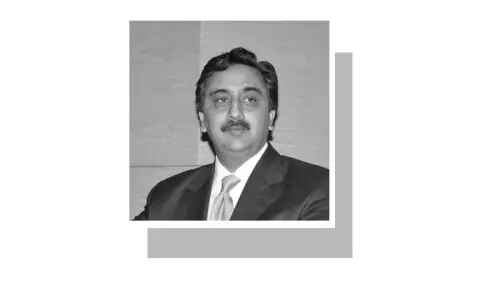
Dr Jafar Ahmad, of the Pakistan Study Centre at the University of Karachi, in his ‘objective analysis’ found the political parties both victims as well as responsible for the current state of Karachi. But he was not fully satisfied with the federal government’s fresh initiative.
“I don’t see it very much effective or I am not very much hopeful of a positive outcome,” he said, adding: “Karachi has become a national issue but you hardly find the first line of leadership of the parties discussing that crisis. The way it’s being handled doesn’t give the impression of a national issue and, secondly, political parties are responsible for this state but they never own it. They will definitely make a hue and cry if any action is taken against them.”
Dr Jafar also criticised the media for the way it had ‘exaggerated’ the government-proposed plans which were not on ground yet. Referring to last month’s Islamabad episode in which an armed man brought the capital to a hostage like situation, he said the media was playing the same ‘running commentary’ game on the government’s initiative that in a big way helped the criminals and mafias in the first place.
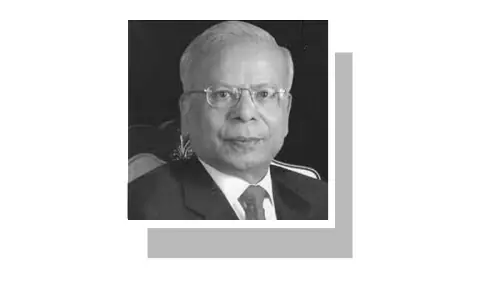
The chaotic situation in Karachi is not unfamiliar to former Sindh IG Jehangir Mirza. He does not see any major shortcoming of the city police that could prevent them from doing their job.
“It’s doable right now, but it can become undoable after two or three more years,” he said, adding: “Depoliticising police should be the first step towards a solution. In Karachi, where political parties are known for having a role in violence and armed wings, no one in the security administration realises that over the years militant outfits have developed a nexus with criminal gangs. This has now become a key challenge for the government.”
Mr Mirza said it was unfortunate that Rangers did not assist the Karachi police the way they were required to do as a paramilitary force. They had their own chain of command which affected operational strategies and ultimately diverted focus away from the target, he added.
An army operation may or may not be a solution to Karachi’s woes, but at least one thing is clear: most killings are politically motivated and political parties crying hoarse over a breakdown of law and order are responsible for it.