0
0

QUETTA, June 25: The government of Dr Abdul Malik Baloch plans to open talks with separatist groups to bring peace to the restive province which is facing a full-blown insurgency and growing sectarian terrorism across the province.
But when? Dr Malik does not yet give a timeframe.
“Our government is developing a Balochistan Strategy Paper which will outline political and economic problems of the province and suggest their solutions,” he told Dawn in an interview in his office last week.
“We’ll take the strategy paper to the federal government. If the country's political leadership approves it, we will start a dialogue with the separatists.”
Although he didn’t say the strategy paper would also require 'approval’ from the military leadership, he went on to say: “Balochistan’s political issues cannot be resolved unless the federal government, the military leadershipand the provincial government are on the same page.”
Dr Malik, as the head of a coalition government, will be under greater pressure to solve the security conundrum of the province once the euphoria over the election of a politician with middle-class roots and his ‘people-friendly’ budget dies down.
The Baloch separatist groups reject the possibility of talks with the government. In answer to questions Dawn sent to him through a person with indirect access to him, outlawed separatist group Baloch Liberation Front
leader Dr Allah Nazar says: “We appreciate dialogue, but (only) in the supervision of the United Nations. We are not going to sit on the negotiating table with the state (of Pakistan).
“It is ridiculous to think the Baloch (separatist) movement is limited to a small circle. It’s a popular movement. We have complete support of our people. (With) the passage of time, we have been able to intensify our war of liberation,” says Dr Nazar, whose BLF represents the middle-class Baloch uprising against Pakistan mainly in Mekran area.
He questioned Dr Malik government’s claim of representing the Baloch nation.
“The Baloch nation has rejected the election and the voter turnout remained below three per cent. The media has been portraying the new ruling party in Balochistan as a nationalist party, which is not true. They are federalist parties and they are serving interests of the state.
They are puppets of (the) state. They have always worked against the Baloch freedom movement.
“People returned to the assembly by securing as few as 550 votes from the Baloch areas. What else does it indicate if not alienation?” a senior journalist said.
The chief minister, on the other hand, represents a broad-based coalition and draws support from the opposition parties.
“The new government has come to power through ‘inclusive elections’,” says a senior official who doesn’t want to be named.
“People came out to vote despite threats from the separatists. Except for the Bugti family everyone – from the Sardars (tribal chiefs) to middle class nationalist politicians are in the assembly. If we had such a representative house before, things wouldn’t have gotten this bad. Now this house has what it takes to handle the situation.
“The establishment is serious about tackling the issue of insurgency and enforcing the state’s writ. We need to combat militants with force and on the other hand we must find a political solution by talking to those ready to join the mainstream.”
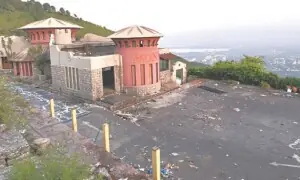
Federal Interior Minister Chaudhry Nisar Ali Khan ruled out talks with armed (Baloch and other) groups after the recent attack on the Ziarat Residency, which was referred to as a symbol of colonial oppression by Mahmood Khan Achakzai, leader of the PkMAP, in a speech in the National Assembly.
These differences in the approach within the coalition signify difficulties for Dr Malik, who does not say if he plans to open talks with all separatist groups or only with those who agree to lay down arms.
He also avoids a direct answer when asked if he would share the strategy paper with the politicians outside his government.
“The document is being developed by the Balochistan government (and not by any political party),” he says, but nonetheless adds that he will take it to Islamabad only after its approval by coalition partners of the government.
Balochistan’s security situation has been compounded by widespread allegations of highhandedness by Frontier Corps against members of the Baloch population and allegations of its involvement in kidnappings and killings of the Baloch suspected of having links with separatists in what is now commonly known as a ‘kill-and-dump’ policy. Human rights activists accuse security and intelligence agencies of detaining hundreds of missing Baloch.
Bodies of five missing Baloch were found in Quetta the day Dr Malik was sworn in as the chief minister. Many analysts have interpreted it as a warning for the new chief minister from security agencies to stay confined to his own territory.
Dr Malik has repeatedly denounced the ‘kill-and-dump’ policy and asked the federal government to rein in security forces and resolve the issue of the missing people before peace could be brought back in the province beset with serious political, sectarian and administrative divisions.
Dr Malik refuses to speculate on the role of the FC in relation to worsening law and order in the province.
“At the moment I cannot say much because we have just taken over and have been busy with the budget. The FC is controlled by the federal government. It is Islamabad's responsibility to talk to them. We haven't gone into these things as yet,” he says.
An official in Quetta, however, reminds that “we are facing a full-blown insurgency here and not a simple law and order problem”.
“We are in a state of war,” he says. “Excesses cannot be avoided in such situations. I'm not justifying anyone here but has any critic of the security forces ever tried to inform the people of atrocities being committed by insurgents? Has anyone ever told the public how many people are killed by separatists in the province every day? We have to counter that as well. The FC is here because our police do not have what it takes to tackle it.”
Officials point out that there is no writ of the state in many Baloch areas and that without the FC it will not be possible even to have a state presence there.
A Sindhi DC and a Pashtun SP posted in a district to conduct the election had to disarm the Levies (tribal police) because they feared the Levies would kill them. Even Isplengi, a few kilometres from Quetta, is said to be a “no-go” area for the provincial security apparatus.
Dr Malik admits that simple development and improvement in social services delivery cannot bring peace to the province.
“Without solving political issues we cannot develop,” he says. Yet he is hopeful his government will be able to do something for the province. Dr Malik sees a tough battle to end sectarian violence, which Mr Saleh Bhootani, who has returned to the provincial assembly for the sixth time, describes as a more serious worry for the government than insurgency.
“Sectarian violence is linked to the country's jihadi and foreign policies,” Bhootani says. “We are living in a conflict zone and will have to change these policies to control the sectarian violence.”
In spite of rejection of the new government by the separatists, Mr Bhootani feels the situation hasn't reached the point of no-return.
“It can still be salvaged if the three stakeholders – Islamabad, military and the provincial government – come on the same page,” he says, advising Dr Malik to also involve politicians defeated in the election in development projects and in the search for a solution to the security conundrum.
“They have as much right on the province as those sitting in the assemblies.”