



 5
5
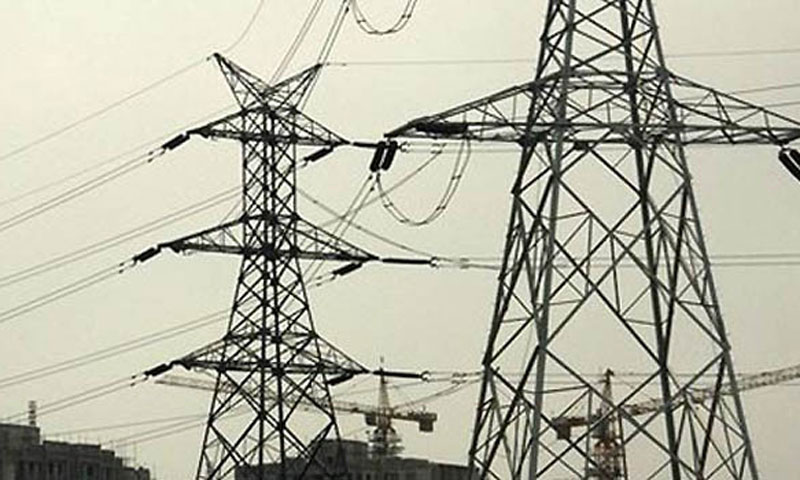

ISLAMABAD: The Economic Survey 2012-13 has blamed circular debt, weak financial position of energy companies, falling gas production, high dependence on oil and gas, low exploitation of indigenous coal and hydel resources and unutilised generation capacity for the severe power shortages in the country.
Quoting the National Transmission and Despatch Company (NTDC), the Survey said: “Annual electricity demand growth rate is forecast to hover around five to six per cent over the next 10 years. With the current position of expansion, it seems the crisis will not be over which in turn will effect the economic growth of the country.”
It said the power sector heavily depended on gas whose reduced supply had crippled its performance. The country’s electricity generation is now highly dependent on imported oil. The bulk of $14.5 billion worth of oil imported annually is used for power generation.
“Thus pronounced shift from hydro to thermal generation, and more recently from natural gas to oil as the primary fuel for electricity generation have caused fuel crisis in the power sector. These trends have further contributed to an increase in power supply cost,” the survey said.
It called for an immediate shifting of fuel mix from expensive to cheaper. The generation capacity also could not be operated at full due to constraints in fuel availability and timely payments.
As of March, the number of consumers has been increased to 21.704 million. Even during the current fiscal year, the consumption pattern, more or less, remained the same with domestic share at 43pc, industrial 26pc and agricultural at about 11pc. About 1000-1200MW is expected to be added to the national grid by 2015 if land is allocated to new wind power projects.
The Pakistan Atomic Energy Commission is responsible for planning, construction and operation of nuclear power plants such as Karachi Nuclear Power Plant and Chashma Nuclear Power Plant Unit-1 and 2 (C-1 & C-2). The construction of two more units C-3 and C-4 is in progress. The commercial operation of the under construction nuclear power plants C-3 and C-4 of 340MW each is planned in December 2016 and October 2017, respectively.
According to the survey, the import bill of petroleum group was $15.2 billion in FY12. In terms of quantity it was 19.2 million tons, including 13.2m tons of petroleum products and 6.0m tons of petroleum crude.
But during July-March FY13, it posted a negative growth of 0.53pc because of a decline in quantity (negative 0.18pc). The main reason attributed to the fall is decline in prices of petroleum products globally and their consumption.
Overall there was a negative growth in consumption of gas during Jul-March FY13. An analysis of sector-wise consumption of gas indicates that the highest share of 27.5pc was consumed by the power sector, followed by the industry 22.6pc. The share of household was 23.2pc.
However, the trend of providing gas to the power sector has been declining since 2005-06, except in 2012 which saw a growth of 6pc.
The consumption of gas by the transport sector grew by 5.3pc in 2011-12, but it declined by 16pc during July-March 2012-13. Although the sector’s share in gas consumption has increased from 0.6 to 9pc over the past 10 years, it is now declining because of load management.
The consumption of gas by the fertiliser sector has been declining, but it still shares a significant amount of 16pc. However, it declined by 7pc when compared with the last year. During July-March 2012-13, it further dropped to 12pc.
It is expected that gas will be supplied to 39,000 new consumers and about 350 new towns/villages will be connected to the gas network during the next fiscal year.
According to the survey, gas utility companies have planned to invest Rs17.437bn on transmission projects, Rs27.265bn on distribution projects and Rs11.165bn on other projects, bringing a total investment of Rs55.867bn during the next fiscal year.




























