



 4
4

ONCE the froth has settled, substantive soul-searching must take place both among those who lost and those victorious in the 2013 general election.
Surely, the biggest loser (not merely in aspirational terms) is the PPP. The party (whose leader was rightly described as the chain or zanjeer holding together the four provinces) has been all but obliterated from everywhere except Sindh.
The party leadership blames a hostile judiciary, media and now even ‘international and domestic institutions’ for its spectacular debacle. One hopes for the sake of one of the most vibrant and people-oriented parties in the country that its leaders don’t believe these reasons to be factual.
All the factors PPP leaders have cited from time to time may have a degree of truth to them. The foremost, however, is the party’s utter lack of interest in anything called governance and in trying to run a clean ship. If this wasn’t enough, look what happened to the party worker.
The post-Benazir Bhutto leaders completely alienated the jiyala who kept the party alive through two periods of military rule. These periods saw the founding leader’s judicial murder, the incarceration/exile of most of the remaining leadership and untold attempts to divide the party.
Ironically, Benazir Bhutto died courting this worker as she had no other reason to emerge from her armoured vehicle on that tragic day in Rawalpindi except for a rush of supporters seeking a glimpse of their leader and a few words from her at close quarters.
In the last election, the security threat was justifiably cited as a reason by the PPP for not staging public meetings. But the workers’ alienation had long happened by the time electioneering began. Whether it was load-shedding or general disinterest in constituency-level contact is immaterial.
What is significant is that many PPP candidates themselves privately say that in the 2013 elections the party ticket, particularly in Punjab, seemed more like a millstone around the neck rather than a much sought-after buoy that kept them afloat in the past.
It is not rocket science that the PPP would need to get its act together and run the tightest, cleanest of ships in Sindh if it has any hope of maintaining its support in the province let alone reviving its fortunes for the rich harvest of seats that elections in Punjab represent.
It’ll have to move beyond token resignations by newly installed party officials who have made no effort to revive support at the grassroots level and spent all their time in backroom deals with the so-called electables. These electables fell like ninepins on May 11 this year.
The other major loser, given its aspirations, was the Pakistan Tehreek-i-Insaf (PTI). Once the party has exorcised the ‘rigging’ ghost from its narrative and discourse, it’ll be able to move on to issues which will need to be addressed if its future has to be guaranteed.
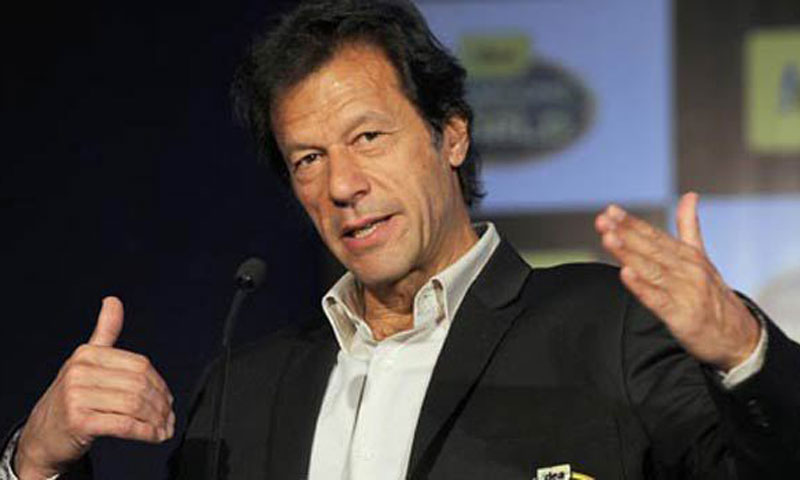
Imran Khan’s track record (not in politics though), personality, energetic campaigning and commitment meant a rainbow of support that bridged the class divide. Popular belief may hold that only the educated urban elite, disparagingly called ‘burger’ by some, were the PTI’s mainstay.
A cursory look at the percentage share of the party in the total votes cast dispels this impression. If it were so, true affluence would be far more pervasive in Pakistan than it is. The PTI secured votes from different socio-economic groups and also from people with diverse lifestyles and ideologies.
One would only need to look at the composition of the PTI jalsas in KP and rural parts of Punjab and compare them with its public meetings say in Lahore, (or pre-election campaign Karachi) and Islamabad. One point of comparison would be the presence and attire of women for example.
Balancing the aspirations of this diverse support base is a tall order nonetheless. The social media debate when it was first suggested that the PTI was allocating the education portfolio to its provincial coalition partner, the Jamaat-i-Islami, is a case in point.
Although the PTI central leadership denied the report, it wasn’t before a number of usually diehard and unflinching supporters, admittedly judging from no wider a sample than social media, expressed horror at the prospect.
So, the party will not only have to play to please its diverse support and run an exemplary provincial administration but also have to appease and keep onside allies vital to keeping its nominee in the provincial chief executive’s office.
As a senior partner in a coalition government which the PTI will be keen to present as a showcase of good governance, Imran Khan has the most determination of any other leader and will likely hold his ground on points of principle.
At the same time, negotiating with coalition partners, listening to their demands and deciding what is fair and what isn’t on an on-going basis will also mean that observers will see a humbler Imran Khan who is less severe about the shortcomings of the political class in Pakistan.
This can only be good for a country long polarised on different lines. There are other players too whose role will dictate whether the political environment remains civil or vitiated at the drop of a hat – among them the Muttahida Qaumi Movement and PML-N, to whom has gone the biggest prize.
Perhaps for the first time in many decades the military appears to have supported the transition to more meaningful civilian rule. It is now up to all the political parties, not just those in power, to wrest more control from GHQ.
How else to ensure that foreign and security policies vital to the country’s existence represent a national consensus; not the will of a few wise men? Only then we’ll talk of Balochistan as a part of us and not just a land whose sons continue to disappear and reappear as tortured, broken corpses.
The writer is a former editor of Dawn.
abbas.nasir@hotmail.com



























