0
0

KARACHI, Nov 8: Sixty per cent of the estimated 6,25,000 opioid users and 125,000 injecting drugs users in the country pertain to the age group of 15-30 years, said Director-General Dr Muhammad Shahid of the Ministry of Narcotics Control on Thursday.
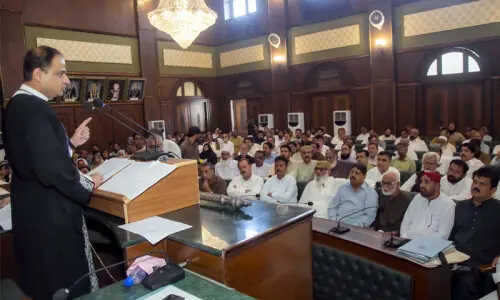
He was addressing the launching ceremony of “Treatment Protocols for Drug Use in Pakistan” jointly organised by Dow University of Health Sciences in collaboration with the Ministry of Narcotics Control and United Nations Office on Drug and Crime (UNODC).
Dr Shahid said Pakistan was the primary transit country for opiates produced in Afghanistan and consequently opiate abuse had emerged as a serious problem in the country.
“Provincial estimation of drug use shows that there are 200,000 drug users and 100,000 injecting drug users (IDUs) in Punjab, 87,000 and 44,000 in Sindh, 90,000 and 80, 000 in KPK and 45,000 and 4,500 in Balochistan,” he said.
The overall prevalence of drug abuse in Sindh showed that there were 20,000 injecting drug users with a prevalence of 0.6 per cent, he added.
The DG said that around 20 per cent of the addicts were selling blood and it must therefore be of no surprise that Pakistan Concentrated HIV Epidemic had been declared among its IDUs.
To overcome the issue, the ministry has developed new initiatives that includes Protocols for Treatment of Drug Addicts in Pakistan; Introduction of Oral Substitution Treatment; Drug Abuse Survey 2012; Transformation from Drug Awareness to Prevention; Development of Webpage for Organisations; Development of Community Leaders for Narcotics Control; Encouragement of Law Enforcing Agencies and Treatment and Rehabilitation facilities Ministry Secretary Javed Iqbal said urgent measures were required to control the mess that was spreading fast in varied forms.
Jeremy Douglas, UNODC country representative, termed drug addiction a major challenge for Pakistan.
He expressed the hope that the protocols would go a long way and provide the services at its best which was very much needed in the country.
In Pakistan, the public sector facilities were usually used by the low-income groups, though a bulk of lower-middle class was also seen visiting private sector health facilities, he said.
Jeremy Douglas said the provision of treatment offered to the clients/patients should reflect their psychological and social needs. It should have flexibility and variation to respond to the situation and should not have conflict with the tradition, customs, norms and values associated with the profession since ages, he said.
Dow university Vice-Chancellor Prof Dr Masood Hameed Khan, associate professors of psychiatry Razaur Rahman and Dr Ishaque Sarhandi also spoke on the occasion.
Experts and medical practitioners involved in treatment of drug addiction and officials of the Narcotic Control Board and UNODC attended the ceremony in a large number.
Copies of the drug treatment protocols were distributed among the practitioners and organisations involved in the treatment of drug addicts.—APP