0
0

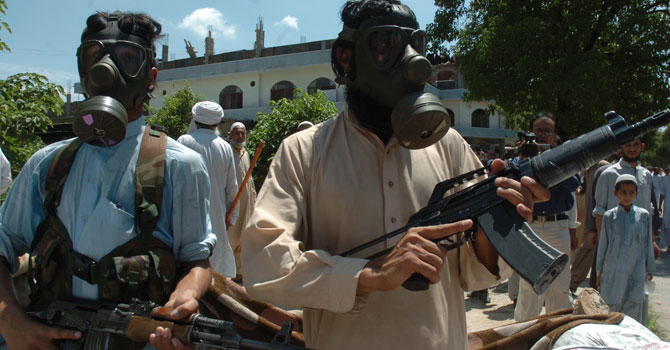
Following the bomb attack on a Shia procession in Khanpur near Rahim Yar Khan which killed 21 people on January 15 this year, Punjab has largely escaped sectarian terrorism despite the significant upsurge in violence in Quetta, Gilgit-Baltistan, Karachi and parts of Khyber Pakhtunkhwa.
“Effective policing, constant monitoring and surveillance of people involved in sectarian violence in the past have significantly weakened the ability of the militant groups to carry out attacks in Punjab,” explains a counterterrorism official on condition of anonymity.
“Most leaders of outfits like Lashkar-i-Jhangvi (LJ) were either taken out or arrested. Those acquitted by the courts for lack of evidence or suspected of having links with militant and sectarian groups are being watched 24/7,” he adds.
The South Asia Terrorism Portal (SATP) data shows that sectarian killings in Punjab dropped to 21 in the first nine months of this year from 64 in 2011. The number of sectarian attacks also fell to one from three last year : comparing favourably with the all-Pakistan data that shows a substantial upsurge in sectarian killings to 338 in 97 strikes till September from 203 in 30 attacks last year.
In 2010, sectarian terrorism left 509 people dead in 57 raids. Some 198 or two-fifth of the total died in six incidents in Punjab alone.
Though Shias remain the primary target of sectarian strikes in Punjab, the Barelvis were also not spared in recent years, evident from suicide raids on Sufi shrines.
Security analysts disagree with the police. “If police claims hold true, how do we explain non-sectarian violence carried out by the same groups?” asks a Lahore-based security and political analyst asks referring to the deadly attacks on a military camp near Wazirabad and on jail staff trainees from Khyber Pakhtunkhwa last July.
The two attacks in quick succession suggested that the militants were back in business in Punjab. “The July attacks clearly show that the militants still possess the ability to strike anywhere in the province,” said a senior police officer.
“Despite the de-escalation, we should not underestimate the ability of sectarian outfits to strike at will,” says Amir Rana, an Islamabad-based security analyst.
He believes the reduction is linked to the killings of the top leaders like Ilyas Kashmiri, Maulvi Aslam Kashmiri, Usman Punjabi and Qari Hussain, etc., in drone attacks. “Moreover, their focus has gradually shifted to the other bigger issues the Tehrik-i-Taliban Pakistan’s (TTP) war with the state and military of Pakistan.
Another crucial factor that Rana considers has contributed a lot to the recent sectarian calm in Punjab is Chief Minister Shahbaz Sharif's policy to “appease” sectarian leaders like the LJ’s Malik Ishaq, who was released in July last year when prosecution failed to produce sufficient evidence for conviction.
“By letting them operate freely for short-run political gains, the PML-N is providing them space to regroup and strengthen their operational network. What’s the guarantee that the LJ will not return to its original activities, if and when Shahbaz Sharif isn’t in government, or when they are told by the TTP leadership to step up in Punjab?” he wonders.
Temporary respite notwithstanding, sectarian violence will continue to threaten Punjab due to the strong links between the Punjab-based sectarian outfits, TTP and Al Qaeda, consistent radicalisation of the population along religious lines and infrastructure developed by the militants with patronage of the intelligence agencies over decades.