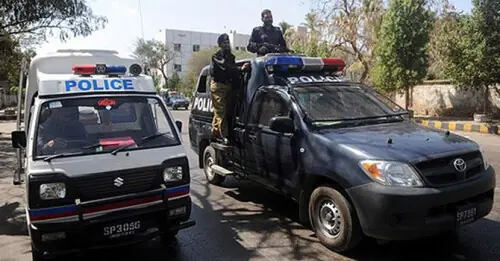
A POWERFUL car bomb on Monday shattered the relative calm that had prevailed in Parachinar over the last few months. The bomb exploded in a market, killing and injuring a number of people. A similar blast had struck a bazaar in the Kurram Agency capital in February. The TTP’s Ghazi group — a hitherto unknown outfit — has claimed responsibility for the attack, saying it was targeted at Shias. However, too much effort should not be spent on scrutinising the names of groups, as militants have a habit of regularly splintering into factions and re-branding themselves — such is the amorphous nature of militancy in Pakistan. In this case, there are suggestions that the attack could have been the handiwork of some elements from the TTP chapter in Darra Adamkhel.
While many parts of the country are currently being affected by sectarian terrorism — and Parachinar cannot be detached from this wider narrative — the region also has its own particular dynamics, as tribal vendettas get intertwined with sectarian politics. Yet while some degree of tension has existed between Kurram’s Shia and Sunni tribes in the strategically important area for the past few decades, in the current situation it has been witnessed that elements from outside the Agency are working to sabotage peace efforts. Such attacks often occur whenever normality is beginning to take root in Kurram. Hence, the security forces need to concentrate their efforts on ensuring that militants from outside Kurram are unable to sneak in to carry out acts of terrorism.
It has been noted that the opening of the Thall-Parachinar road last October has made militants’ access to Kurram easier. When the arterial road was closed for several years, it presented a different set of difficulties for Kurram residents, severing communication links with the region and the rest of Pakistan. Now that the route is open, blocking the militants’ access must be ensured. Thankfully, there has been no communal violence after Monday’s bombing. But if the situation is not contained, tensions can easily escalate. The area has witnessed horrific violence in the past. The security establishment must increase troop deployment in all troubled areas to reassure residents while the state should take tribal representatives and elders into confidence in an effort to maintain communal harmony. The tribes in the past have pledged to work towards peace, hence all external irritants attempting to harm the peace process must be neutralised. The intelligence apparatus must also work towards thwarting further attacks while most importantly, there’s a need for security forces to remain vigilant regarding elements from outside Kurram trying to get in and disturb the peace.