0
0


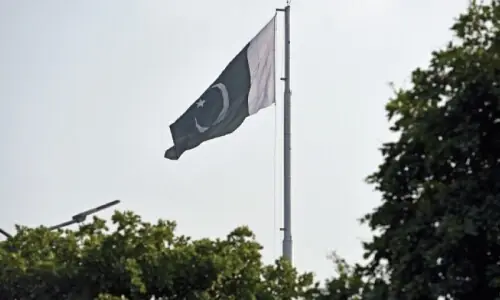
ISLAMABAD: Nato on Tuesday invited Pakistan to key talks on the future of Afghanistan in Chicago next week as Islamabad signalled it was about to end a nearly six-month blockade on supply routes.
Nato Secretary General Anders Fogh Rasmussen telephoned President Asif Ali Zardari to invite him to the May 20-21 summit, Islamabad said, a day after Pakistan's foreign minister said it was time to “move on” after US air strikes killed 24 soldiers last November.
Islamabad shut its Afghan border crossings to Nato supplies after the deaths and its relations with the United States, already frayed by the discovery of Osama bin Laden in Pakistan, plunged into their worst ever crisis.
Nato spokeswoman Oana Lungescu said Pakistan had “an important role” to play in the future of Afghanistan, which will be the focus of the second day of the summit.
“We're working very closely with Pakistan to allow the opening of the transit line because obviously this is in everybody's interest,” she said.
Pakistan's involvement in the Chicago talks would minimise its international isolation and could boost its leverage over the future of neighbouring Afghanistan, as Nato countries pull out their combat forces by 2014.
Pakistan stopped short of confirming immediately that the president would travel to Chicago, but the invitation marks a return from the cold for Islamabad, which boycotted the last major international talks on Afghanistan, held in Bonn in December.
“The president informed the Nato secretary general that he would consider the invitation in the light of the guidelines of the parliament and the advice of the government,” said spokesman Farhatullah Babar.
The Pakistani parliament has called in vain for an end to US drone strikes targeting Taliban and al Qaeda militants on its soil, and a formal US apology for the November air strikes.
Analysts say Pakistan has no choice but to reopen the border as US cash is needed to help boost its meager state coffers, at a time when major Nato discussions are under way affecting its own strategic future.
The defence committee of cabinet is to convene at around 1430 GMT, followed by a cabinet meeting on Wednesday which is widely expected to decide to reopen overland Nato supply lines into Afghanistan, closed since November.
Sources familiar with the discussions told AFP the government had effectively decided to end the blockade, probably by the beginning of next week.
Both sides had found “broad agreement” on logistics for the fuel and other non-lethal supplies that would go overland through Pakistan to Afghanistan, one source said.
“The meetings will indicate that the decision has the backing of all the stakeholders,” the source told AFP.
“This should minimise the prospect for religious groups to exploit the situation in the hope that they'll get the backing of the military establishment.” Pakistan previously negotiated a fee of $160 per 40-foot container and is now looking to secure anywhere from $320 to $500, although the figure has yet to be agreed, one source told AFP.
The United States has also guaranteed payment of at least $1.1 billion should the borders reopen, as compensation for fighting militants, the source added.
Foreign Minister Hina Rabbani Khar said on Monday that Pakistan had made its point and that “we now need to move on and go into a positive zone and try to conduct our relations.” The US State Department said both countries had made “considerable progress” on ending the blockade, which has halted fuel and supply trucks from the port city of Karachi in the south to two Afghan border crossings.
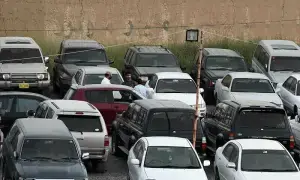
The United States has made increasing use of more expensive routes into northern Afghanistan and the Pakistan supply routes constitute as little as 25 per cent of what Nato needs to sustain itself in its nearly 11-year fight against the Taliban.
Mir Mohammad Yousuf Shahwani, chairman of the All Pakistan Oil Tanker Owners Association, told AFP he had been informed by a senior official in the petroleum ministry that Pakistan would reopen the supply line within days.