



 1
1

LAS VEGAS: Goodbye boob tube. Hello smart TV.
The world’s obsession with tapping into the Internet is being played out on the biggest screen in the house, with software startups, TV makers, and technology titans such as Google and Microsoft adding momentum to the trend.
Even the beloved firm behind iPads and iPhones is expected to weigh in soon with a revamped version of an Apple TV system that it has long called a hobby.
The Consumer Electronics Show that ends Friday in Las Vegas is brimming with companies large and small betting that “smart TVs” will quickly take over living rooms. “The television is rapidly becoming the gateway of content from the Internet,” Sony executive deputy president Kazuo Hirai said during a CES presentation.
Samsung, Sony, and LG are among major industry players that unveiled new smart TVs at the show.
South Korea-based LG announced it is making its own chips to beef-up TVs with online capabilities along with gesture and voice controls.
“Since the start of the smart TV revolution we’ve found that industry chip sets have held us back from offering high performance,” said LG Electronics chief technical officer Scott Ahn.
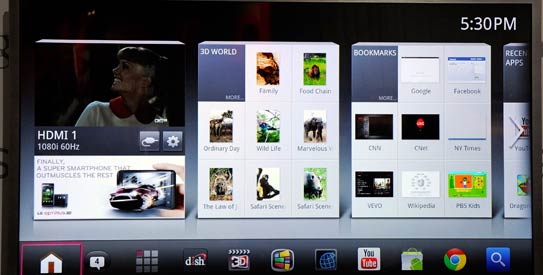
“Starting this year we will apply our own L line chips to a premier TV line.”LG has joined a small cadre of manufacturers building televisions synched to the Internet with Google TV software.
Google TV launched in 2010 but has yet to gain momentum in the market.
“We believed we have some great technologies that would make a Google LG a popular choice,” Ahn said.
“Our technology coupled with the Google TV platform will form the basis of a strong long-term relationship with Google.” Internet pioneer Yahoo! kicked off the trend at CES three years ago, with “widgets” embedded in Connected TV models to link them to online services the way “apps” link mobile gadgets to games, video or other Internet content.
More than eight million TVs with Yahoo! widgets have been bought and sales are accelerating as the technology improves and more sets come with wireless Internet connections, according to Connected TV director Russell Schafer.
“The next stage is really about engagement; providing relevant content,” Schafer told AFP.
Frequency and Shodogg were among startups at CES out to make names for themselves by helping people navigate, sort or share the dizzying amounts of video available once TVs link to the Internet.
Los Angeles-based Frequency released iPad and Internet browser versions of a service that lets people program channels based on their interests.
“You can create a personal TV Guide, basically,” Frequency chief executive Blair Harrison said, as he demonstrated the technology on an iPad.
“I can watch Facebook, TMZ, TED... as if they were video channels, or make channels on any particular topic.”Frequency applications are free, and the software will be embedded in Samsung televisions this year, according to Harrison.
“When I come home I want to turn on the TV and have it say ‘Hello Blair, here is what you want to watch’,” he said of where smart televisions were heading.
“I don’t want it to tell me the channel it was on when I turned it off, which is what it does now.”New York-based Shodogg launched a service that lets people “fetch, toss, and share” online video wirelessly across all kinds of devices, from smart televisions to tablets or smartphones.
“You can be watching video at home, toss it to your mobile device and finish watching it on public transit,” Shodogg chief innovation officer Rajiv Lulla said at the startup’s booth on the CES show floor.
“If you want to share the content with your kids in the next room or your grandmother living in India, you can do that, as long as they are connected.”The Shodogg application is free, with the company making its money by sharing in revenue from advertising in video routed through the service.


























