

Literary magazines’ uphill battle
 It is generally believed that Khairkhwah-i-Hind, launched in 1847 by Master Ram Chandr, was Urdu’s first literary and scholarly magazine. It was renamed as Muhibb-i-Hind as a Baptist missionary at Mirzapur had been publishing a journal since 1837 by the same name, about which Master Ram Chandr didn’t know.
Urdu has a long history of literary magazines. Some of the prominent literary journals that the language has produced include: Sir Syed Ahmed Khan’s Tehzeeb-ul-Akhlaq, Abdul Haleem Sharar’s Dilgudaz, Shaikh Abdul Qadir’s Makhzan, Hasrat Mohani’s Urdu-i-Moalla, Diya Narain Nigam’s Zamana, Zafar Ali Khan’s Sitara-i-Subh, Dar-ul-musannifeen’s Muaarif, Chakbast’s Subh-i-Ummeed, Imtiaz Ali Taj’s Kehkashan, Moulvi Abdul Haq’s Urdu, Niaz Fatehpri’s (and later Farman Fatehpuri’s) Nigar, Mian Basheer Ahmed’s Humaiyoon, Jamia Millia’s Jamia, Oriental College’s Oriental College Magazine, Akhter Shirani’s Intekhab and Roomaan, Tajwer Najeebabadi’s (and Salahuddin Ahmed’s) Adabi Dunya, Hakeem Ahmed Shuja’s Hazaar Daastan, Hakeem Yousuf Hussain’s Nairang-i-Khayal, Shahid Ahmed Dehlvi’s Saqi, Seemab Akberabadi’s Shaer, Rasheed Ahmed Siddiqi’s Suhail, Sehba Lakhnavi’s Afkar, Chiragh Hasan Hasrat’s Shiraza, progressive writers’ Sawera (and later on Adab-i-Lateef, too), Mumtaz Shirin’s Naya Daur, Mohammad Tufail’s Nuqoosh, government of Pakistan’s Maah-i-Nau, Majlis-i-Taraqqi-i-Adab’s Saheefa, Anjuman Taraqqi-i-Urdu’s Qaumi Zaban, Urdu Dictionary Board’s Urdu Nama, Ahmed Nadeem Qasmi’s Funoon, Vazeer Agha’s Auraq, Mushfiq Khwaja’s Takhleeqi Adab, Ata-ul-Haq Qasmi’s Muaasir, Naseem Durrani’s Seep, Mubeen Mirza’s Mukalma and scores of other quality journals, apart from magazines brought out by our universities’ Urdu departments.
 I apologize for giving this long list. And I also apologize if I have missed any names, as I am afraid I have many. But mere counting or recalling names is not intended here. I just wanted to give an idea how prolific and creative Urdu’s literary journalism has been. What these magazines have published includes research as well as critical material in addition to creative pieces.
There can be no denying the fact that literary journals play a very vital role in the creation and promotion of literature. Literary trends and movements usually surface in literary magazines first and then catch on. Literary magazines are instruments, so to speak, that measure where the winds are blowing.
It is literary journalism that gave many great writers of Urdu their first taste of fame. Many great pieces like Khadija Mastoor’s Anngan or Krishan Chandre’s An Data first appeared in literary magazines. Journals that began publishing in the 19th century also helped shape the Urdu language.
In the aftermath of the 1857 war of independence, many Urdu magazines were launched and the 20th century saw a real proliferation of literary Urdu magazines, some of which have been named above. After independence, a great many literary Urdu journals began their journey while the old ones continued theirs. Among the new ones that made ripples were Nuqoosh, Funoon, Urdu Nama and Az-Zubair, to name a few.
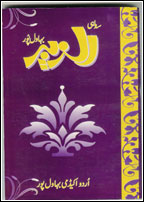
Az-Zubair, a quarterly launched in 1961 by Bahawalpur’s Urdu Academy, is now in its 48th year of publication, a rare feat indeed as even giants like Nuqoosh have either ceased publication or have become, to a large extent, irregular in their publication or ineffective due to dwindling circulation.
Az-Zubair’s first editor was Allama Shabbir Bukhari. Later on, Masood Hasan Shahab Dehlvi took over as editor and it is exactly when Az-Zubair really began to set new trends and new standards in the history of Urdu literary journalism.
In those days literary magazines used to publish special issues on literary topics. These issues were called ‘number’ and Nairang-i-Khayal has to its credit the founding of this tradition. Other journals carried this tradition further and Nuqoosh is especially admired and remembered for its special issues. But it was Az-Zubair that first published special issues on topics like travelogue writing and autobiography. It brought out special issues on Cholistan, literary feuds, criticism, short-story and others important aspects of literature and other journals, including Nuqoosh, followed suit. Az-Zubair’s special issue on libraries, published in 1967, surveyed important libraries of the Indo-Pak subcontinent, including larger personal collections.
Dr Shahid Hasan Rizvi, the current editor, has been trying hard to keep the magazine afloat as the atmosphere and times are no more conducive to literary magazines. It is really commendable that he brings out the journal regularly and Az-Zubair can be termed as one of the most regular quarterlies of Urdu. What is more appreciable is the fact that he does the work almost single-handedly.
The current issue, keeping in line with the tradition, offers a number of good articles on research and criticism. Notable among these is Hafiz Sufwan Chauhan’s article, stressing the need for the immediate launching of an online English-Urdu dictionary in Urdu script. He has been constantly presenting, and quite rightly so, the case for an online Urdu corpus.
It is disappointing to note that many literary magazines that helped popularize Urdu literature and played an important role in shaping writers that were later known as stalwarts had to be closed down and lost to oblivion. Many are fighting a battle for their survival and many launched in recent years could not survive beyond a few issues. But, at the same time, contradictorily, it is heartening to note that a good number of new literary Urdu magazines have been launched, especially from Punjab, and they are making good progress with sustained publications.
Literary magazines’ uphill battle
It is generally believed that Khairkhwah-i-Hind, launched in 1847 by Master Ram Chandr, was Urdu’s first literary and scholarly magazine. It was renamed as Muhibb-i-Hind as a Baptist missionary at Mirzapur had been publishing a journal since 1837 by the same name, about which Master Ram Chandr didn’t know.
Urdu has a long history of literary magazines. Some of the prominent literary journals that the language has produced include: Sir Syed Ahmed Khan’s Tehzeeb-ul-Akhlaq, Abdul Haleem Sharar’s Dilgudaz, Shaikh Abdul Qadir’s Makhzan, Hasrat Mohani’s Urdu-i-Moalla, Diya Narain Nigam’s Zamana, Zafar Ali Khan’s Sitara-i-Subh, Dar-ul-musannifeen’s Muaarif, Chakbast’s Subh-i-Ummeed, Imtiaz Ali Taj’s Kehkashan, Moulvi Abdul Haq’s Urdu, Niaz Fatehpri’s (and later Farman Fatehpuri’s) Nigar, Mian Basheer Ahmed’s Humaiyoon, Jamia Millia’s Jamia, Oriental College’s Oriental College Magazine, Akhter Shirani’s Intekhab and Roomaan, Tajwer Najeebabadi’s (and Salahuddin Ahmed’s) Adabi Dunya, Hakeem Ahmed Shuja’s Hazaar Daastan, Hakeem Yousuf Hussain’s Nairang-i-Khayal, Shahid Ahmed Dehlvi’s Saqi, Seemab Akberabadi’s Shaer, Rasheed Ahmed Siddiqi’s Suhail, Sehba Lakhnavi’s Afkar, Chiragh Hasan Hasrat’s Shiraza, progressive writers’ Sawera (and later on Adab-i-Lateef, too), Mumtaz Shirin’s Naya Daur, Mohammad Tufail’s Nuqoosh, government of Pakistan’s Maah-i-Nau, Majlis-i-Taraqqi-i-Adab’s Saheefa, Anjuman Taraqqi-i-Urdu’s Qaumi Zaban, Urdu Dictionary Board’s Urdu Nama, Ahmed Nadeem Qasmi’s Funoon, Vazeer Agha’s Auraq, Mushfiq Khwaja’s Takhleeqi Adab, Ata-ul-Haq Qasmi’s Muaasir, Naseem Durrani’s Seep, Mubeen Mirza’s Mukalma and scores of other quality journals, apart from magazines brought out by our universities’ Urdu departments.
I apologize for giving this long list. And I also apologize if I have missed any names, as I am afraid I have many. But mere counting or recalling names is not intended here. I just wanted to give an idea how prolific and creative Urdu’s literary journalism has been. What these magazines have published includes research as well as critical material in addition to creative pieces.
There can be no denying the fact that literary journals play a very vital role in the creation and promotion of literature. Literary trends and movements usually surface in literary magazines first and then catch on. Literary magazines are instruments, so to speak, that measure where the winds are blowing.
It is literary journalism that gave many great writers of Urdu their first taste of fame. Many great pieces like Khadija Mastoor’s Anngan or Krishan Chandre’s An Data first appeared in literary magazines. Journals that began publishing in the 19th century also helped shape the Urdu language.
In the aftermath of the 1857 war of independence, many Urdu magazines were launched and the 20th century saw a real proliferation of literary Urdu magazines, some of which have been named above. After independence, a great many literary Urdu journals began their journey while the old ones continued theirs. Among the new ones that made ripples were Nuqoosh, Funoon, Urdu Nama and Az-Zubair, to name a few.
Az-Zubair, a quarterly launched in 1961 by Bahawalpur’s Urdu Academy, is now in its 48th year of publication, a rare feat indeed as even giants like Nuqoosh have either ceased publication or have become, to a large extent, irregular in their publication or ineffective due to dwindling circulation.
Az-Zubair’s first editor was Allama Shabbir Bukhari. Later on, Masood Hasan Shahab Dehlvi took over as editor and it is exactly when Az-Zubair really began to set new trends and new standards in the history of Urdu literary journalism.
In those days literary magazines used to publish special issues on literary topics. These issues were called ‘number’ and Nairang-i-Khayal has to its credit the founding of this tradition. Other journals carried this tradition further and Nuqoosh is especially admired and remembered for its special issues. But it was Az-Zubair that first published special issues on topics like travelogue writing and autobiography. It brought out special issues on Cholistan, literary feuds, criticism, short-story and others important aspects of literature and other journals, including Nuqoosh, followed suit. Az-Zubair’s special issue on libraries, published in 1967, surveyed important libraries of the Indo-Pak subcontinent, including larger personal collections.
Dr Shahid Hasan Rizvi, the current editor, has been trying hard to keep the magazine afloat as the atmosphere and times are no more conducive to literary magazines. It is really commendable that he brings out the journal regularly and Az-Zubair can be termed as one of the most regular quarterlies of Urdu. What is more appreciable is the fact that he does the work almost single-handedly.
The current issue, keeping in line with the tradition, offers a number of good articles on research and criticism. Notable among these is Hafiz Sufwan Chauhan’s article, stressing the need for the immediate launching of an online English-Urdu dictionary in Urdu script. He has been constantly presenting, and quite rightly so, the case for an online Urdu corpus.
It is disappointing to note that many literary magazines that helped popularize Urdu literature and played an important role in shaping writers that were later known as stalwarts had to be closed down and lost to oblivion. Many are fighting a battle for their survival and many launched in recent years could not survive beyond a few issues. But, at the same time, contradictorily, it is heartening to note that a good number of new literary Urdu magazines have been launched, especially from Punjab, and they are making good progress with sustained publications.



























