ISLAMABAD: The government is considering to impose a new tax on compressed natural gas to reduce the price difference between CNG and petrol in order to phase out the use of the gas in private transport.
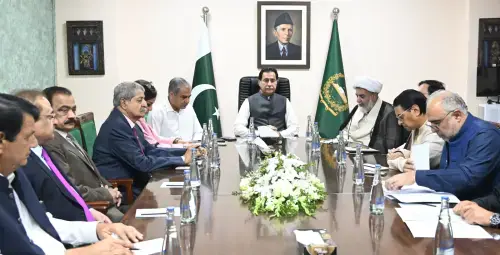
“The government has planned to phase out CNG stations gradually as they are causing heavy loss to the national economy by wasting this valuable commodity (natural gas), instead of its use for industrialisation and investment and domestic use,” Prime Minister’s Adviser on Petroleum Dr Asim Hussain told the National Assembly’s Standing Committee on Petroleum on Wednesday.
The country does not have sufficient or surplus gas reserves to allow it to be burnt in private and luxury vehicles.
He said the government wanted to set equitable prices for all fuels and allow only a reasonable profit to owners of CNG stations.
He said the CNG should only be used by public transport and private vehicles should be discouraged from burning the cheaper fuel.
To achieve this goal, he indicated imposition of a new tax but did not give details.
The committee headed by Muhammad Tariq Khattak asked the petroleum ministry to come up with a solution by Dec 5 and play the role of a mediator between the CNG station owners and the Oil and Gas Regulatory Authority (Ogra) in fixing a reasonable price to mitigate people’s difficulties.
It expressed concern over closure of CNG stations and the disagreement over the pricing mechanism.
Dr Asim said Ogra had failed to play the role of a regulator. The government increased the wellhead gas price to $6 which boosted exploration work and 40 rigs were operating in the country. He said 30,000 barrels of oil from Khyber Pakhtunkhwa would start flowing into the national system by March next year.
He said the department of explosives that granted no-objection certificate to CNG and petrol stations was under the industries ministry where officials received bribes to issue laboratory certificates. The petroleum ministry, he said, had initiated a legislation to bring the department under its control.
The parliamentarians expressed concern over recent explosions in CNG-fitted vehicles and wondered what role the department of explosives and the Hydrocarbon Development Institute played in allowing substandard cylinders.
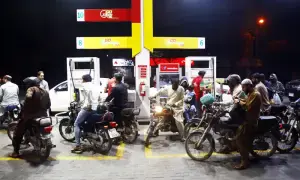
The members said that while Ogra and the station owners were taking extreme positions, the consumers were forced to spend a major part of their day in long queues to get CNG.
Some members called for a national debate to determine if there was sufficient gas available for vehicles or it should be used only for value-added sectors so that a clear roadmap could be followed and confusion and people’s difficulties removed.
MNA Rana Afzaal Hussain said the CNG Association had become a cartel and minted millions of rupees at the cost of people. He wondered why 100 per cent profit was promised in the agreement the government had reached with the CNG sector in 2008.