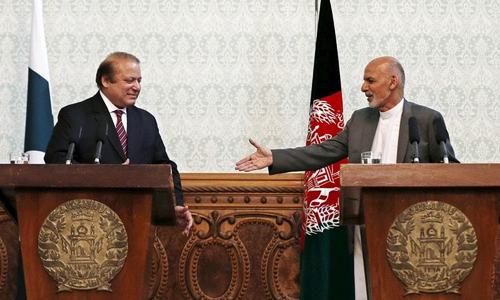
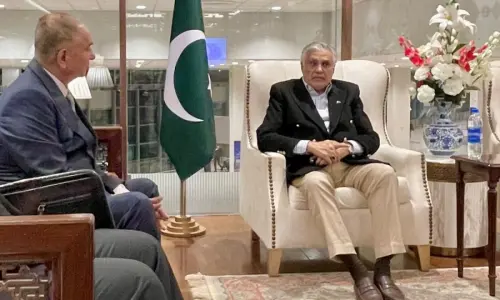
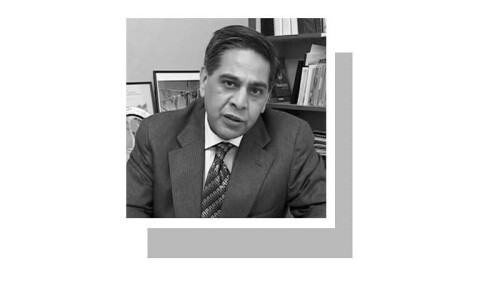
Adviser to Prime Minister on Foreign Affairs Sartaj Aziz asked the Afghan leadership to stop blaming Islamabad for the deteriorating security situation in Afghanistan and advised them to instead review their “fragmented” approach to peace talks with the Taliban on the resilient insurgency, reported VoA on Wednesday.
In an interview to the US-based media outlet, Sartaj Aziz said that a "lack of political consensus and prevailing ambiguity in Afghanistan about whether to treat Taliban insurgents as terrorists or stakeholders" in national politics had blocked the internationally-backed efforts to start peace talks between the warring sides.
“Their approach to talks with the Taliban is very, very fragmented," he said. "We want the [Afghan] government of national unity to succeed, to establish its writ, we want them to send a clear signal to the Taliban and other groups that the whole world wants them [insurgents] to talk [to Kabul] and solve the problem because nobody wants fighting in Afghanistan to continue.”
A clarity in the Afghan approach coupled with Pakistan’s resolve to prevent the use of its soil against Afghanistan and international pressure may send “right signals” to the Taliban and they may come to the table for peace talks, the report quoted Aziz as saying.
“I think they will come under greater pressure and so, if serious negotiations begin in 2017, that will be our best hope for peace in Afghanistan,” Aziz told VoA.
He was of the view that years of reliance on the use of military power to resolve the Afghan conflict has so far not yielded results and instead strengthened the Taliban.
“The Taliban may not be able to capture (the) bulk of Afghanistan or the capital or any other (major urban) place but they can carry on [the] insurgency for a very long time and the people of Afghanistan do need peace as early as possible… In the meanwhile, of course, ISAF forces are trying to help Afghanistan to make sure that they [the Taliban] don’t gain much territory because if they start gaining [more territory] then obviously they will be reluctant to negotiate,” he was quoted as saying.
Talking about the ongoing Operation Zarb-i-Azb against terrorists and its impact within and across the Afghan border, he said that Pakistan had repeatedly assured Ghani that space has been squeezed on anti-Afghan insurgents and those hiding on the Pakistani side of the border had mostly gone back to Afghanistan.
“So, that commitment we are gradually honouring. Through operation Zarb-i-Azb, North Waziristan was cleared. The infrastructure of all the terrorist groups was destroyed so they can no longer operate as forcefully and as frequently as they used to but remnants are still scattered. The cleaning up operations are going on,” Aziz said.
Aziz said that Pakistan has already intensified efforts to boost security along its 2,600-kilometre long porous border with Afghanistan.
Further elaborating the efforts being taken by Islamabad to ensure a secure border, he said, "Unlike the decades old tradition of free cross-border movement, travellers are now required to show valid identity documents to move in either direction."
“This (new policy) will enable us to monitor the movement of all kinds of people and so this documentation travel has to be (introduced) on both sides. So far they (Afghanistan) aren’t (implementing it on their side)…and that is the best way to ensure that undesirable elements do not go (to Afghanistan) and this is the only way we can ensure that our commitment of not allowing our soil to be used can be observed,” Aziz said during the interview.
He also demanded of the Afghan authorities to make a matching response on their side.