With its wide, manicured roads, high-rise buildings, shopping malls and recreational spots, Islamabad would be largely indistinguishable from any other modern capital city, if not for the Margallas, and the roads and trails that zigzag up the hills.
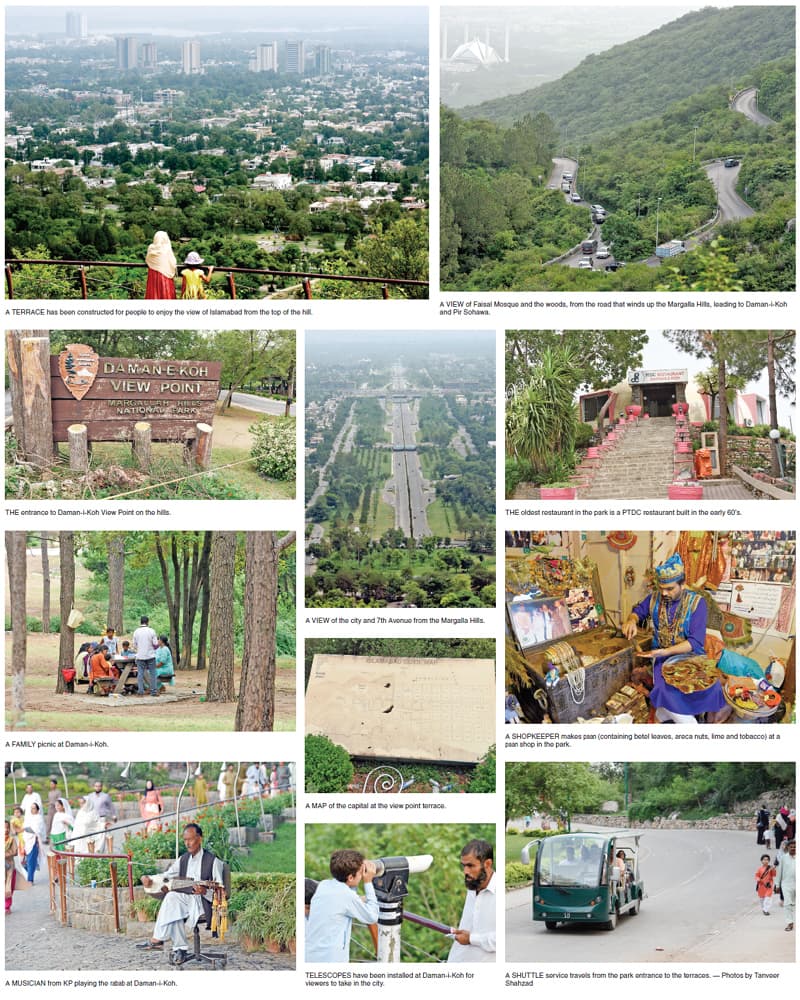
Daman-i-Koh is a point on the Margalla Hills where wildlife, villages and the modern city meet. On one side of the hill, old villages tell the history of the area, and on the other, a modern capital welcomes visitors.
These two sides of Islamabad are also visible at Pir Sohawa, the highest point of the city. The meadows and terraced fields of the Gokina, Talhar and Saidpur villages stand on either side of the hills.
Most Gokina residents are employees of the Capital Development Authority (CDA), and spend their spare time cultivating vegetables to sell in the city’s markets. Public transport from Super Market in F-6 takes people from the city to the other side of the Margallas.
Before 1960, this area fell within the Rawalpindi district and was considered a crossroad of Khyber Pakhtunkhwa and Azad Kashmir for centuries. Once Islamabad was established in 1960, the CDA developed a picnic spot on the hill.
According to tales told by villagers from Gokina, Talhar and Saidpur, the Margallas were a safe haven for robbers and bandits during British rule. Most people were afraid to use this route to enter KP from Haripur, and instead travelled to KP from Taxila.
Now, however, the woods of the Margallas are a safe haven for wildlife and fauna and flora. It is not uncommon to see monkeys travelling down the same roads and hiking trails that lead tourists and residents from Margalla Road to Daman-i-Koh. Last year, villagers even saw leopards in the hills, and cobras are also said to be found in the area.
Previously, the Pakistan Tourist Development Corporation (PTDC) owned a restaurant at Daman-i-Koh, but the CDA has since allowed new outlets to operate at the site. Many restaurants also opened in Pir Sohawa after the area was redeveloped in 2007.
Gardens at the top of the hills are a popular spot for tourists, as well as local residents, for a day out. Walking and hiking trails have also been developed, and many people visit these for morning or evening strolls.
Of course, one of the most popular things about the Margalla Hills is the view of the city spread out below. Morning and evening, the woods, the city and its expansive avenues, Faisal Mosque and Rawal Dam can be seen from the hills, and from telescopes that have been installed there.
Published in Dawn, July 31st, 2016