15
15

FATEHJHANG: For farmer Mujahid Abbasi, switching the power source for his irrigation pump from diesel to biogas has brought economic and health gains.
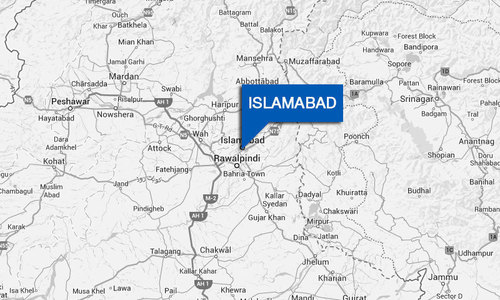
The 43-year-old from Fatehjhang, some 42 kilometres from Islamabad, has benefited from a pilot project led by the Punjab government to provide biogas equipment at a subsidised rate.
Abbasi uses dung from his 30 buffalo to produce nearly 40 cubic metres of gas per day, which powers his irrigation pump for six hours and his family's cooking stove.
The father of five says cutting out diesel has saved him around Rs1,046 to Rs1,255 daily over the past 13 months.
He has used the money to plant seasonal vegetables on five additional hectares that had lain fallow for several years due to a lack of funds.
Turning a lever to start his groundwater pump, Abbasi recalls how the 20-horse power engine used to consume around 13 litres of diesel each day. But he has not bought diesel since he installed the biogas-run pump in March 2015.
"This is a brilliant saving," he said. "This means additional income of Rs120,290 for me annually. It has helped improve our family's economic well-being."
Close to 20 other farmers in his area have followed suit and are also running their irrigation pumps on biogas, thanks to the government-backed project.
Vegetable farmer Naeem Raza Shah uses slurry left over from the biogas production process to fertilise his 19 hectares, cutting out chemical fertiliser which previously cost him around Rs88,910 per year.
"The organic fertiliser from the biogas plant is an economic blessing for me," he told the Thomson Reuters Foundation.
Subsidies for small farmers
Abbasi and Raza are among nearly 17,000 beneficiaries of the $67 million programme that aims to convert 100,000 irrigation pumps from diesel to biogas by the end of 2017 across Punjab.
According to Punjab Agriculture Minister Farrukh Javed, the initiative aims to reduce dependence on diesel and boost farm productivity by improving access to irrigation water and promoting the use of bio-fertiliser, while fighting groundwater contamination from chemical inputs.
The government is paying half of the conversion cost for diesel-powered pumps, which ranges from Rs200,000 to Rs400,000 rupees per tube well.
The subsidies are weighted in favour of farmers with less land, who usually have lower incomes and would struggle to afford the pump conversion without additional financial support.
The programme is expected to avoid the use of 288m litres of diesel, worth Rs30 billion each year.
It will help cut the diesel import bill and boost farmers' profits, while reducing environmental pollution. It is expected to shrink the sector's carbon footprint by more than 5 per cent.
Agriculture accounts for nearly 39pc of Pakistan's annual carbon emissions, which are increasing at a rate of 6pc per year.
According to a 2010 census by the Pakistan Bureau of Statistics, farmers operate 1.1m irrigation pumps across the country to exploit groundwater, more than 70pc of them in Punjab. Of these, 900,000 are run on diesel.
Meanwhile, in Punjab alone, there are 32m cattle and buffalo, which produce 117m tonnes of dung annually ─ enough to produce around 6bn cubic metres of biogas.
"The government should encourage the private sector to join its efforts to capitalise on the untapped opportunity the biogas sector offers in view of the millions of tonnes of unused dung from 180 million head of cattle across the country," said Arif Allauddin, former head of Pakistan's Alternative Energy Development Board.