0
0
PANAMA: Argentine President Mauricio Macri became the latest world leader to be caught up in the storm of the so-called Panama Papers on Thursday as prosecutors opened an investigation into his offshore financial dealings.
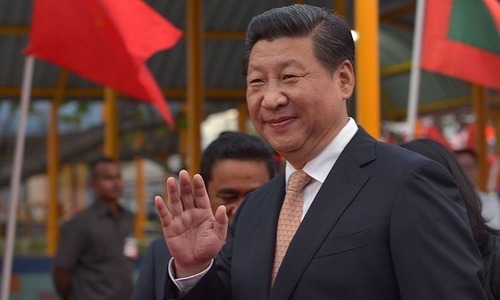
Macri, the leading symbol of a budding right-wing resurgence in Latin America, joins Russian President Vladimir Putin and China’s Xi Jinping in the tempest unleashed by the leak of millions of offshore financial documents from Panamanian law firm Mossack Fonseca.
But unlike Putin and Xi, who are only connected to the revelations via their inner circles, Macri is listed on the board of directors of two offshore firms — one registered in the Bahamas and the other in Panama.
Investigators around world have announced probes following Panama Papers revelations
Argentine federal prosecutor Federico Delgado said he had asked a judge to request information from the national tax authority and anti-corruption office to determine whether Macri “omitted, with malicious intent, to complete his sworn declaration” of assets, a requirement for Argentine public officials.
Macri did not list either company in his financial declarations when he became Buenos Aires mayor in 2007 or president last December.
The conservative leader, who vowed to fight corruption during his presidential campaign, denies wrongdoing and says the firms were legitimate operations set up by his father, a wealthy business magnate.
Putin for his part ridiculed the international media probe behind the revelations, deriding it as US-orchestrated and boasting that a year-long investigation had failed to find any mention of his name.
The International Consortium of Investigative Journalists (ICIJ) coordinated the investigation with more than 100 media groups around the world after the 11.5 million documents were obtained from an anonymous source by German daily Sueddeutsche Zeitung.
The leaks have put a host of world leaders, celebrities and sports stars in the hot seat and left Panama fighting to salvage its reputation.
Already, they have toppled Iceland’s prime minister and led to a Swiss police raid on the headquarters of European football body UEFA.
Panamanian President Juan Carlos Varela fended off accusations that his country has allowed the rich and powerful to hide their funds from international tax authorities and the law, vowing to “confront whoever comes to put down Panama’s image”.
He called on the Organisation for Economic Cooperation and Development (OECD) to “return to the table for dialogue”, after the group sharply criticised lawlessness in the Panamanian finance sector, which accounts for seven per cent of the Central American country’s economy.
There was no immediate reaction to Varela’s comment from the Paris-based, 34-nation OECD, which helps to coordinate the global fight against tax evasion.
In Iceland, former agriculture minister Sigurdur Ingi Johannsson was sworn in as premier after his predecessor, Sigmundur David Gunnlaugsson, was forced out over allegations he hid millions of dollars of investments.
Though not illegal in themselves, offshore financial transactions may be used to hide assets from tax authorities, launder the proceeds of criminal activities or conceal misappropriated or politically inconvenient wealth.
Investigators around the world, including in Australia, the Netherlands, El Salvador and Costa Rica, have all announced probes following the leak.
A judicial source said Spain had opened a money-laundering probe into the law firm.
Many of the world’s top banks have also been named in the leaks, including HSBC, UBS, Credit Suisse and Societe Generale, as creating thousands of offshore companies.
European banking shares took a pounding on Thursday after British and French regulators ordered lenders to come clean on any links to the scandal.
Published in Dawn, April 8th, 2016