EVEN as tragedy struck Lahore with full force, a disturbing set of events was transpiring in Islamabad on Sunday.
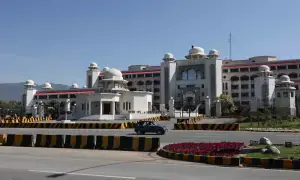
A situation requiring the state to act delicately but firmly turned dangerous when rioters stormed an area that is supposed to have watertight security.
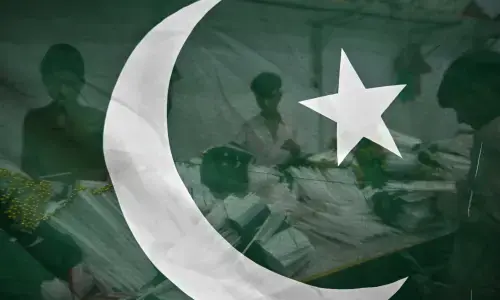
While organisers had earlier claimed that the chehlum of executed assassin Mumtaz Qadri was going to be a peaceful affair, it turned out to be anything but, as protesters marched from Rawalpindi’s Liaquat Bagh to parliament — a considerable distance — largely unhindered by police and paramilitary forces that were deployed in the area.
The mobs caused much damage and army troops had to be called in in aid of civil power. At the time of writing, many protesters continue to occupy D-Chowk.
Handling such large crowds gathered for an emotionally charged event was never going to be an easy exercise, although having experienced the tension and violence of the PTI-PAT dharna days, the state should have had some plan in place.
Yet the state seemed to lack any strategy, in contrast to the protesters who appeared to have a fairly good idea of what they were doing. Apart from the state’s ineptitude, the religious parties contributed a great deal to the ugly turn of events.
In the days leading up to the chehlum, all over the country the religious right whipped up the emotions of its supporters through statements and public events organised in memory of Mumtaz Qadri. In fact, the breaking out of violence on Sunday was not a question of if, but when.
While the bulk of the violence was witnessed in the capital, other parts of the country were not immune. For example pro-Qadri demonstrators in Karachi attacked the Press Club; the gates of the institution had to be locked until police showed up and dispersed the mob.
People have a right to peacefully protest and express their emotions. But there is no justification for resorting to violence.
Such incidents are indicative of the high intolerance levels in society. While the majority of the population may be moderate in its outlook, all it takes is a tiny minority of charged-up obscurantists to cause mayhem.
For the state, the challenge is how to handle this fringe with minimal force but unambiguous resolve. As for the religious right, through its inflammatory rhetoric, it is only aiding the cause of religiously inspired militancy.
Published in Dawn, March 29th, 2016