2
2
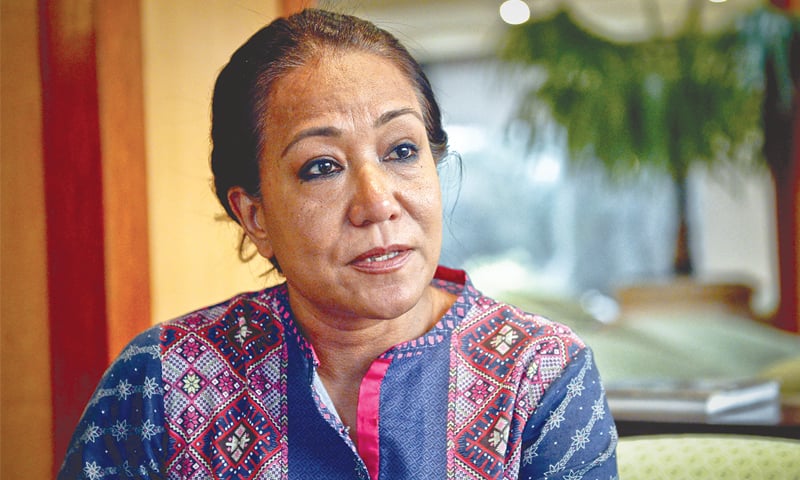
As member of the Nepalese Constitutent Assembly, Sapana Pradhan Malla was very involved in the drafting of the constitution. And, as Gender Adviser to the office of the prime minister, she was instrumental in ensuring that gender-sensitive provisions were included in the constitutional framework. She was in Karachi recently to attend the Women of the World Think in and discussed with Maleeha Hamid Siddiqui the shortcomings of the constitution and why it has led to divisiveness in Nepal.
Q: What world constitutions did the technical committee study while drafting the constitution?
A: We first went to the community and asked what principles or concepts they would like to see in the constitution. We prepared a concept paper in which we did a comparative study of different constitutions. We especially looked at those which were made after a conflict or peace negotiations. We also looked at the constitutions of developed countries. But it isn’t easy to capture everything in a single framework.
Q: How deeply were you engaged in the drafting of the constitution?
A: I was a member of the first constituent assembly. I was also a member of the drafting of the constitutional task force and was working in the technical committee. I was very much involved in the process and in finalising the draft. The first constituent assembly was able to resolve everything but the leaders couldn’t reach a consensus and could not finalise the draft. I wasn’t there in the second constituent assembly but I gave a lot of feedback. The second constituent assembly was focused only on the contentious issues. This assembly also discussed the citizenship issue which related to women. Just to enlist the citizenship issue we had a long struggle. Even to enlist it as a disputed issue.
Q: Why do you think was there so much resistance to it?
A: Citizenship is not a mere right to confer it on children or spouse. It is also a political issue. The political leaders related citizenship through marriage to national interest and security. So, on the one hand you respect the right to marriage, the right to choose in a marriage, but if a woman chooses a foreigner as her husband then he or her children don’t have the right to domicile. This means you don’t have the right to family which is a fundamental right. The debate continued right till the passage of the constitution without resolving the issue. But after the passing of the constitution there were protests by the Madhesi ethnic minority community. As a result, there have been negotiations with them, leading to an informal agreement but women’s issues have still not been resolved.
Q: Why are the Madhesis unhappy with the constitution?
A: They were unhappy with the process because it was rushed through. It was perhaps done because there was fear of intervention and that we will not be able to adopt the constitution. That speedy process did not allow any amendments. This led to protests and boycotts. They were also upset because their population was not given adequate representation. Districts were divided especially in the Madhes areas. We adopted the constitution either in fear or under pressure.
Q: What about Nepal becoming a secular state...
A: I am personally not happy with it especially the definition which says that secularism is the protection of religion which has been practised for years and years. It is an indirect protection of Hinduism. If the state is truly secular, it has to be impartial towards all religions.
Q: What gender-sensitive provisions were incorporated in the constitution?
A: In South Asia, women are not only discriminated socially, culturally, religiously but also by law. We have been able to insert a definition of non-discrimination which is not traditional. So it is non-discrimination not only on the basis of sex, caste or creed but also marital status. This concept has been included. There is a constitutional guarantee of right to property for women regardless of their marital status.
Another provision relates to equality. Not just equality of opportunity but also equality of outcome. In other words, women’s representation in parliament and the state assemblies will be 33 per cent. Therefore, president or vice president, speaker or deputy speaker in parliament or provinces has to be a woman. Even in local bodies we have been able to ensure women have 40 per cent representation.
Q: India has been unhappy with the Nepalese constitution. PM Modi sent one of his representatives to delay the adoption of the constitution. And when it was passed, the Indians issued a statement saying they had noted it. What do you think about India’s reaction?
A: We are neighbours; we are very close; we have an open border. But we need to understand that there are boundaries that need to be respected. This is for the first time we saw Nepalese leaders resisting any kind of interference, which is commendable. If Madhesi community has any problems then we have to resolve it ourselves.
Published in Dawn, January 18th, 2016