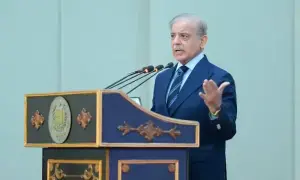
THAT terrorism was one of Nawaz Sharif’s major concerns during his Sri Lankan visit became obvious when he rang up Narendra Modi to assure him that his government would not hesitate to take “prompt and decisive action” if the involvement of Pakistan-based elements in the Pathankot attack was proved.
Terrorism also came up for discussion during talks between Mr Sharif and Sri Lankan President Maithripala Sirisena, when the latter thanked Pakistan for its help in putting down the Tamil insurgency led by the LTTE.
While there is no doubt that the crushing of the insurgency is a controversial, blood-filled chapter in Sri Lanka’s history and has involved egregious human rights violations, Pakistan’s military assistance is seen as having helped restore peace to the island.
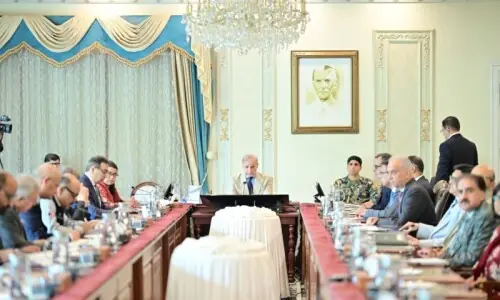
Yet countering terrorism is only one aspect of the multidimensional relationship between Pakistan and Sri Lanka as is evident from the number of agreements signed during the visit of Prime Minister Sharif.
Besides the memorandums of understanding signed on cooperation in such diverse fields as financial intelligence and terrorism financing, the two sides also pledged to work closely in science and technology, healthcare, tourism and defence, while deciding to include the exchange of services under the free trade agreement.
Given Saarc’s failure to click, Pakistan has no choice but to develop bilateral relations with its members. The principal reason for Saarc’s inability to become a going concern like Asean and the EU are many, but the principal factor is the adversarial India-Pakistan relationship.
The same is true, though at a lower level, of Islamabad’s ties with Kabul, both failing to develop a workable model of coordination in tackling terrorism on either side of the border. In contrast, Colombo and Islamabad always had a warm relationship that has worked to their advantage.
The Sri Lankan government’s decision to buy eight Pakistan-built JF-17 aircraft in the face of stiff Indian opposition shows the Sri Lankan leadership’s resolve to withstand pressure and develop the country’s military capability against a possible resurgence of insurgency.
Mr Sharif welcomed the Sri Lankan navy’s participation in joint manoeuvres with the Pakistan Navy and hoped cooperation in defence would continue. What is regrettable is the low volume of trade — a mere $325m. We can only hope that the resolve to raise it to a billion dollars will be met, even though, given the natural resources the two countries possess, trade could be expanded manifold.
Published in Dawn, January 7th, 2016