It is as unexpected as it is compelling — and official: Pakistan and India are to resume dialogue across a range of agreed subjects under the umbrella of what has now been labelled the Comprehensive Bilateral Dialogue.
As ever, the India-Pakistan relationship has not failed to surprise — though for once in the most welcoming of ways.
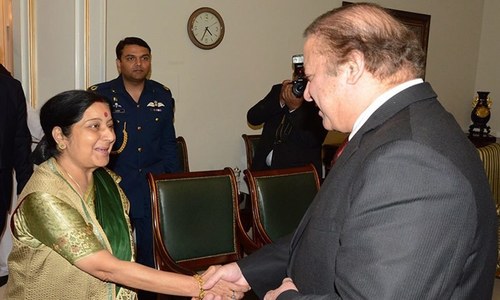
A rush of meetings over the past 10 days has achieved a most remarkable of breakthroughs, credit for which must first and foremost go to the governments of Prime Minister Nawaz Sharif and Indian Prime Minister Narendra Modi.
Also read: Pakistan, India agree to restart ‘comprehensive’ dialogue process
When politicians lead, positive change is often achievable. Mr Modi in particular appears to have recognised the failure of his high-risk strategy of not talking to Pakistan while trying to isolate this country internationally on terrorism-related issues.
Meanwhile, Mr Sharif stood firm in the face of fierce domestic opposition, particularly after the Ufa debacle, and kept open the door to dialogue with India.
The Paris meeting on the sidelines of the climate conference proved to be more of a catalyst than perhaps anyone other than the two prime ministers themselves could have hoped or known.
Now, the hope will be that by the time Mr Modi visits Pakistan next September for the Saarc conference, the two governments will have achieved a meaningful breakthrough in some of the areas to be discussed under the Comprehensive Bilateral Dialogue.
It will not be easy. The earlier Composite Dialogue appeared to progress smoothly, but agreement on the so-called low-hanging fruit proved elusive.
On the Indian side, the challenge will be to withstand the opposition to the resumption of dialogue with Pakistan. While Mr Modi’s supporters have appeared to be at the vanguard of the anti-Pakistan sentiment in India in recent months, there are a range of other populist and establishment forces in India that will try and scuttle or slow down the dialogue process.
Mr Modi and his government will have to demonstrate a great deal of resolve domestically. For Pakistan, the immediate challenge is the same as it has been for a number of years now: there must be some movement on the trials here related to the 2008 Mumbai attacks. That would automatically create the space and goodwill for the comprehensive dialogue to move forward.
The question is, can Pakistan and India break out of the historical cycle of hope and despair when it comes to the possibility of genuine normalisation of ties?
Turbulent spells in the relationship in the past have sometimes been followed by unexpected bilateral peace endeavours. Unhappily, those endeavours have always failed because the leadership of the two countries found statesmanship difficult or, sometimes, populism easy.
Today, on the Indian side, Mr Modi can surely deliver — if he wants to. On the Pakistani side, Mr Sharif has worked out a coexistence with the military — and so could conceivably deliver. There is reason to hope again.
Published in Dawn, December 11th, 2015