CHAKWAL: Some 79 kilometres from Chakwal city, a link road branches out from the main Talagang-Mianwali artery and leads to the Dhurnal village.
Stepping into Dhurnal on the day of the local government elections, many women were seen working in the fields alone. Some women were grazing their goats while others were busy picking peanuts.
The streets were full of people heading to and returning from the four polling stations set up in the village.
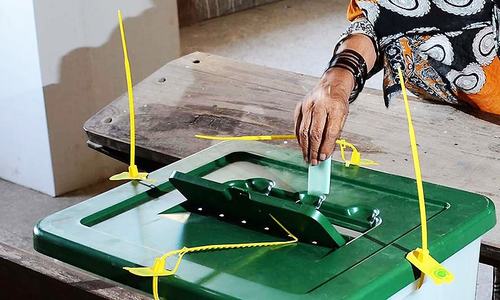
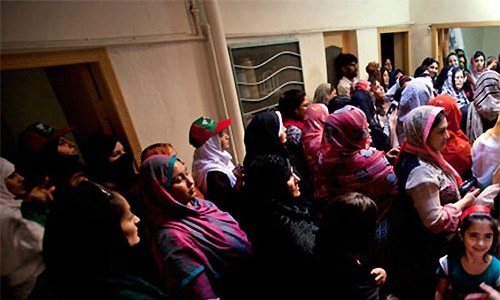
At a nearby polling station, men lined up to cast their votes. But at an adjacent polling station for women, the polling staff had little to do.
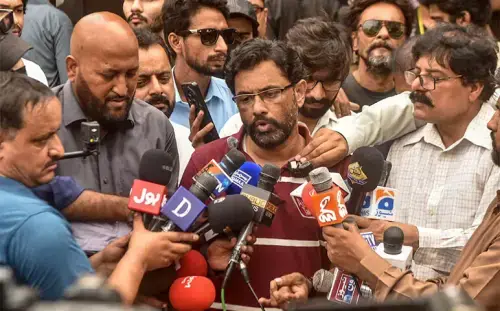
“We are quite free here, and are just waiting for the clock to strike five because polling ends at 5pm,” said Ghulam Anwar, the presiding officer.
“Although over 4,000 women are registered in the village, not a single cast her vote,” Ms Anwar added.
There are over 6,000 registered men in Dhurnal while the number of registered women is lower.
Dhurnal is also the headquarters of the Dhurnal union council (UC). Among the half a dozen villages that make up the UC, women in Dhurnal and Balwal do not vote.
“This is our tradition, which has been practiced for decades,” said former general councillor Malik Khan Zaman.
The popular narrative presented by the village elders is that women do not vote of their own will. According to PML-N Dhurnal UC chairman Malik Yaran Khan: “If any woman wants to cast her vote, nobody stops her.”
Mr Zaman argues that since various tribes in the village have been at loggerheads, old enmities would be revived if women go out to vote.
“When a woman leaves her home and goes to a place where men are also present, some untoward incidents are bound to occur,” he said.
When asked about the women working along in the field, Mr Zaman said: “Every woman works in her own field and no man can dare to enter the fields owned by someone else.”
Dhurnal is not the only village where women are not permitted to exercise their constitutional right to vote. Women do not vote in Balwal and Dholar and the turnout of women voters in other villages of Talagang remains meager.
“The women of the village want to vote but their elders do not allow them to,” a teacher said.
“I dared to vote in the last general elections, following the example of some educated women settled in Talagang city, Rawalpindi and Islamabad whose votes were registered in Dhurnal,” she recalled. She said 14 women managed to cast their votes in the last general elections.
“All the other women came from Talagang, Rawalpindi and Islamabad. They did not face any problems after voting but after I cast my vote I was rebuked by men in my family,” she said.
Another woman said: “Despite having a master’s and a BEd degree, I can’t cast my vote while illiterate men can.”
Interestingly, women’s education is encouraged in Dhurnal but a woman voting is seen as ‘improper.’
“I don’t see this tradition being abolished in the near future,” said Advocate Mehr Khan, who is from Dhurnal.
Potohar Organisation for Development Advocacy’s district head Naheeda Abbasi demanded urgent measures to convince men that voting is also a woman’s constitutional right.
“Politicians in the village say they do not need women’s votes as if women are not human beings,” she said.
When contacted, MNA Sardar Mumtaz Khan Tamman said he was not aware that women in Dhurnal and other villages did not vote.
“This is a very strange tradition which must be condemned. I would try my best to convince the men of these villages that women be allowed and encouraged to vote,” he said.
Published in Dawn, November 10th, 2015