ISLAMABAD: Pakistan on Wednesday formally requested Iran to withdraw its ban on imports of rice and kinno.
The ban has led to a drastic cut in Pakistan’s exports to Iran, which fell to mere $43 million in 2014 from $182m in 2010, an official told Dawn.
Rice exports constitute 63 per cent of the country’s total exports to Iran.
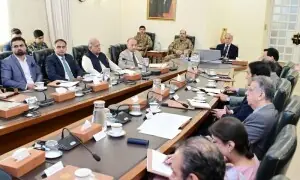
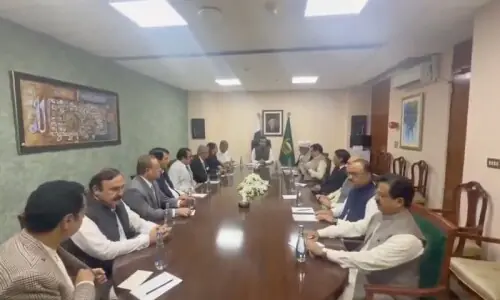
The issue, among others, was raised during the two-day meeting of Pak-Iran Joint Working Group (JWG) on Trade.
Pakistan’s delegation was headed by Additional Secretary Commerce Robina Ather, while Iranian side was led by Mojtaba Mousavian, Director General (Asia-Pacific) Iranian Trade Promotion Organisation.
A representative of Pakistan Ministry of National Food Security and Research informed the meeting that Iran’s quarantine department inspectors visited hot water treatment plants for mangoes and approved 16 facilities, while approval for another three was in the process.
Pakistani side also informed that they have provided a draft of ‘Agreement on Cooperation in the Field of Veterinary and Animal Health’ to the ministry concerned in Iran.
Both sides agreed to constitute a joint working group for implementation of electronic data interchange. Pakistan also showed its interest to hold a single-country textile exhibition in Tehran in Feb/March 2016.
Both the countries reiterated the need for granting visa to businessmen and truck drivers on a priority basis, and agreed to implement the bilateral Preferential Trade Agreement (PTA) in letter and spirit including strengthening of transparency and prior notification mechanisms.
Discussing freight train operations, Pakistan proposed that till freight traffic picks up, Iranian authorities may also introduce concessional fares between Zahedan-Quetta.
Regarding tax and charges imposed on Pakistani vehicles, the Iranian side informed that those taxes did not constitute “para tariffs” and were consistent with the PTA as per Article 2 on services charges.
The meeting discussed the draft of ‘Five Years Strategic Plan’ to enhance bilateral trade.
Both sides agreed to consider incorporating linkage of Iran with China-Pakistan Economic Corridor, strengthening border markets, upgrading road and railway networks, building warehouses and opening/upgrading border crossing points into the five-year plan.
It was agreed that both sides will exchange soft data about their tariff and trade regimes as per the format provided by Pakistani side, within two weeks of this JWG meeting.
Published in Dawn, August 27th, 2015
On a mobile phone? Get the Dawn Mobile App: Apple Store | Google Play