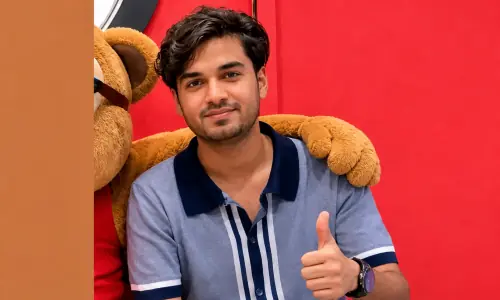
ISLAMABAD: “We were never very active with regards to the media and that has taken a toll on our perception,” says Asif Khursheed, a public relations man with a slightly more challenging job than most others in this profession.
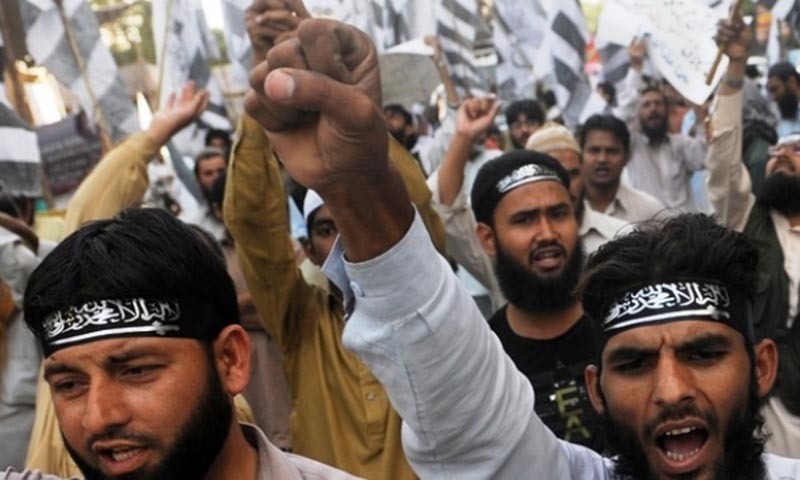
Mr Khursheed works for the Jamaatud Dawa (JuD), a charity organisation that earned notoriety when it was accused of being involved in the Mumbai attacks of 2008. The Indian government and much of the international press has insisted that JuD chief Hafiz Saeed was the mastermind behind the attack, a label that refuses to go away for the party, despite the fact that the allegations have yet to be proven in a court of law.
“The propaganda war that has been waged against us since 2008 forced us to fight back,” Mr Khursheed told Dawn, adding that most of the accusations against them came from the English language press. However, since the organisation lacked the capacity to respond, its point of view was often missed out by foreign and English language news outlets.
Now, though, the JuD’s media presence has been revamped to suit the changing times. They have embraced social media platforms such as Facebook and Twitter and now have the ability to get their message out in Urdu and in English, for international consumption.
Read: Footprints: JuD's show of strength
“We have to keep pace with media growth. Hafiz Saeed has an active twitter account,” Mr Khursheed said adding, “Since his tweets are in English, they are picked up instantly by the India media.”
JuD, ASWJ, JUI-F targeting English press, social media as new platforms for getting their message out
The JuD is not the only group that has had to change with the times. The Jamiat Ulema-i-Islam-Fazl (JUI-F), which is arguably one of the largest religious parties in the country, has also undergone a bit of rebranding. The party’s new mouthpiece, Jan Achakzai, is the face of that change.
Shortly before the 2013 elections, the party introduced the clean-shaven Mr Achakzai – who is comfortable chatting in English and answers emails from his iPad – as its new spokesman.
Two years on, he is a known name among journalists and one of the most recognised face from the JUI-F, given his frequent appearance on news channels, after party chief Maulana Fazlur Rehman.
“The dynamics and demography of politics is changing, so we have to adjust accordingly,” he told Dawn, saying that his party was now concentrating on urban areas as well as the international community, “therefore, English is a key language for JUI-F now”.
Other religious parties – all of whom complain about not being treated fairly by the media – are not too far behind. Shia, Barelvi and Deobandi groups have all realigned their public relations machinery to adjust to the changing needs of the times.
“We are not a banned organisation, nor are we involved in any kind of sectarianism; our motto is to preach Islam that is based on the teachings of the Prophet and his descendants,” a spokesperson for the Tehreek-i-Nifaz Fiqh-i-Jaffria (TNFJ). However, he complained that the press never gave his group the kind of space other groups enjoyed.
Like the JuD spokesman, he too admitted that the English press had a wider outreach, whereby they could reach a diverse and international audience.
This view is echoed by Uneeb Farooqi, spokesperson for the proscribed Ahle Sunnat Wal Jamaat (ASWJ).
“Our party has an image problem. In order to address that, we began to focus on the English press two or three years ago,” Mr Farooqi told Dawn, claiming that this helped the party a great deal.
Mr Farooqi is no ordinary member of the ASWJ. Aside from having learned the Quran by heart, he is fluent in the Arabic and English language too. And like the PR personnel for every other religious group in Pakistan, he has grievances with the English press.
“You give more importance and space to groups such as the Tehreek-i-Taliban (TTP). But we are here on the ground, in the streets, in the mosques, addressing the people. But we are still not given the recognition which is our due.”
Mr Farooqi’s appointment to this position is also proof of the importance his party attaches to this public relations exercise: he was transferred to Islamabad from Karachi specifically for this purpose in 2013. And in the year-and-a-half that he has been here, he feels that ASWJ’s perception has improved.
Published in Dawn, May 11th, 2015
On a mobile phone? Get the Dawn Mobile App: Apple Store | Google Play