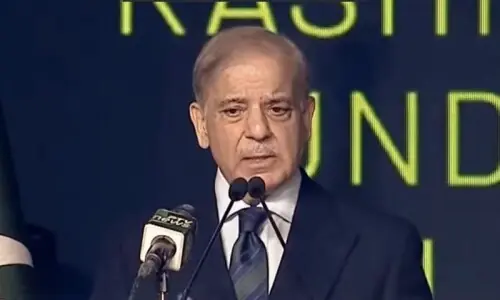
ADVISER to the Prime Minister on National Security and Foreign Affairs Sartaj Aziz had some tough words on Thursday for the attempt by the US and India to put back on track the civilian nuclear deal between those countries.
Speaking at a seminar in Islamabad, Mr Aziz said, “Pakistan is examining the imbalance and the possible ways and means for redressing it,” and added that “Pakistan’s key concern is the paramount importance of strategic stability in South Asia”.
Take a look: The wolf and the fox
But what do those words mean? The Pakistani state has always resented and been suspicious of the Indo-US nuclear deal for essentially two reasons: one, the security establishment here fears that a flow of foreign nuclear fuel into India for civilian purposes will free up more of India’s own fuel supplies for diversion to military purposes; and two, the deal is a milestone in India’s attempt to elevate itself into the so-called global big boys’ club.
In addition, hardliners here with long memories are not convinced that the safeguards built into the 2008 deal will prevent a replay of the 1970s when India first tested a nuclear device using nuclear resources that the Indian government had pledged were only being used for peaceful purposes.
Ultimately, it comes down to India getting a deal that is clearly not even on the negotiating table with Pakistan — the legacy of the A.Q. Khan proliferation network; concerns about the security of Pakistan’s nuclear assets from the militant threat; and Pakistan’s not having the growing economic heft of India or the ability to help the US balance out a rising China have all contributed to make a deal for Pakistan a non-starter.
The Pakistani state’s response though can be one of two. It can either acknowledge that strategic stability is linked fundamentally to political relations and not try and make deterrence about simply pursuing more and more missiles and nuclear warheads, or it can take the paranoia route by acquiring more missiles, delivery platforms and warheads of sizes big and small.
Perhaps what Mr Aziz should have done is deliver a more substantive, nuanced set of comments, one that highlighted the choices for the political government and the military establishment and that would inform the apex nuclear decision-making body, the National Command Authority.
If a reinvigorated US-India nuclear deal requires Pakistan to tweak its own national security strategy, would it not make sense to contribute to the debate and shape it rather than just reiterate stock, tired phrases?
Consider that it has been nearly a decade since the deal with India has been proposed and its broad contours known. What has Pakistan done in the meantime?
Has the military component of the national security response ever been debated? What about the economic and diplomatic components of national security and strategic stability? It seems words come easier than policymaking here.
Published in Dawn February 1st, 2015
On a mobile phone? Get the Dawn Mobile App: Apple Store | Google Play