THE victory of the leftist Syriza party in the Greek general election held earlier this week has garnered virtually no coverage in the Pakistani press. Neither is there any comment on the prospect of another recently cobbled together left electoral alliance claiming victory in Spain’s upcoming elections. Meanwhile the ongoing successes of leftist presidents and their backers in many Latin American countries also slip continuously under the radar.
Certainly there are only so many lessons — and inspiration — that one can draw from a context very far removed from ours. But there can be no gainsaying that the popular frustrations that have led working people to look for genuine alternatives to status quo in Greece, Spain and so many countries of Latin America resonate with a majority of Pakistanis.
Why, then, is there no political response in this country to the ravages of neo-liberalism, war and state excess similar to Syriza, Podemos (Spain) or the so-called ‘pink tide’ in Latin America?
There’s little chance of a Syriza-type project succeeding here.
Those who until not so long ago insisted that Imran Khan — and even Tahirul Qadri — symbolises an insurrectionary popular will have gone remarkably quiet in recent times. Indeed, the PTI ‘tsunami’ is a cautionary tale about the perils of flirting with the military establishment and a ratings-obsessed corporate media.
Khan and the PTI will surely have a role to play in the next round of the power game — and definitely in the 2018 general election — but it is in any case clear that right populism represents at best a rejigging of the established order rather than a radical restructuring of state and society.
I do not mean to suggest that Syriza, Podemos or any other left ‘alternative’ can necessarily transcend neo-liberal globalisation and the forces of reaction within their respective countries. But at least they are raising the flag of radical change in an era defined by the slogan ‘there is no alternative’.
That there is no such mass alternative in Pakistan goes without saying. What we need to ask is what prevents such an alternative from emerging.
The first major constraint is the tone and tenor of mainstream politics — at an everyday level politics is about who knows who and how to navigate the system through personal links, whereas at the discursive level class, gender and other social fault lines are conspicuous by their absence while the interests of the state and religion are paramount.
There is no impetus provided either by the intelligentsia or the media to challenge these orientations. The ‘change’ movements patronised by our anchors and writers employ empty signifiers such as ‘corruption’ and ultimately seek a share in government and its patronage machine rather than an overhaul of the structure of power.
Second, there is a real crisis of identity that, until some kind of resolution is reached, precludes a coming together of working people across ethnic and other divides. The Punjabi heartland is still wedded to statist nationalism which preaches religion as a unifying force whereas ethnic-nationalism is much more prominent in just about every other part of the country.
So long as a perception exists that the state is a Punjabi protectorate, and the Punjabi working classes do not clearly take a stand against state excess, there is very little chance of a Syriza-type project succeeding in Pakistan that emphasises the common interests of the popular classes, both vis-à-vis the dominant classes within society and imperialist forces outside of the state’s borders.
Third, all contemporary movements of change on the left of the political spectrum feature a considerable and growing popular element — that of women. In our country, women’s participation in public life, let alone politics, is negligible. Women were visible participants in the PTI’s recent mobilisation, but there is little to suggest that they exercise meaningful decision-making power within the party. The same applies to women in other right populist parties such as the Jamaat-i-Islami and MQM. At the very least, such political forces make no commitment to challenging patriarchy.
Identifying these daunting impediments to the construction of a popular movement for change in Pakistan is a sobering exercise. Yet it is necessary if serious political elements on the left are to take up the challenge.
And there are things to build on. On Wednesday, for example, close to 10,000 workers associated with Pepco gathered in Islamabad for a peaceful protest against the impending privatisation of the organisation. The well-known Okara tenants were on the streets in the thousands recently to protest ongoing harassment by the military farms authorities and local administration.
Even in neo-liberal Europe, movements of working people garner some public interest. When workers protest, people sit up and take notice. It is this sitting up and noticing that has culminated in Syriza and Podemos. If they can do it, why not us?
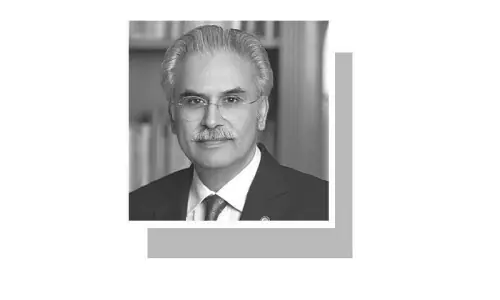
The writer teaches at Quaid-i-Azam University, Islamabad.
Published in Dawn, January 30th, 2015
On a mobile phone? Get the Dawn Mobile App: Apple Store | Google Play